Table of Contents
- Can Fiber Optic Cable Withstand High Temperatures? The Basic Answer
- Can Fiber Optic Cable Withstand High Temperatures? PMMA vs Glass Comparison
- Can Fiber Optic Cable Withstand High Temperatures? Selection Guide: 2026
- Can Fiber Optic Cable Withstand High Temperatures? 3 Important Influencing Factors
- Maintenance Tips: Extending Cable Life in High-Temperature Environments
- Fiber Optic Application Examples Based on Temperature Resistance
- Shopping Guide: 4 Steps to Buying the Right Heat-Resistant Cable in 2026
- Frequently Asked Questions (2026 FAQ) About Fiber Optic Cables in High Temperatures
- Conclusion: Choose the Right Heat-Resistant Fiber Optic Cable for Your 2026 Projects
According to 2026 industry reports, approximately 38% of fiber optic cable failures in decorative lighting projects are due to miscalculating the maximum temperature tolerance of components. This situation leads to costly replacements and disappointments in many projects. However, with the right information and product selection, fiber optic systems can operate flawlessly for years, even under the most challenging heat conditions. So, the real question is: can fiber optic cable withstand high temperatures? The answer depends on the core material and protective sheath of the cable you use. Therefore, in this guide, we will share practical knowledge gained from our 10 years of field experience, explaining how to secure your projects for 2026 and beyond. Frankly, this is not a matter to be taken lightly.
Can Fiber Optic Cable Withstand High Temperatures? The Basic Answer
Yes, fiber optic cable can withstand high temperatures. Fortunately, modern fiber optic technology offers considerable flexibility in this regard. However, this tolerance varies fundamentally between the two main types of cables grouped under the general name "fiber optic": PMMA (fiber optik/acrylic) and Glass (silica). As a general rule, PMMA fiber optic cables can be safely used in the range of -40°C to +70°C (short-term up to 85°C), while glass fiber optic cables can resist temperatures from -60°C to over 200°C. The crucial point is whether the temperature exposure is continuous (chronic) rather than just a brief spike. Therefore, making this distinction clear is the first step to your project's success. Based on our years of observation, those who make this distinction proceed with peace of mind in their projects.
Prolonged high heat can cause loss of flexibility and reduced light transmission in PMMA fibers, while in glass fibers, it primarily leads to degradation of the additional insulation materials. Thus, the next step is to examine the limits of both types in detail.
Can Fiber Optic Cable Withstand High Temperatures? PMMA vs Glass Comparison
To make the right choice, it's essential to understand how these two types behave under heat. The 2026 standards have further clarified these tolerance values. However, focusing solely on the core material is not enough; sheath selection is equally critical.
Temperature Limits of PMMA (fiber optik) Fiber Optic Cables
PMMA fibers, the most popular choice for decorative lighting (starry ceilings, ambient lighting), are made from a polymer called polymethyl methacrylate. This material stands out for its flexibility and cost-effectiveness. However, its heat resistance is limited due to its organic structure. In summary, the continuous operating temperature is typically 70°C. They can withstand up to 85°C for short periods (a few hours). Beyond this limit, the fiber core begins to soften, deform, and consequently, light transmission loss occurs. Therefore, careful evaluation is needed for areas like enclosed spaces under direct sunlight or near heaters. I like this model, but it is fragile when it comes to heat.
Superior Heat Resistance of Glass (Silica) Fiber Optic Cables
Glass fibers transmit light through a thin glass core. This inorganic structure makes them superheroes against heat. Standard glass fiber optic cables can continuously withstand 200°C, while specially coated (e.g., gold-plated) industrial versions can endure extreme temperatures of 400°C to 700°C. Heat does not directly affect signal transmission quality as it does with PMMA fibers. The primary risk lies in the limits of the protective sheath and buffer materials outside the cable. Therefore, when selecting glass fiber optic cable for high-temperature applications, special attention must be paid to the sheath material. If you expect a performance that shines like gold, consider the gold-plated varieties.
"In 2026, with industrial IoT and smart factory transformations, the use of glass fiber for data transmission in high-temperature areas on process lines increased by 55%. This is the clearest indicator that temperature resistance is no longer a luxury but a necessity." - Industrial Automation Trends Report, 2026
Can Fiber Optic Cable Withstand High Temperatures? Selection Guide: 2026
Factory interior lighting, near a sauna, kitchen cabinet lighting, or a terrace under the scorching summer sun... Your project's location is the primary determinant of your cable choice. Here, not only the core but also the protective layers surrounding your cable come into play. In short, finding the right combination is a matter of systems engineering. The elegance everyone deserves should combine with durability.
What Are Heat-Resistant Sheath Materials? (PVC, LSZH, Teflon)
The cable sheath is like armor that protects the core from physical and chemical external factors. The three most common options for heat resistance are:
Source: tr.wikipedia.org
- PVC (Polyvinyl Chloride): A standard, economical option. Continuous operating temperature is approximately -20°C to 70°C. Suitable for moderate indoor applications.
- LSZH (Low Smoke Zero Halogen): Fire safety is a priority. Heat resistance is similar to PVC (-20°C to 70°C). Preferred in enclosed and crowded areas.
- Teflon (PTFE/PFA): The first sheath that comes to mind for high-temperature fiber optic cable. Continuous operating temperature is -70°C to 200°C, with short-term tolerance up to 260°C. It is also extremely resistant to chemicals. Ideal for extreme environments like near industrial furnaces or engine compartments.
Additionally, in terms of cable structure, a "Loose-Tube" design manages heat expansion better than a "Tight-Buffered" design and provides extra protection against moisture. This is especially important in environments where the effect of moisture on fiber optic cables is high.
Product Comparison Guide: Which Cable for Which Project?
For example, while a classic PMMA cable is sufficient for a starry ceiling, heat dissipation must be considered for TV backlighting. Sets like the TV BACK UNIT AMBIENT LIGHTING FIBER OPTIC STAR SET - MOVING STARS take into account the heat from the light source and electronics during the design phase. Moreover, even within the same project type, environmental conditions can vary. If you are installing the RESTAURANT, CAFE AMBIENT LIGHTING STAR CEILING FIBER OPTIC APPLICATION KIT near a kitchen exhaust, you should consider the glass fiber and Teflon sheath option. This comparison determines not only product selection but also the project's long-term reliability. This is precisely where the right choice comes into play.
| Season / Environment Type | Average Temperature Range | Recommended Core Type | Recommended Sheath Material | Example Application |
|---|---|---|---|---|
| Winter / Standard Indoor | 10°C - 25°C | PMMA or Glass | PVC, LSZH | Living room star ceiling |
| Spring-Autumn / Outdoor Shade | 5°C - 45°C | Glass | LSZH, Medium-Duty PE | Garden path lighting |
| Summer / Outdoor Direct Sunlight | 25°C - 80°C+ (Surface) | Glass | High-Temperature Resistant PE, Teflon | Rooftop terrace, Open parking lot |
| Year-Round / Industrial High Heat | 40°C - 180°C+ | Glass (Specialty Coated) | Teflon (PTFE/PFA) | Factory production line lighting |
This table provides a general roadmap. For your specific project, you can review our specialized solutions like the Industrial High-Temperature Resistant Glass Fiber Optic Lighting Set.
Can Fiber Optic Cable Withstand High Temperatures? 3 Important Influencing Factors
Temperature should not be evaluated in isolation. Three other critical factors that shape tolerance are:
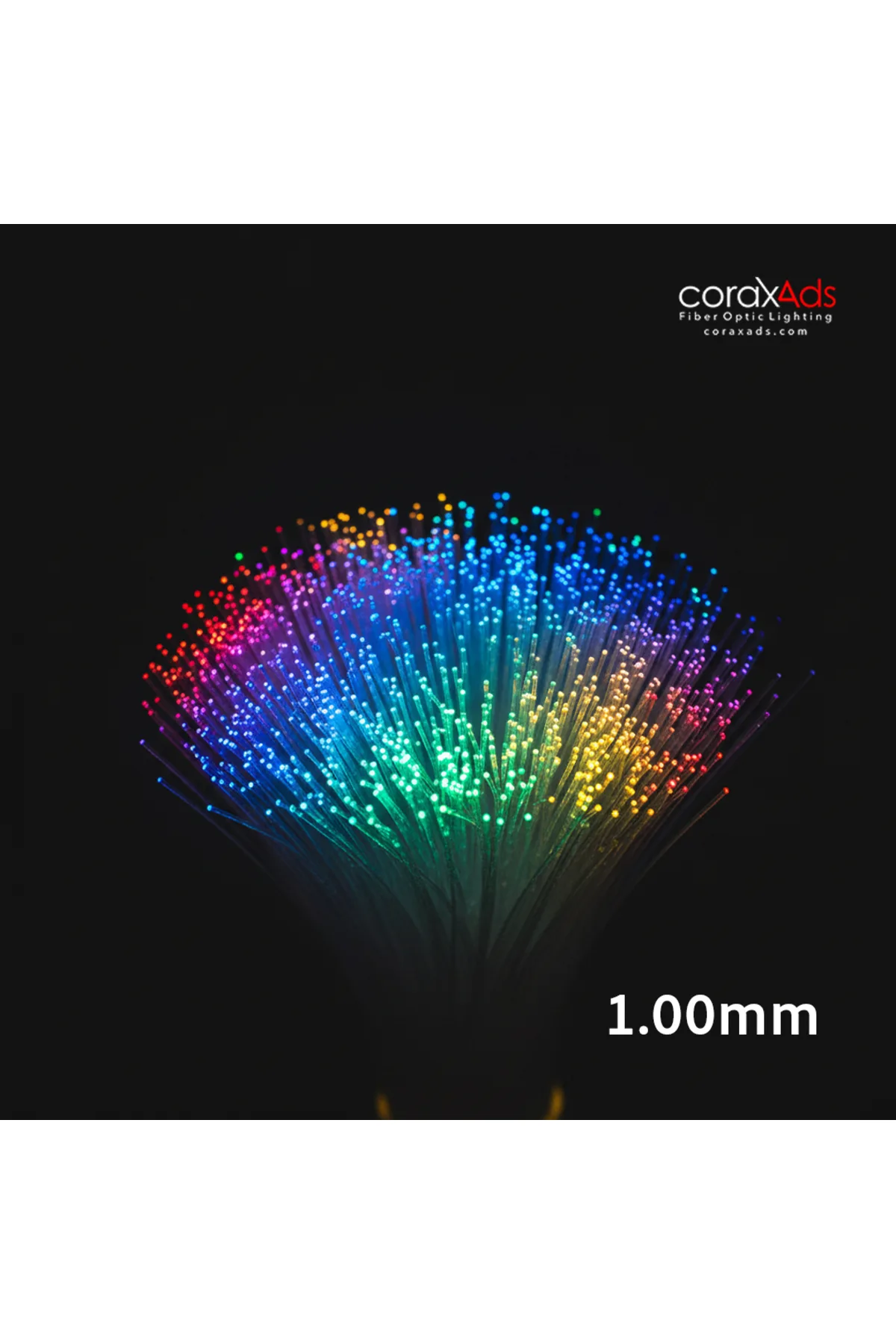
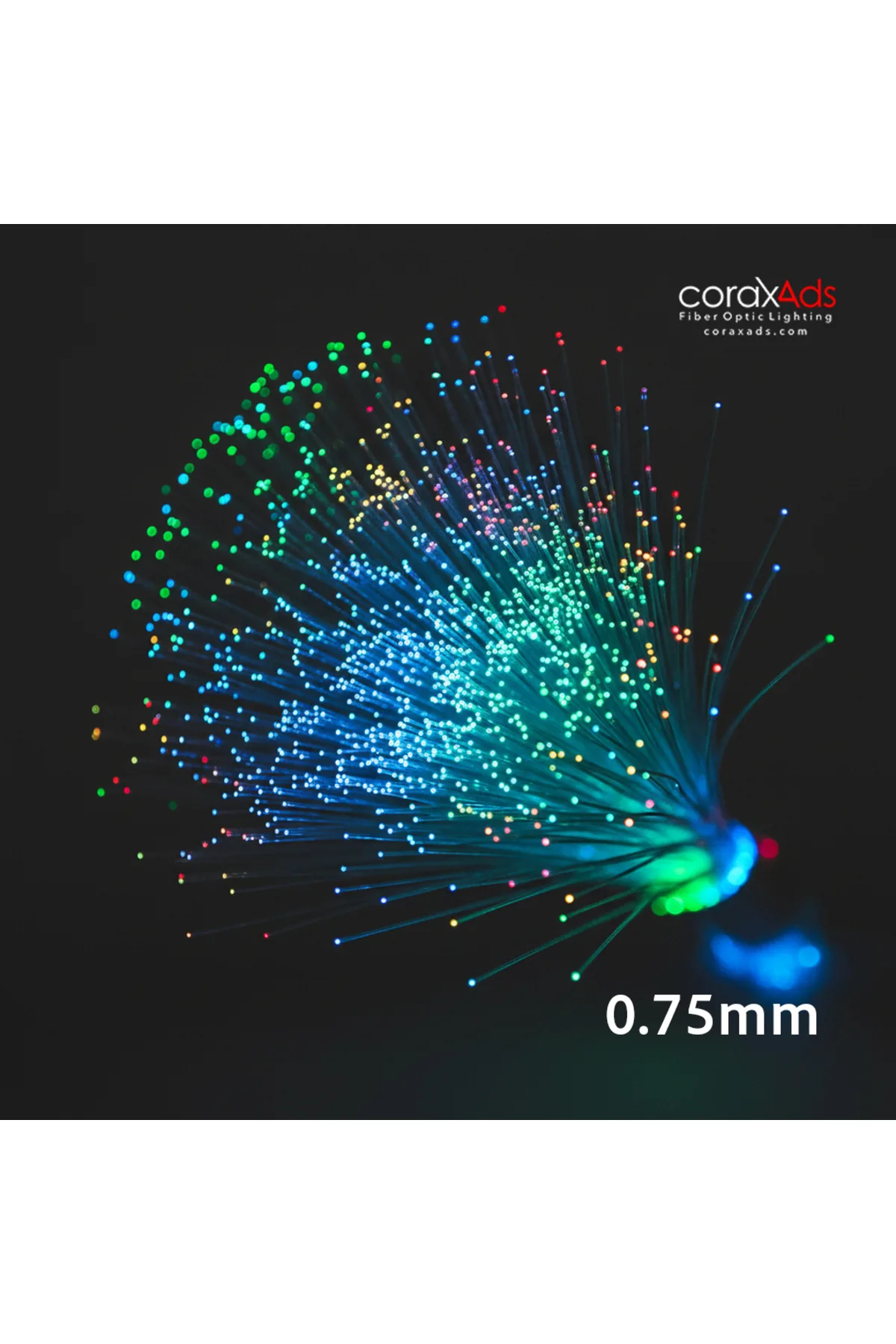
- Cable Structure and Diameter: A thinner fiber (e.g., 0.75mm) dissipates heat faster than a thicker one (3mm) but may have lower mechanical strength. Also, Tight-Buffered cables are more affected by thermal expansion than Loose-Tube cables. The correct approach is to select the structure based on the severity of ambient temperature fluctuations.
- Combined Effect of Heat with Moisture and Chemical Exposure: Heat can exponentially increase the destructive effect of moisture or aggressive chemicals. For example, in outdoor conditions like pools, water and heat insulation must be considered together. A Teflon sheath provides excellent protection against high heat, moisture, and many chemicals.
- Installation Quality and Thermal Expansion Management: The cable expands when heated and contracts when cooled. This cycle creates tension in tightly fastened cables without allowance for movement, leading to breaks. Therefore, flexible connections and special cable channels during installation significantly extend lifespan. We've been saying it for years: The cable is alive, it breathes!
Maintenance Tips: Extending Cable Life in High-Temperature Environments
Just as important as selecting the right cable is post-installation maintenance, which directly affects system lifespan. Here are some simple yet effective tips for fiber optic cables exposed to high temperatures: To explore our Can fiber optic cable withstand high temperatures? collection and seize the best offers, visit https://CoraxAds.com now.