Table of Contents
- How Much Cable is Needed Per Square Meter for a Star Ceiling? The Practical Answer for 2026
- How to Calculate Cable Requirement Per Square Meter for a Star Ceiling?
- How Cable Type and Diameter Affect How Much Cable You'll Need Per Square Meter for Your Star Ceiling
- How Much Cable is Needed Per Square Meter for a Star Ceiling? 2026 Project Examples and Case Studies
- Maintenance Tips and 2027 Trend Analysis
- Frequently Asked Questions (FAQ): Star Ceiling and Cable Calculation
You've decided to install a star ceiling, and your first question is: "How much cable is needed per square meter for a star ceiling?" To be honest, this question is the most critical step that directly determines both your project's budget and its final appearance. As we enter 2026, there's no longer a need for rough estimates to make this calculation. In this guide, drawing from over a decade of field experience, I will provide you with a precise and practical formula, illustrate different scenarios, and give pinpoint answers to the "how many meters" question.
How Much Cable is Needed Per Square Meter for a Star Ceiling? The Practical Answer for 2026
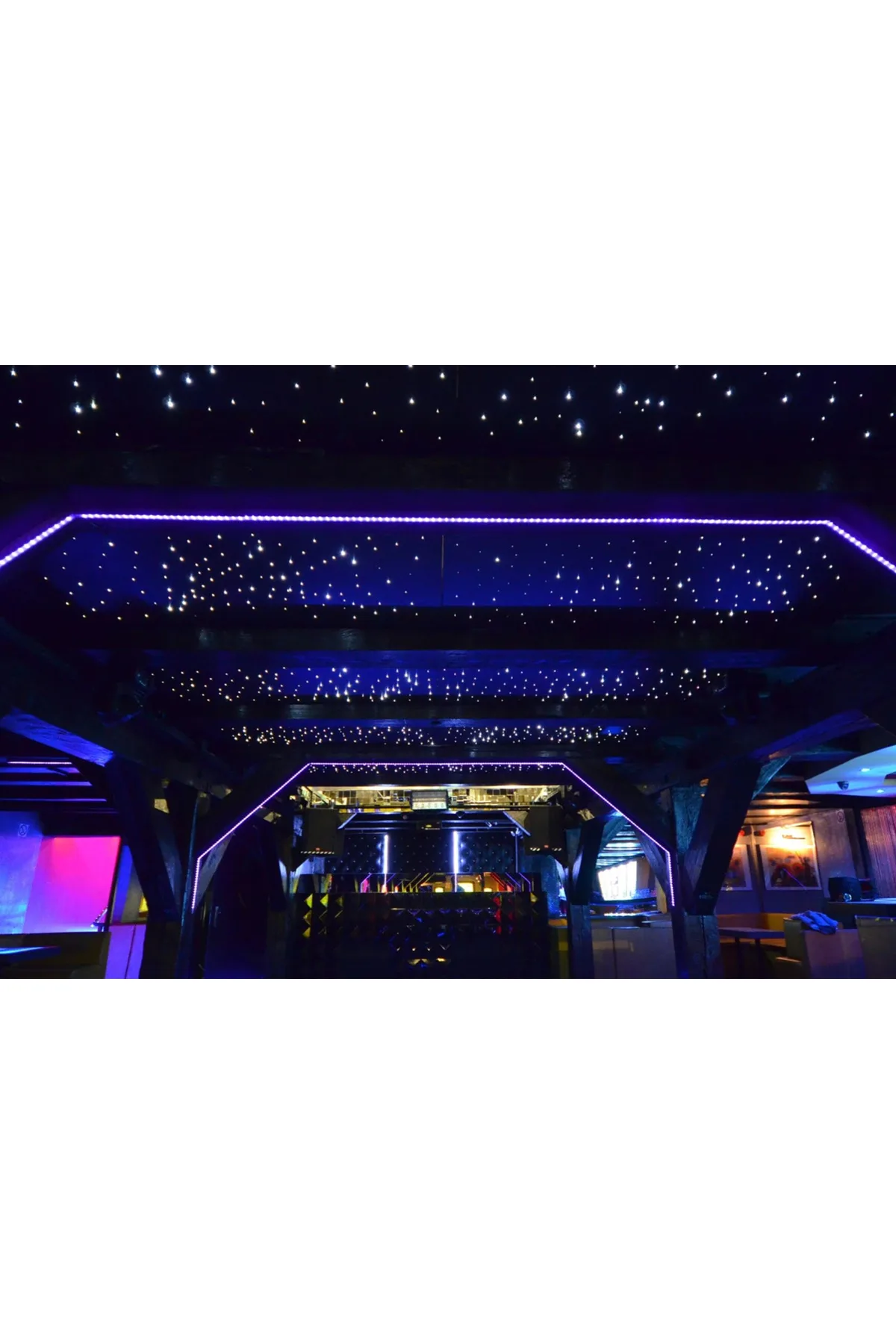
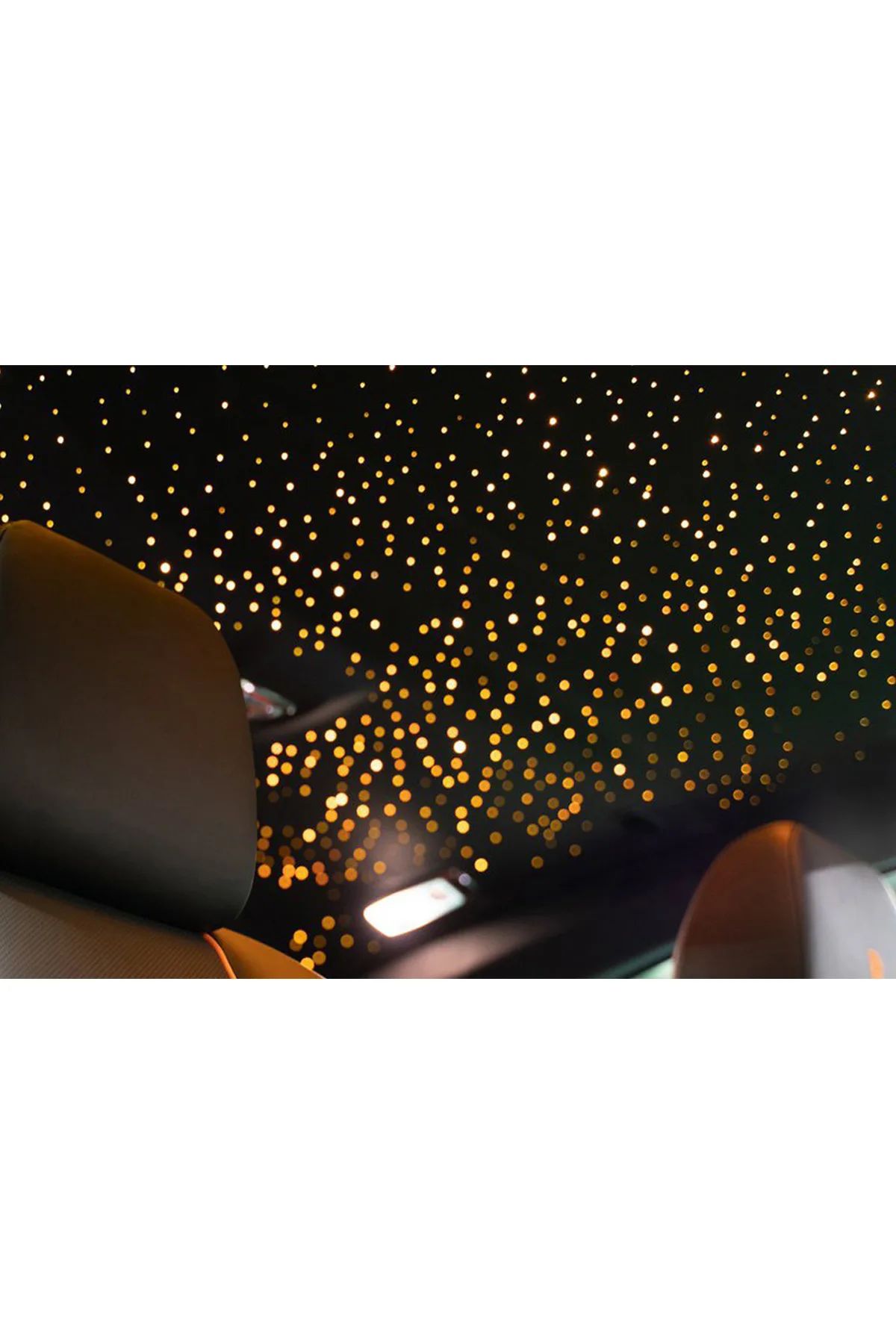
Let's give a clear answer right away: the answer to how much cable is needed per square meter for a star ceiling varies between an average of 30 to 60 meters of fiber optik cable per square meter, depending on your desired light density. This means that for a 10-square-meter room, you may need to use between 300 and 600 meters of cable, based on the density you choose. In fact, the real issue behind the "how much" question is not the area, but the visual effect you want to create in that space.
Basic Calculation Principle: The Relationship Between Density and Square Meters
At the heart of the calculation lies a simple relationship: Light Density = Total Cable Length / Area. More cable means more light ends (stars) and therefore a denser, more impressive sky effect. The key here is to correctly define your project's purpose. Is it a romantic bedroom, or a meditation room meant to create a planetarium effect? This decision will determine the amount of cable per square meter. Furthermore, this principle is universal and provides a solid starting point for all your projects. On the other hand, it shouldn't remain just theoretical; it must be supported by practical applications.
How to Calculate Cable Requirement Per Square Meter for a Star Ceiling?
You can follow the steps below to calculate your own project. This methodology is a reliable method also used by professional installers in 2026. However, since every project is unique, you can adapt these steps.
Step-by-Step Cable Calculation Formula
- Calculate Gross Area: Measure the width and length of the ceiling (e.g., 4m x 5m = 20 m²).
- Select Density Coefficient: Determine the appropriate coefficient for your project from the table below.
- Multiply: Area (m²) x Selected Density Coefficient = Required Estimated Cable Length (meters).
- Add Waste Allowance: Add 10-15% to the total length you calculated to account for cutting and placement losses.
For example, by following these four steps, you will reach the most accurate result. Additionally, adding a waste allowance eliminates the risk of facing a material shortage at the end of your project.
Cable Requirement Table for Different Patterns
The table below compares the three most frequently preferred effect models in 2026 and the required cable coefficients per square meter for them. These coefficients are valid for 1.5mm and 2.0mm diameter PMMA cables.
| Effect Model / Density | Description and Use Case | Cable Coefficient Per Square Meter (m/m²) | Estimated Cable for 10 m² |
|---|---|---|---|
| Natural and Sparse (Minimalist) | Resembles a real sky, with spaced-out stars. Ideal for bedrooms, hallways. | 25 - 35 m/m² | 250 - 350 m |
| Rich and Medium Density (Classic) | Distinct and frequent star distribution. Perfect for living rooms, restaurants, and hotel lobbies. | 40 - 50 m/m² | 400 - 500 m |
| Dense Milky Way (Premium) | Very dense light points creating a nebula and Milky Way effect. For special design spaces, luxury spas. | 55 - 70 m/m² | 550 - 700 m |
Expert Opinion: "The most common mistake in cable calculation is underestimating the density coefficient. When a client says 'make it a bit more,' an average of 150-200 meters of extra cable is needed per project. Therefore, when planning, it's wise to select your light source capacity with a 20-25% overhead, considering the possibility of future additions."
In conclusion, this table provides you with a clear starting point. However, personal taste is always the most decisive factor.
How Cable Type and Diameter Affect How Much Cable You'll Need Per Square Meter for Your Star Ceiling
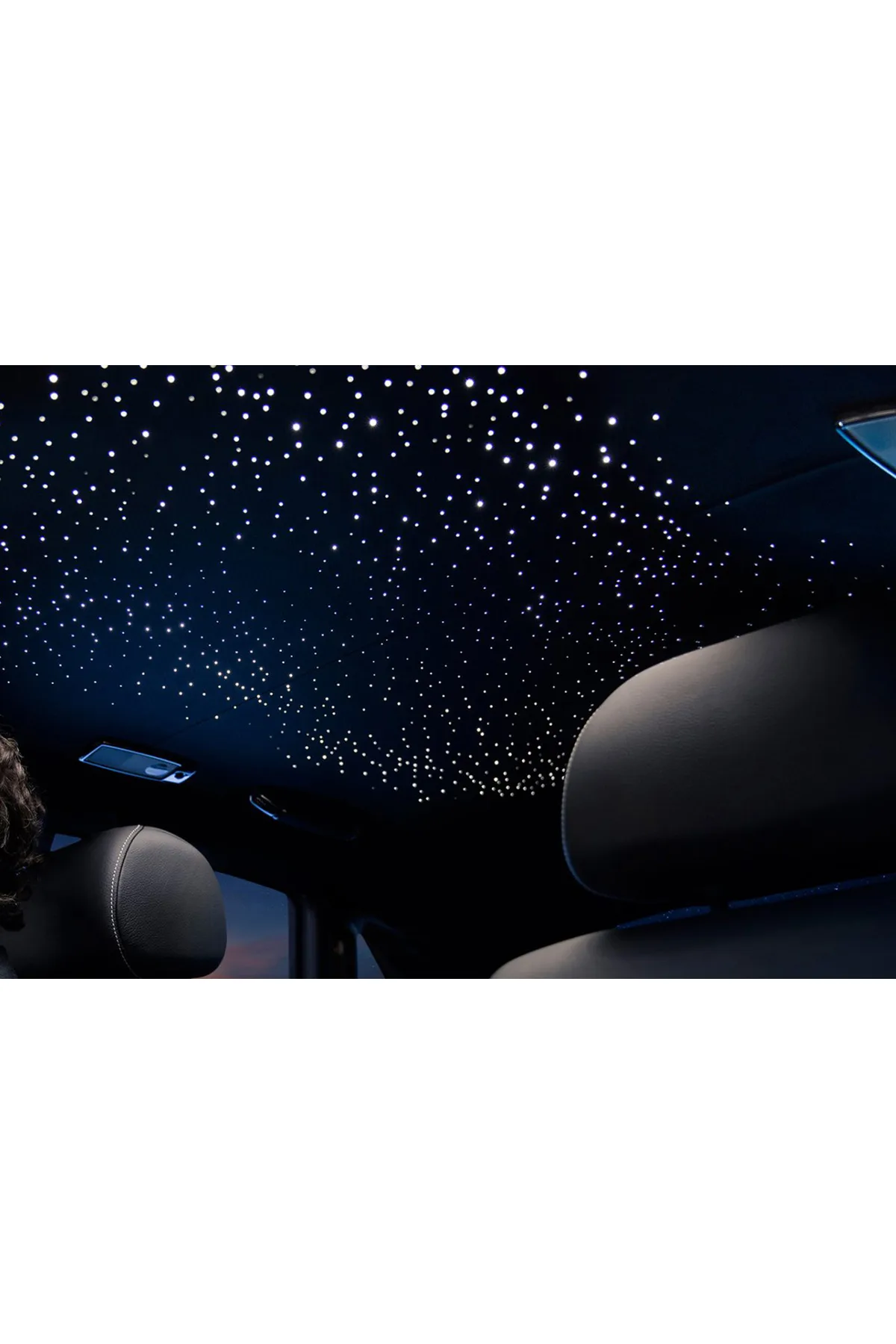
The answer to how much cable is needed per square meter for a star ceiling is not only related to square meters but also directly tied to the technical specifications of the cable you will use. The cable type and diameter determine how efficiently light is transmitted and, therefore, how many square meters you can effectively illuminate with the same length of cable.
Efficiency Comparison: PMMA vs. PC Fiber Optik Cables
There are mainly two types of fiber optik cables on the market: PMMA (Polymethyl Methacrylate) and PC (Polycarbonate). According to 2026 standards, PMMA cables are used in over 85% of decorative lighting due to their light transmission efficiency and color vibrancy. Moreover, PMMA cables have very low light transmission loss.
- PMMA Fiber Optik Cable: Light transmission loss is very low. Especially in 2.0mm diameter, brightness loss is almost imperceptible up to distances of 15-20 meters. This means you can power larger areas (40-50 m²) with a single powerful light source. Its efficiency per square meter is high. For more technical information on this subject, you can check out international fiber optic industry standards.
- PC Fiber Optik Cable: More durable and flexible, but light transmission loss is higher compared to PMMA. Brightness decreases noticeably, especially after 8-10 meters. Therefore, you may need to use multiple light sources or lay cable more densely in large areas; this means more cable and equipment cost for the same area.
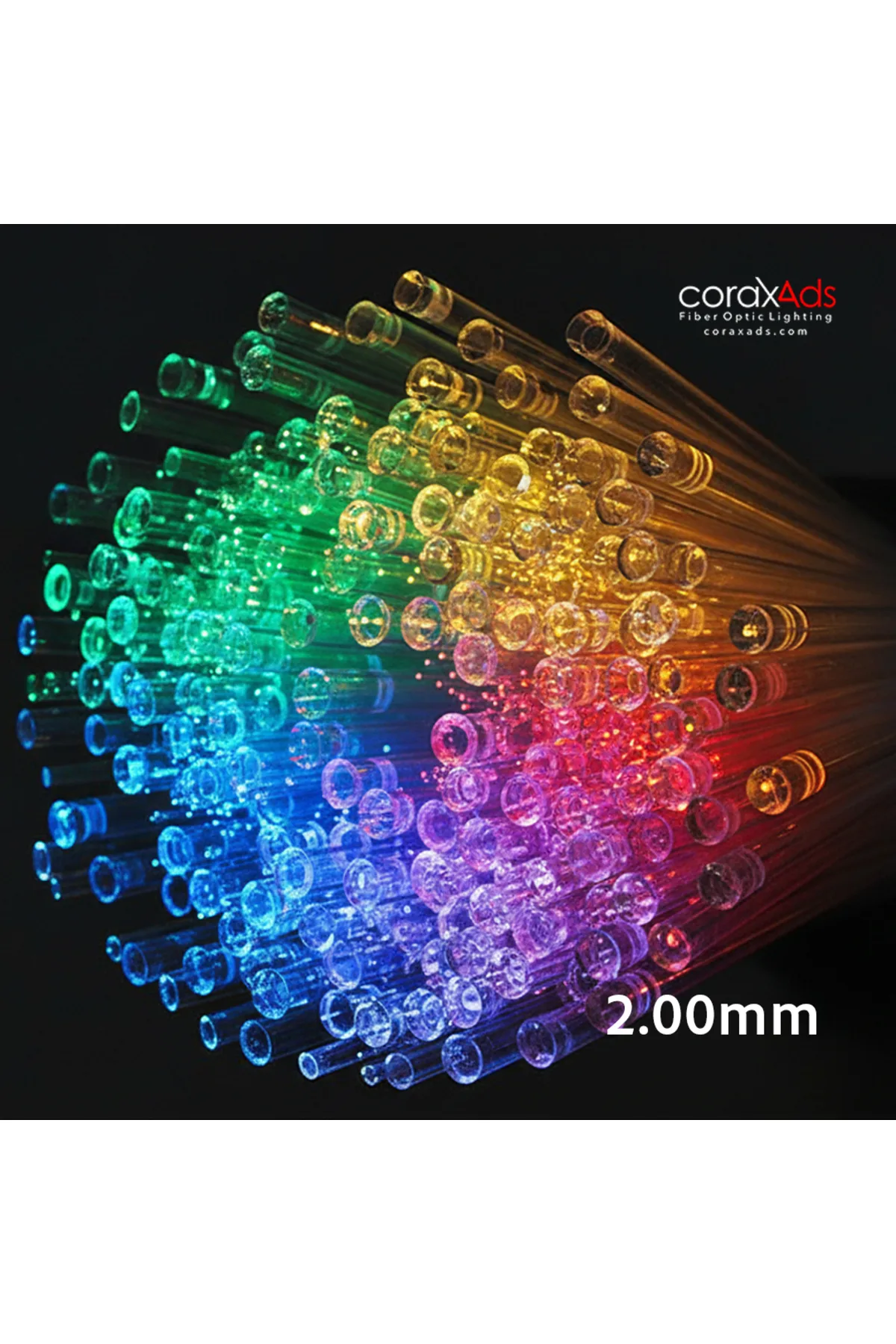
Thus, cable diameter is also critical. 1.5mm cable is thinner and less noticeable, but the light point it emits is smaller. 2.0mm cable creates a more distinct and bright point. General rule: to achieve the same density of effect with 1.5mm cable, approximately 15-20% more cable length may be required compared to 2.0mm cable, because more of the smaller light points are desired.
5 Critical Points to Consider When Buying Cable in 2026
Therefore, the right cable choice guarantees your project's success. Here are five fundamental criteria to guide you during the purchasing process:
- Light Transmittance Value (Luminous Transmittance): High-quality PMMA cables offer over 92% light transmittance. Be sure to ask your manufacturer for this value.
- Diameter Tolerance: Millimeter inconsistencies in cable diameter lead to irregular light output. Look for a tolerance of less than ±0.05mm.
- UV Resistance: Especially in sun-exposed spaces, cables with UV stabilizers prevent color fading and brittleness.
- Flexibility and Bend Radius: They should have good flexibility to lay cables without forcing them. The minimum bending radius should not be less than 10 times the cable diameter.
- Certification and Warranty: International certifications like CE, RoHS, and a product warranty of at least 5 years are the most concrete indicators of quality.
How Much Cable is Needed Per Square Meter for a Star Ceiling? 2026 Project Examples and Case Studies
Let's put theory into practice. Below, you will find two typical project examples we frequently encounter in 2026 and their detailed calculations. In addition, we will compare ready-made set options.
Example 1: 15 m² Children's Room
- Goal: A calm, sleep-promoting, sparse yet magical sky.
- Chosen Density: Natural and Sparse (Coefficient: 30 m/m²).
- Cable Calculation: 15 m² x 30 m/m² = 450 meters.
- Waste (12%): 450 m x 1.12 = 504 meters of cable.
- Light Source Recommendation: For this length, a single 150W LED projector will be sufficient. Since the density is low, using small-diameter (1.5mm) cable can be more cost-effective and aesthetic.
- Set Recommendation: For such medium-scale projects, among the ready-made star ceiling sets and their contents, sets with a 500-600 meter cable capacity are ideal.
In short, since the main goal in this project was calmness, we kept the cable density low.
Example 2: 40 m² Living Room or Café
- Goal: A "wow" effect, a rich Milky Way and star field that will impress guests.
- Chosen Density: Dense Milky Way (Coefficient: 60 m/m²).
- Cable Calculation: 40 m² x 60 m/m² = 2400 meters.
- Waste (15%): 2400 m x 1.15 = 2760 meters of cable.
- Light Source Recommendation: A single source won't be enough for such high cable length and density. A 300W or two 150W LED projectors should be used to power cable clusters separately. 2.0mm cable is essential for brightness and effect.
- Cost Note: A project of this size requires a higher budget for materials and labor. For proper planning, you can review our list of all materials needed for a star ceiling.
Therefore, planning for multiple light sources is inevitable in large projects.
Ready-Made Set Comparison: Which Set for Which Square Meterage?
So, how do ready-made sets fit into these calculations? For example, let's compare popular sets on the market based on square meterage and cable capacities:
| Set Model | Included Cable Length (m) | Recommended Max. Area (Sparse Density) | Recommended Max. Area (Dense Density) | Ideal Use |
|---|---|---|---|---|
| QUICK Starter Set | 200 - 300 | 8 - 12 m² | 4 - 6 m² | Small bathroom, hallway, inside cabinet |
| MEGA Medium Set | 500 - 750 | 20 - 30 m² | 10 - 15 m² | Bedroom, children's room, small living room |
| JUMBO Professional Set | 1000 - 1500 | 40 - 60 m² | 20 - 30 m² | Large living room, restaurant section, office |
Indeed, as can be seen from this table, a set's capacity directly affects the area it will cover based on the density you choose. For larger areas, combining multiple sets may be necessary.
Maintenance Tips and 2027 Trend Analysis
After calculating the correct cable amount and completing your project, it's time to maintain this magical atmosphere. Also, knowing future trends ensures your investment remains valuable in the long term.
3 Ways to Extend Your Star Ceiling Cable Lifespan
Fiber optik cables require almost no maintenance, but you can extend their lifespan to decades with some simple precautions:
- Protect from Dust and Moisture: Regularly clean the light source and cable connection points from dust using a soft brush. In high-humidity environments, place the projector in a ventilated compartment.
- Avoid Excessive Heat: Do not run your LED projector at a higher power than it requires. Overheating shortens both the LED lifespan and can cause melting at cable ends.
- Gentle Cleaning: Never use chemical solvents to clean the cable surface. A microfiber cloth will suffice. When cleaning the plasterboard where the cables are placed, do not press the vacuum brush too hard against the ceiling surface.
Thus, with these simple steps, you keep your system's performance at its peak.
The Future of Lighting: Star Ceiling Trends Post-2026
As we reach 2026, star ceiling technology is not static but constantly evolving. Here are 3 important trends that will mark the coming years:
- Smart Integration and Voice Control: Star ceiling systems will now integrate seamlessly with home automation systems (IoT). They will be controllable via commands from your phone or voice assistant (like "Dim the lights," "Turn on Milky Way mode"). This allows you to completely personalize your lighting.
- Hybrid Lighting Solutions: The combined use of traditional spotlights or LED strips with fiber optik star ceilings in the same ceiling area is becoming widespread. This combines both functional and decorative lighting under a single ceiling.
- Leap in Energy Efficiency: New generation LED projectors provide the same light flux (lumens) while consuming up to 40% less power. This means achieving longer cable networks or brighter effects with lower electricity bills.
In conclusion, following these trends will future-proof your project for both today and tomorrow.
Frequently Asked Questions (FAQ): Star Ceiling and Cable Calculation

Q: How many meters is one roll of cable, and how many square meters does it cover?
A: A standard PMMA fiber optik cable roll is usually 100 or 200 meters. How many square meters it covers depends entirely on your density choice. For example, for a medium-density design (45 m/m²), one 200-meter roll of cable covers approximately 4.5 square meters of area (200 m ÷ 45 m/m² ≈ 4.44 m²). Remember that large projects will require many rolls.
Q: I've calculated the cable length; how do I determine the light source power?
A: Light source power (Watt) is directly proportional to the total cable length and cable diameter. A general guideline: ~25W per 100 meters for 1.5mm cable, ~35W per 100 meters for 2.0mm cable. For example, for 500 meters of 2.0mm cable: 500m x 0.35W/m = 175W, so a 200W projector is suitable. Selecting your source based on 20% above the calculated power is beneficial for performance lifespan.
Q: Can a star ceiling be installed on an existing plasterboard? Does the cable requirement change?
A: Yes, it can be applied to existing plasterboard. In this case, cables are run behind the ceiling, and the light ends are brought out through tiny holes. The cable requirement calculation does not change; the same density coefficients apply. However, the cable laying job can be more laborious, and existing electrical installations must be considered.
Q: Do I need extra cable for a Milky Way effect in my star ceiling?
A: Absolutely. Since the Milky Way requires creating a dense, nebulous cluster of light, many more light ends (i.e., cable) are used in the same area compared to a classic star pattern. As seen in the table above, the cable coefficient per square meter for the Milky Way is at the highest level (55-70 m/m²). This means significantly more cable, a more powerful light source, and careful placement planning.
Q: What is the biggest misconception about cable calculation?
A: The biggest misconception is focusing only on the area and ignoring density. There is no universal figure like "this much cable is enough for 20 square meters." Also, failing to account for the brightness loss of cables as they move away from the light source is a common mistake. In large areas, it is essential to group cables into two or more clusters and power each group from a point close to the center for uniform brightness. We address such professional details in our article on 2026's most popular decorative lighting ideas.
Conclusion and Final Recommendations
The answer to how much cable is needed per square meter for a star ceiling is no longer a secret for you. To summarize, first determine your area, then the visual effect you dream of (density coefficient). Multiply these to reach your cable length and be sure to add a waste allowance. Choose the cable type (PMMA) and diameter (1.5mm or 2.0mm) according to your project's scale and budget. Don't neglect light source power and quantity in large projects.
Remember, a correctly calculated cable amount both protects you from unnecessary expenses and allows you to achieve the enchanting atmosphere you envision. In 2026, accessing this technology and achieving professional results is easier than ever. To start your project today, contact us to discover all the technical information and professional products you need, or continue exploring the comprehensive guides on our site.