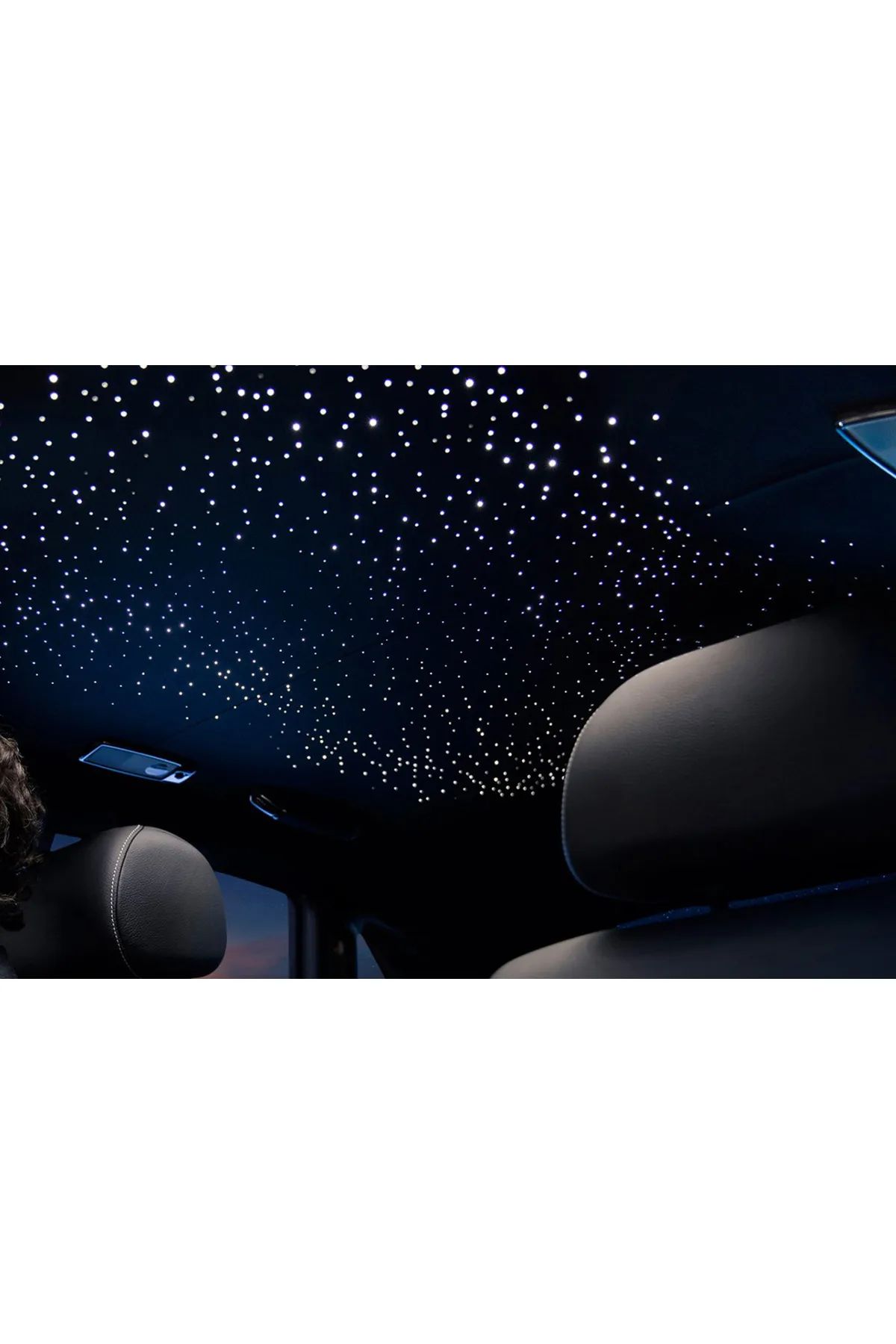
After a day spent at sea, the view that greets you when you retreat to your cabin can redefine luxury. This is where the starry ceiling application for yacht cabin ceilings comes into play. So, how is a starry ceiling applied to a yacht cabin ceiling? The year 2026 marks an era where this application is no longer just a decoration, but a component of marine engineering and personalized luxury. Therefore, this guide explains how this magical light, with its history stretching from royal yachts to today's private vessels, can be safely and skillfully brought into your own cabin. To explore our collection on how to apply a starry ceiling to a yacht cabin ceiling and seize the best opportunities, visit https://CoraxAds.com now.
Table of Contents
- Step 1: Comprehensive Planning and Design
- Step 2: Correct Material Selection and Technical Hardware
- Step 3: Professional Installation and Integration
- Step 4: Testing, Calibration, and Final Checks
- System Comparison Table
- Frequently Asked Questions
The First Step to Capturing the Stars: Planning and Design
Speaking from years of experience: success lies in the first step. For instance, you should start by understanding the structure of your cabin ceiling. Specifically, is it PVC, wood, or fiberglass? Each requires a different approach. However, if you don't meticulously map out hidden cables and ventilation ducts, you could face headaches later. In short, the real magic begins afterward. That is, the heart of the question how is a starry ceiling applied to a yacht cabin ceiling beats in translating your dream sky onto paper. How densely will the stars be placed? Also, should some be brighter? Perhaps you want to immortalize a favorite constellation. Therefore, life at sea complicates matters. Moreover, humidity and constant motion require much more foresight than land-based projects.
Things Not to Forget While Planning
Remember, a yacht is not a fixed home! Because of this, the fiber optik guides and that light source we call the illuminator must be mounted to withstand vibration and temperature fluctuations. Placing the light source in a relatively drier and cooler corner of the cabin (inside a cabinet or technical compartment) will extend its lifespan. However, energy consumption is always a critical issue for yachts. This is why modern LED illuminators are the smartest choice.
Step 2: Material Quality is the Soul of the Work
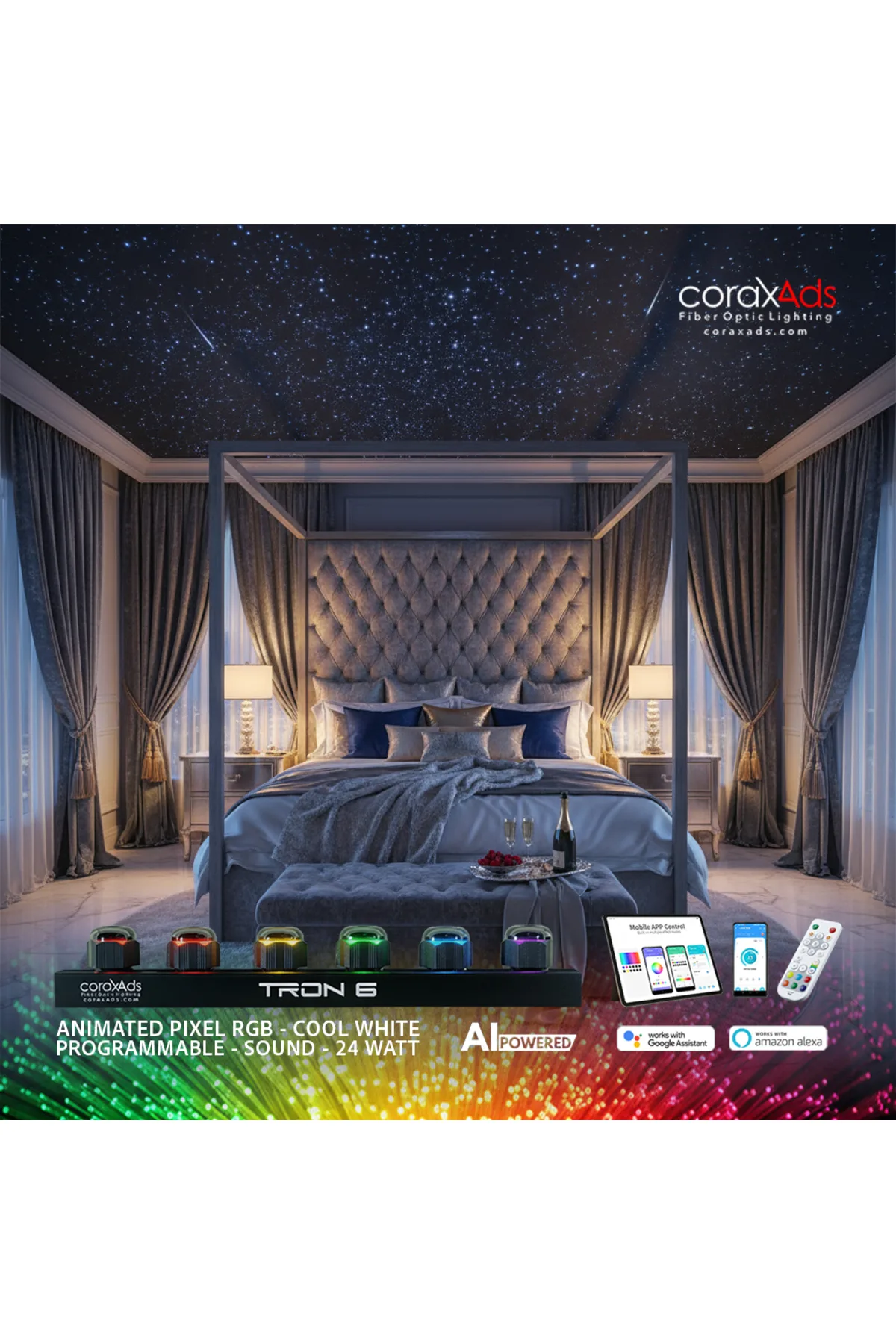
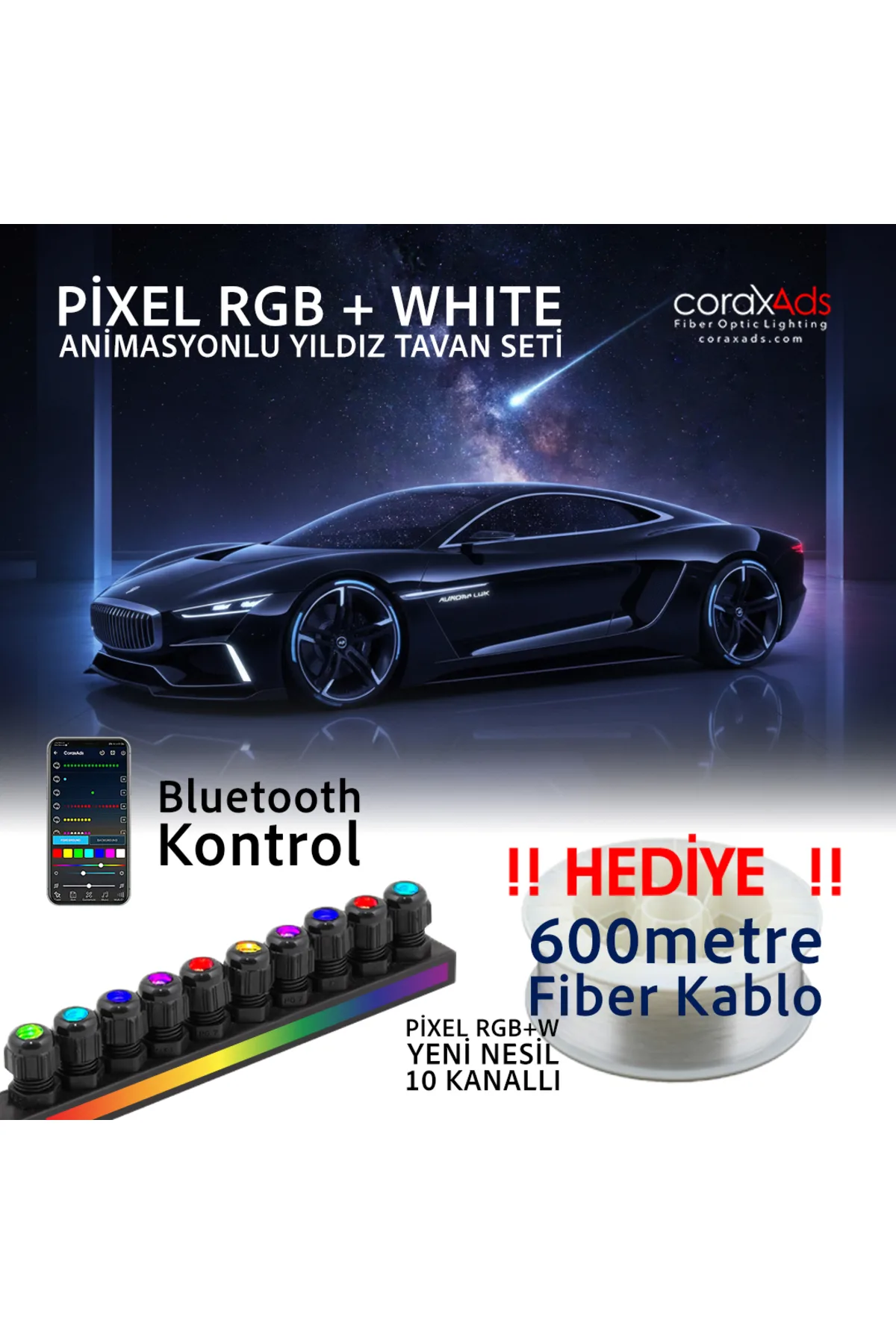
Quality is everything in this work. You cannot trust blindly. The market offers fiber optik strands from 0.75mm up to a thick 3mm and dozens of types of light engines. For the star effect, fibers with a diameter of 0.75 or 1 mm and flame-retardant sheathing generally deliver magnificent results. Furthermore, having a color-changing (RGB/RGBW) light source is the spice of the work. Indeed, instantly transforming your cabin's atmosphere from blue to warm white must be the true definition of luxury. Therefore, be sure to examine the fiber optik systems I frequently use in my own projects, which are both efficient and durable.
"Success in a yacht cabin lies in the unseen details. Moreover, just as important as the fiber optik distribution is the light source's silent operation and lack of heat generation, which directly affects comfort." - Marine Interior Decoration Expert
Installation: Transforming the Magic into Reality
Is the design approved? Indeed, now the real work begins. First, the ceiling lining is carefully removed or access is gained behind it. Then, the fiber optik strands are routed behind the ceiling liner, guided by the previously prepared template. Each delicate fiber is brought out through holes drilled with millimeter precision at pre-marked points. This is the most delicate part of the question how is a starry ceiling applied to a yacht cabin ceiling. The diameter and angle of the holes determine how the light spreads. The strands are meticulously secured to avoid being affected by vibration. After the final connections are made, the ceiling is closed back up as it was, leaving no trace. This process requires skill and is usually completed within 2-4 days.
Precautions Against the Harsh Conditions of the Sea
What is electronics' worst enemy? Salt and moisture! To protect against this duo, all connection points must be insulated to marine standards. When choosing a light source, you should also look for a high IP protection rating (at least IP44). On the other hand, UV-resistant fiber optik guides prevent color fading in a cabin exposed to sunlight.
Test Time: The Magic is Completed with Final Touches
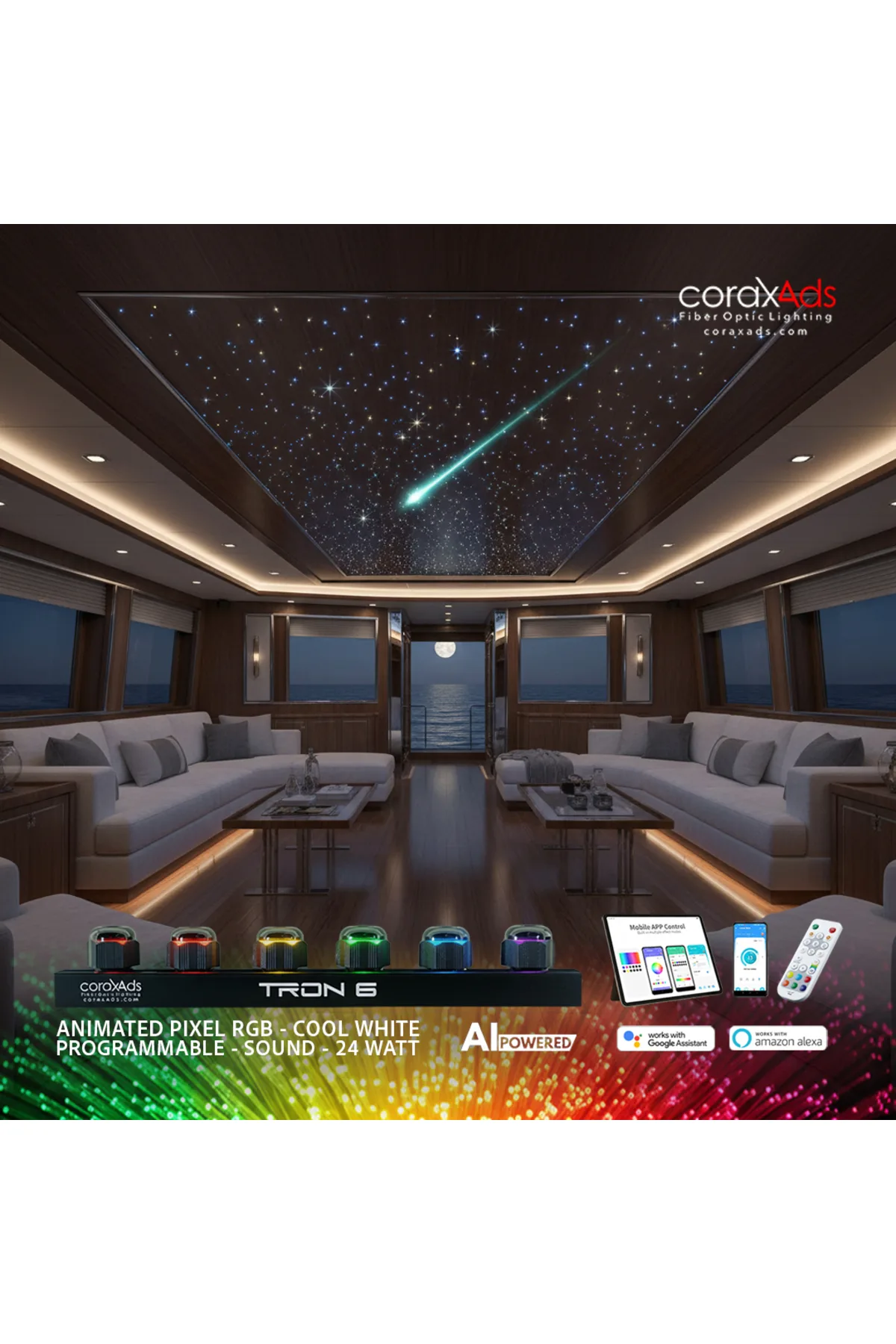
When everything is in place, it's time for testing. The system must be tested in a dark environment. Ensure every star lights up, color transitions are smooth, and the engine operates quietly. Fortunately, many systems can now be controlled via smartphone or remote control. Add a Milky Way effect if you wish, set the brightness to sleep mode. This is the most fun part! The customer sees the result and their eyes light up. You can check out our blog posts for starry ceiling design ideas.
Which One Suits You? System Comparison
| Feature / System Type | Standard LED Fiber System | RGB Smart Control System | Marine-Certified Professional System |
|---|---|---|---|
| Light Source (Illuminator) | Single Color (White/Blue) LED | RGB/RGBW LED, Smart Remote | IP67 Protection, Vibration-Resistant RGBW LED |
| Fiber Optik Diameter | 0.75 mm - 1 mm | 0.5 mm - 1.5 mm (Mixed) | 0.75 mm (Special Marine Coated) |
| Energy Consumption (Average) | 15-25 Watts | 20-40 Watts | 18-30 Watts |
| Application Lifespan | ~30,000 Hours | ~50,000 Hours | ~60,000 Hours |
| Marine Suitability | Limited (For inland waters) | Medium (Coastal cruising) | High (Open sea) |
| Recommended Use Area | Land-Based Fixed Structures | Luxury Yachts (Coastal) | Superyachts, Open Sea Boats |
What People Wonder: FAQs About Starry Ceilings
Does this system consume a lot of electricity?
Actually, the opposite is true! Today's LED fiber optik systems operate on an almost laughably low power of around 20-35 Watts on average. They are far from being an extra burden on your yacht's generator or batteries.
Will sea salt and moisture damage the lights?
Not if you choose the right equipment. Products manufactured for the marine environment with high IP protection and specially coated fibers should be used. In professional installation, all electronics are insulated and the light source is placed in a dry location.
Will my ceiling be permanently damaged?
Source: tr.wikipedia.org
Absolutely not. Knowledgeable teams carefully remove your existing ceiling lining (panel, leather, wood) and, once the work is done, reattach it with the same care, leaving no trace. The fibers pass through such fine holes that they are normally not even noticeable.
Can I change the color or brightness later?
Of course! If you install an RGB/RGBW LED and smart control system, you can easily adjust the brightness, color (blue, white, purple), and effects via remote control or your phone.
Is maintenance difficult and expensive?
It requires almost no maintenance because there are no moving mechanical parts. The LED source's lifespan reaches tens of thousands of hours. The only thing you need to do is check the light source's ventilation once a year. The cost is almost zero.
Final Word
Installing a starry ceiling in a yacht cabin is an art requiring both technical knowledge and fine craftsmanship. A solid plan, quality materials suitable for marine conditions, and installation by experts promise you a lifetime of magic. The five steps outlined here are the key to a project that appeals to both aesthetics and technique. Remember, your yacht is not just a vessel; it's your home at sea. Personalizing it elevates your experience to a golden level.
The sky of your dreams awaits you in your cabin! With over a decade of experience in the industry, Corax Ads offers the most suitable fiber optik solutions for your yacht. To explore our products, receive technical consultancy, or schedule a free project consultation, reach out to us via our contact page. The most magical way to add value to your home at sea is right here! Check it out now.