What is the brightness difference between Power Pixel LED and normal LED? The answer lies in a typically 3 to 4 times higher luminous intensity (candela) compared to normal LED. However, behind this immense difference are larger LED chips, high-current drivers, and superior cooling technology. Consequently, as we see in the field, this technological advantage translates to a light range exceeding 25 meters in fiber optik lighting and eye-catching visibility even under strong ambient light.
Contents
Imagine a dazzling starry ceiling or a mesmerizing pool lighting. Moreover, did you know that your most crucial decision when turning this dream into reality is how bright the light source is? Furthermore, what is the brightness difference between Power Pixel LED and normal LED? The answer to this question determines the fate of your project. With technology advancing at a dizzying pace in 2026, an up-to-date and in-depth guide is essential for making the right choice. In this article, drawing on over 10 years of industry experience, I will explain this difference in the finest detail, sharing not only theoretical knowledge but also the results I have witnessed in the field.
- Lumens or Candela? The Correct Metric for Fiber Optik Lighting
- Measurement Standards Brought by 2026 Technology
- Brightness-Focused Purchase Guide: What to Look For?
Frankly, the answer to this question is not hidden in a single number. The difference stems from the design philosophy at the core of the technology. Power Pixel LED, as the name implies, means "power"; it uses larger LED chips, special driver circuits that manage high current efficiently and safely, and superior cooling solutions. In contrast, normal LEDs are typically produced with standard, low-cost components and focus more on general lighting. This creates a fundamental gap in brightness and performance between two products of the same physical size. However, to grasp this difference, we must first clarify the basic concepts.
- Lumens per Watt: A Real Efficiency Comparison
- Long-Term Cost and Maintenance Analysis (2026)
- Maintenance Tips: Extending System Lifespan
So what is brightness? Brightness is the amount of light perceived by our eyes. On the technical side, it is measured in lumens (total light output) or candela (light intensity in a specific direction). In fiber optik lighting, the secret lies in the candela value. Power Pixel LEDs, thanks to their high candela values, reach much longer distances than normal LEDs and create bright spots that challenge ambient light.
- Projects Requiring High Brightness: Pool, Exterior Facade, Commercial Spaces
- For Calmer Atmospheres: Bedroom, Small Living Areas
- Trend Analysis: Brightness Expectations for 2026 and Beyond
Brightness is a concept we frequently use in daily life but must be carefully defined in technical terms. The "brightness" we perceive with our eyes is directly related to the light source's total light output (lumens) and how concentrated this light is in a specific direction (candela). In short, Power Pixel LEDs can focus light into fiber optik cables like a laser, thanks to their high candela values. This sharp focusing ensures that the light exiting the fiber ends is more vibrant, has longer range, and is more resistant to other light sources. Essentially, the light travels without loss.
- The Evolution of the 'Power' Concept in Technology
- Light and Power: The Social Symbolism of Lighting
What is Power Pixel's technological superiority? The 'power' in Power Pixel LEDs comes from larger LED chips, high-current driver circuits, and advanced cooling solutions. This robust infrastructure allows each LED channel to operate independently and at full capacity. The result? Compared to normal LEDs, it delivers exponentially higher brightness, rich color saturation, and instant response times.
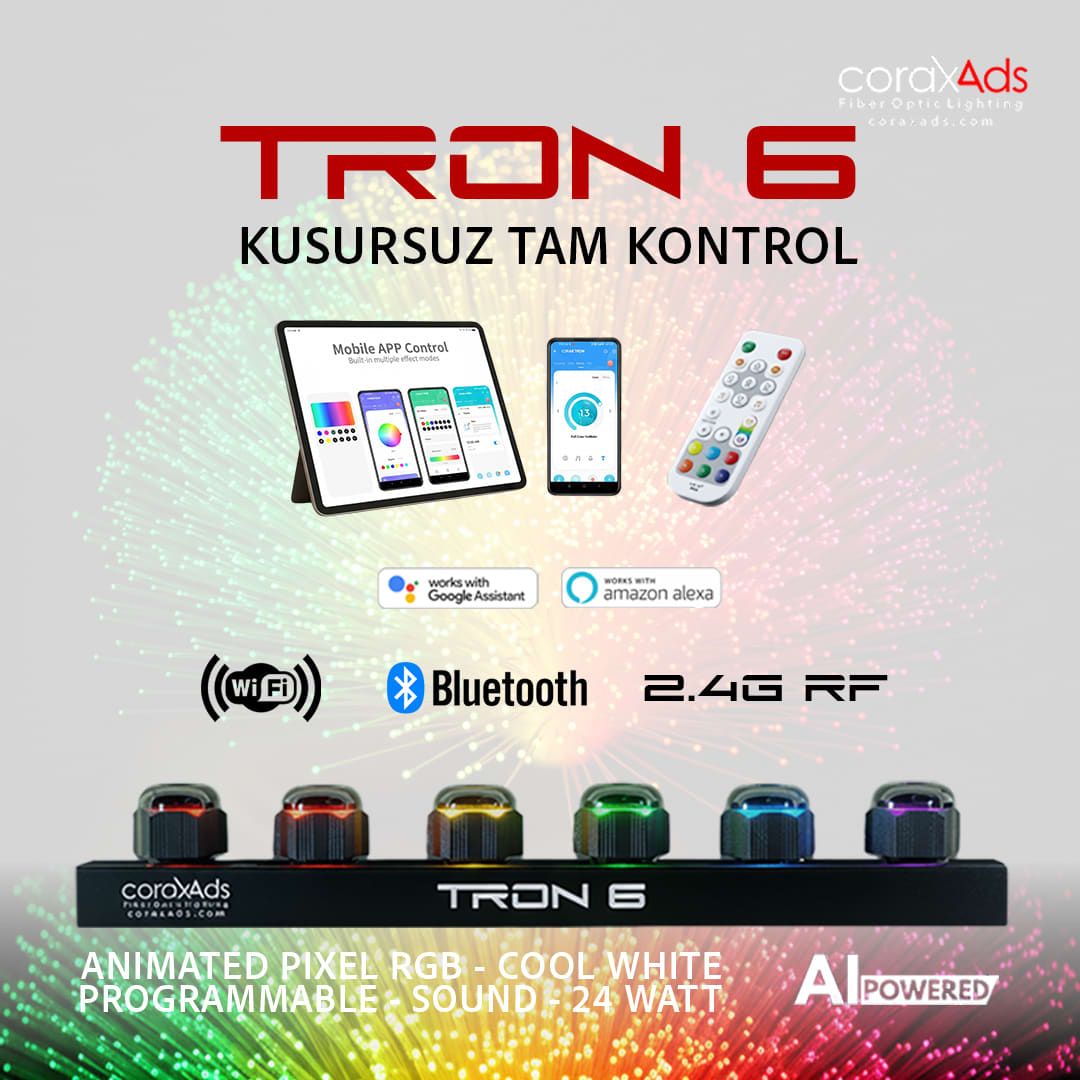
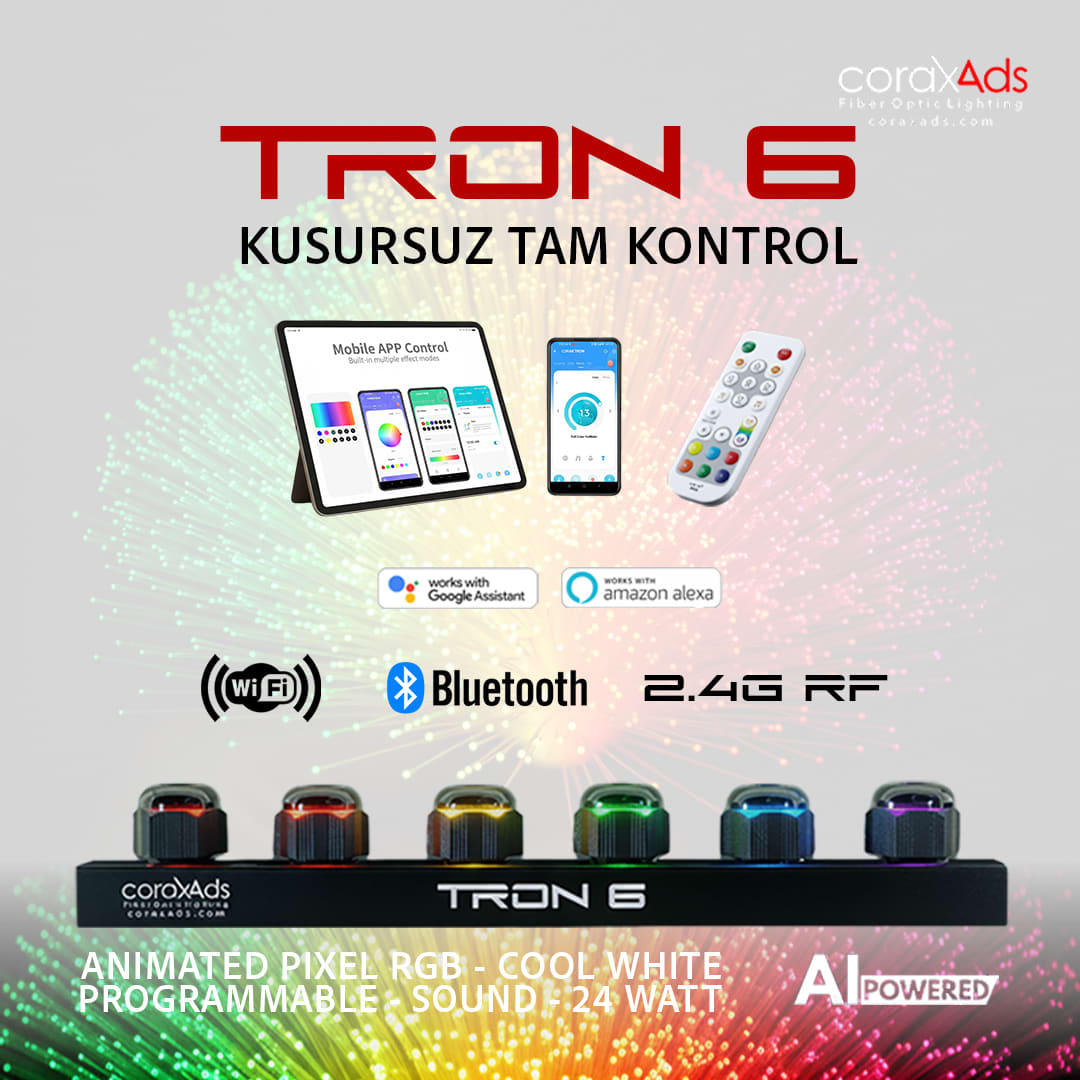
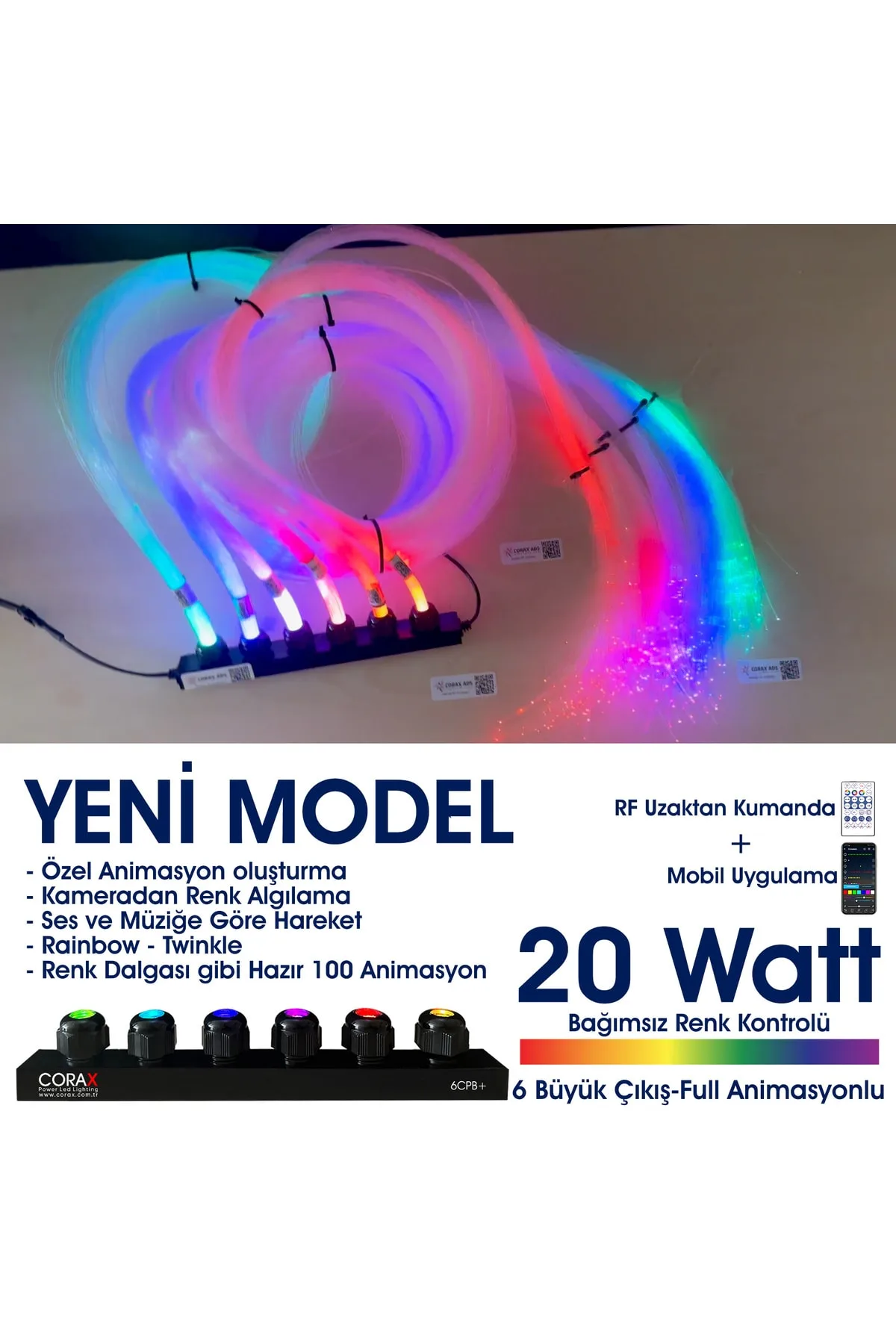
The word 'power' here refers not just to electricity consumption but to "light power." For example, if you look at our in-depth review of the TRON 6 light source, you'll see that each channel can be driven independently and at high current. This guarantees that each fiber optik tip reaches maximum brightness. The situation is different with a normal LED light source; manufacturers typically divide the power among many low-power LED chips. The result is widespread but faint lighting. In fact, this technological foundation determines not only brightness but also color vibrancy and effect speed.
What is Brightness and How is it Measured?
What is the brightness difference in a 2026 product comparison? Looking at the 2026 market, an advanced Power Pixel source (e.g., TRON 6) can drive up to 2A on a single output and easily surpass the 1000 candela barrier. Many normal LED sources in the same price range operate with a fixed, shared current and remain around 300 candela per output. The numbers are clear: Power Pixel offers up to 3 times higher light intensity.
Power Pixel's Technological Superiority: Where Does the 'Power' Come From?
For those asking about the brightness difference between Power Pixel LED and normal LED in 2026, concrete examples are best. Suppose you are using a Power Pixel source like TRON 6. With its 6 independent channels, it can drive each fiber output up to 2A. In contrast, many normal LED sources within the same budget offer 9 or 12 outputs sharing a fixed total current. The result? The Power Pixel product provides a much stronger light intensity on a single output. When choosing a product, don't just focus on the number of outputs; be sure to check whether each output can be controlled independently and its maximum current values.
"In 2026, lighting is no longer just for 'seeing' but for 'feeling and influencing.' Power Pixel technology offers the designer the most fundamental tool to create this emotional impact: controlled and powerful brightness." - CoraxAds Technical Consultant
Current Product Comparison Guide (2026)
How is the brightness difference between Power Pixel and normal LED measured? The key to a correct comparison is luminous intensity, i.e., candela (cd), the fundamental metric in fiber optik lighting. Power Pixel LEDs can achieve much higher candela values, like 400-1200 cd in the same physical size, compared to normal LEDs. This means light travels with less loss within the fiber and emerges with dazzling brightness at the end.
What is the brightness difference between Power Pixel LED and normal LED? Measurement and Metrics
To make a proper comparison, you must focus on the correct metrics. Unfortunately, many manufacturers only highlight lumen values. However, in fiber optik lighting, the real determinants are the distance light travels within the fiber and its visibility at the tip. This is exactly where the candela (cd) value comes into play. These technical terms can sometimes be confusing for end-users. Therefore, simplifying the basic criteria you need to understand during the purchase process is very important.
Lumens or Candela? The Correct Metric for Fiber Optik Lighting
Lumens or candela? The correct metric in fiber optik lighting is candela. Lumens refers to the total luminous flux the source scatters in all directions. Candela is the luminous intensity in a specific direction and shows how effectively light enters the fiber cable. You can find more technical information about the candela unit. Power Pixel LEDs can achieve much higher candela values compared to normal LEDs. For instance, a quality Power Pixel source can exceed 1000 candela on a single output, while a normal LED source of similar size remains around 300 candela. The gap lies here.
Measurement Standards Brought by 2026 Technology
How is brightness measured in 2026? 2026 technology highlights brand-new measurement criteria like "Maximum Fiber Light Output (MFLU)." This metric is the candela value measured at the tip of a specific fiber diameter and provides the most meaningful data for your project. These values are now clearly stated in the technical documentation of advanced Power Pixel products.
Brightness-Focused Purchase Guide: What to Look For?
High-end products now feature new measurement criteria like "maximum fiber light output (MFLU)." This measurement gives the candela value read at the tip of a fiber of a specific diameter and is the most realistic data for your project. In 2026, accessing such specific information makes the right product selection incredibly easy. Moreover, some manufacturers now share MFLU values for different fiber diameters in their catalogs. Therefore, I strongly recommend looking for this information in the technical documents before selecting a product.
What is the brightness difference between Power Pixel LED and normal LED? Energy Efficiency Analysis
What should be considered in a brightness-focused purchase? Add four key points to your checklist during the purchase process: 1) Luminous intensity (candela) value in the technical datasheet, 2) Sample brightness values according to the fiber diameter you will use, 3) Energy efficiency (lumens/watt ratio), 4) Independent color and brightness control capabilities. These criteria reveal the real performance difference between Power Pixel and normal LED.
Lumens per Watt: A Real Efficiency Comparison
Therefore, if you want to concretize the question of what the brightness difference between Power Pixel LED and normal LED is for your project, add the following points to your checklist during the purchase process: First, ask for the "luminous intensity (candela)" value in the technical datasheet. Second, determine the diameter of the fiber optik cable you will use (e.g., 0.75mm, 1.5mm) and request sample brightness values for that diameter from the manufacturer. Third, look at energy efficiency; a high lumens/watt ratio means long-term electricity savings. Finally, evaluate color control capabilities; a true Power Pixel system allows you to independently control the color and brightness of each output. All these features determine the final brightness performance and usage flexibility.
| Characteristic | Power Pixel LED (e.g., TRON 6) | Standard Normal LED Light Source |
|---|---|---|
| Average Luminous Intensity (Candela) | Very High (400-1200 cd*) | Low - Medium (50-300 cd*) |
| Efficiency (Lumens/Watt) | High (95-110 lm/W) | Medium (70-85 lm/W) |
| Light Range in Fiber | 25+ meters (in 0.75mm fiber) | 10-15 meters (in 0.75mm fiber) |
| Color & Effect Control | Full, independent channel control | Limited, usually fixed white or simple transitions |
| Lifespan (L70 - at 70% brightness) | 50,000+ hours | 25,000 - 35,000 hours |
| *Values may vary depending on fiber diameter and model. |
Long-Term Cost and Maintenance Analysis (2026)
Are Power Pixel LEDs energy efficient? Absolutely yes. High-quality Power Pixel LEDs can operate more efficiently than normal LEDs despite the tremendous brightness they offer. Power Pixel systems typically achieve 95-110 lumens/watt efficiency, while standard LED sources remain in the 70-85 lumens/watt range. This means they are approximately 25-35% more efficient and lead to a significant reduction in your electricity bill in the long run.
Maintenance Tips: Extending System Lifespan
Brightness alone is not enough; how efficiently you achieve that brightness is also critical. This is where the "lumens/watt" ratio comes in. Contrary to common belief, Power Pixel LED systems can exhibit surprising efficiency despite their high performance. However, this efficiency advantage may not be the same for every product. Therefore, when making an energy efficiency comparison, it is necessary to focus not only on the product type but also on the quality of the components used.
What is the brightness difference between Power Pixel LED and normal LED? In Which Applications is it Decisive?
What is the lumens per watt comparison? Efficiency depends on LED chip quality and driver design. High-quality Power Pixel LEDs can reach 95-110 lumens per watt, while many standard LED light sources on the market are in the 70-85 lumens/watt range. This 25-35% efficiency difference shows that Power Pixel can produce much more light with the same electricity consumption.
Projects Requiring High Brightness: Pool, Exterior Facade, Commercial Spaces
Efficiency is directly related to the quality of the LED chip used and the intelligent design of the driver electronics. High-quality Power Pixel LEDs can achieve values like 95-110 lumens per watt, while many standard LED light sources on the market remain in the 70-85 lumens/watt band. This can mean an efficiency advantage of approximately 25% to 35%. Of course, this superior efficiency comes with a higher initial investment cost. On the other hand, unfortunately, there are also low-quality, economical Power Pixel replicas on the market, and their efficiency can be low. Therefore, working with a reliable supplier is very important.
- High ambient light: A pool, display window, or office lobby receiving daylight.
- Long fiber distances: Situations where light needs to travel more than 15 meters.
- Impact-focused design: Eye-catching, artistic, or advertising-oriented installations.
- High ceilings: Places like cathedral ceilings where light needs to travel a long distance to reach the floor.
What is long-term cost analysis? The longer lifespan of Power Pixel LED (50,000+ hours), lower maintenance needs, and high efficiency usually offset the initial investment cost. It reduces maintenance costs, especially in hard-to-reach applications, and can provide 20-30% annual savings on electricity bills. The total cost of ownership (TCO) can be lower.
For Calmer Atmospheres: Bedroom, Small Living Areas
The initial cost alone can be misleading. The longer lifespan of Power Pixel LED (50,000+ hours) and its lower maintenance requirements lead to significant savings, especially in applications like hard-to-reach ceilings or underwater pool lighting. Since the coverage area of a 6-output ARGB Power Pixel is very wide, larger areas can be illuminated with fewer sources, reducing installation and equipment costs. Additionally, high efficiency can mean annual savings of up to 20-30% on electricity bills. Moreover, when calculating the total cost of ownership (TCO), you should consider these long-term factors rather than just the initial purchase price.
Trend Analysis: Brightness Expectations for 2026 and Beyond
How do you maintain Power Pixel LED? To extend the system lifespan, do not restrict airflow, perform regular dust cleaning, check fiber tips for bending and pinching, and ensure connection connectors remain clean and dry. These simple measures help the Power Pixel system complete its 50,000-hour lifespan without issues.
What is the brightness difference between Power Pixel LED and normal LED and Why is it Called 'Power'?
Whichever LED type you choose, you can maximize its lifespan with proper maintenance. Power Pixel LED systems usually have better cooling solutions, but still ensure airflow is not restricted. Dust accumulation can cause LED chips to overheat and lose brightness. Regularly clean dust with light compressed air. Also, regularly check fiber optik tips; ensure there is no bending or pinching. Keeping connection connectors clean and dry also prevents electrical issues. These simple measures will ensure your system completes its 50,000-hour lifespan smoothly.
The Evolution of the 'Power' Concept in Technology
In which applications is the brightness difference decisive? The superior brightness of Power Pixel LED is critically important in situations with high ambient light (sunny pools, display windows), long fiber distances (15+ meters), impact-focused designs (artistic installations), and high ceilings. For calmer, personal spaces, normal LED may be sufficient.
Frequently Asked Questions About Power Pixel LED
What is the brightness difference between Power Pixel LED and normal LED, can it be expressed numerically?
Yes, a numerical comparison is possible. A high-quality Power Pixel LED strip can reach very high values like 5000 to 10,000 lumens per meter, while the brightness of a standard decorative LED strip is usually in the range of 800-1500 lumens per meter. This means a brightness superiority of 5 to 10 times for Power Pixel. But remember, the real difference is not just in these numbers, but in the ability to use this high brightness independently and with full control at each LED point.
Does such high brightness increase energy consumption proportionally?
No, not necessarily proportionally. The efficiency (lm/W) of modern Power Pixel LEDs is much higher compared to traditional LEDs. So, they work more efficiently per unit of power while producing more light. In your project, you won't use all LEDs at full white brightness continuously. Thanks to dynamic and controlled use, it is possible to optimize overall energy consumption by illuminating only the needed areas.
What applications can I do with Power Pixel LED that I cannot do with normal LEDs?
Power Pixel LEDs are indispensable for moving and interactive light scenarios. For example, a flowing water effect on a wall, a shooting star effect running across a ceiling, or a real-time light show synchronized with a music system are not possible with normal LEDs. Furthermore, professional applications like large-scale, high-resolution media facades or highlighting complex architectural details can only be realized with independently controllable powerful pixels.
Are Power Pixel LED systems more difficult to install and control?
While installation principles are similar, control systems are more advanced. Now, user-friendly interfaces and ready-made controllers have greatly reduced this complexity. With proper planning and professional consultancy, the technical details are handled while you focus solely on the creative process. At CoraxAds.com, we guide you through every stage of your project and offer solution packages that simplify installation.
Is the cost difference very large? Is Power Pixel LED investment worth it?
The initial investment cost is higher compared to standard LED solutions. But here you should think of it not as a "cost" but as an "investment." Considering the flexibility you gain, the impact you can create, and technological durability for the future, Power Pixel LED investment is definitely worthwhile, especially for a permanent and impressive decoration or commercial project. In the long run, the artistic and functional possibilities it offers far outweigh the initial price difference.
This difference is not equally important in every project. To be honest, analyzing your needs well helps you avoid unnecessary costs. On the other hand, in some applications, this difference determines the line between the project's success and failure. Therefore, carefully evaluating the following criteria will be beneficial.
Conclusion and Evaluation
Which projects require Power Pixel? Power Pixel LED is almost mandatory for projects with high ambient light, long fiber distances (15m+), impact-focused design, and high ceilings. These criteria cover pool, exterior facade, commercial space, and advertising lighting. Normal LEDs are insufficient under these conditions.
Your Next Step
If your project meets one of the following criteria, choosing Power Pixel LED is almost mandatory:
- High ambient light: A pool, display window, or office lobby receiving daylight.
- Long fiber distances: Situations where light needs to travel more than 15 meters.
- Impact-focused design: Eye-catching, artistic, or advertising-oriented installations.
- High ceilings: Places like cathedral ceilings where light needs to travel a long distance to reach the floor.
In these cases, your expectation from normal LED should not be disappointment. For example, in a sunny pool, Power Pixel LEDs will make the underwater light visibly prominent, while normal LEDs will appear faint.
In which applications is normal LED sufficient? For dimmer, intimate, and personal spaces (bedroom, small living areas, home theater), normal LED light sources generally provide a sufficient and economical solution. However, if daytime effect is also desired, Power Pixel's extra brightness provides an advantage.
Normal LED light sources can offer a sufficient and economical solution for dimmer, intimate, and personal spaces. Although among the ideal application areas for a 3-output Power Pixel are a small child's room starry ceiling or dim lighting in a home theater room, normal LED may be preferred for budget-focused projects. Fortunately, the variety in the consumer market makes this choice easier. However, even in these areas, if you want the "starry" effect to be visible during the daytime, Power Pixel's extra brightness will be beneficial.
What are the brightness trends in 2026? In 2026, demand for smart home integration and dynamic brightness control is increasing. New generation Power Pixel systems come with sensors that can automatically adjust brightness according to ambient light or user scenarios. This trend increases the importance of Power Pixel solutions offering a wide brightness range and precise control.
In 2026, demand for smart home integration and personalized lighting scenarios is increasing. Additionally, the question of what the brightness difference is between Power Pixel LED and normal LED is now addressed not only in the context of a static brightness level but also dynamic brightness control. New generation Power Pixel systems come with sensors and software that can automatically adjust brightness according to the time of day, natural light entering the room, or the type of movie being watched. This trend will become even more widespread in the coming years. Therefore, for your investment today to be compatible with these future smart features, considering Power Pixel solutions that offer a wide brightness range and precise control would be a foresighted move.
Why is it called 'Power'? The word 'Power' symbolizes not the electrical power consumption of this LED technology, but the 'light power', 'control power', and 'artistic expression power' it provides. Power Pixel LED offers much higher brightness, color control, and dynamic effect capacity than normal LED, giving the user unlimited design freedom.
The word 'Power' carries a multi-layered meaning here. While technically it indicates electrical power, it actually symbolizes artistic expression power, control power, and ultimately the power of emotional impact it creates. Indeed, this naming gives a clear message to the consumer about the product's capacity. Additionally, understanding the technological evolution underlying this powerful performance is important.
In technology, power has historically evolved as the "capacity to do more." Power Pixel LED is a product of the same evolution: the capacity to produce more brightness, more color control, more dynamic effects. This gives the user unlimited design freedom. Moreover, vibrant color transitions in party mode, a faint Milky Way effect in calm mode... All these scenarios are possible with a powerful and controlled light source. What is the brightness difference between Power Pixel LED and normal LED? Visit https://CoraxAds.com immediately to explore our collection and catch the best offers.
What is the brightness difference between Power Pixel LED and normal LED, can it be expressed numerically?
Answer: Yes, a high-quality Power Pixel LED strip can reach 5000-10,000 lumens per meter, while a standard decorative LED strip is in the 800-1500 lumens/meter range. This means a brightness superiority of 5 to 10 times for Power Pixel.
Does such high brightness increase energy consumption proportionally?
Answer: No, not necessarily proportionally. The efficiency (lm/W) of modern Power Pixel LEDs is higher compared to traditional LEDs. Thanks to dynamic and controlled use, it is possible to optimize overall energy consumption by illuminating only the needed areas.
What applications can I do with Power Pixel LED that I cannot do with normal LEDs?
Answer: Power Pixel LEDs are indispensable for moving and interactive light scenarios (flowing water effect, shooting star, music synchronization) and professional applications like high-resolution media facades.
Are Power Pixel LED systems more difficult to install and control?
Answer: While installation principles are similar, control systems are more advanced. Moreover, user-friendly interfaces and ready-made controllers have greatly reduced this complexity. With proper planning and professional consultancy, technical details are handled.
Is the cost difference very large? Is Power Pixel LED investment worth it?
Answer: The initial investment cost is higher, but it should be evaluated as an "investment." The flexibility, impact, long lifespan, and energy efficiency it offers far outweigh this difference, especially for permanent and impressive projects.
In conclusion, what is the brightness difference? The brightness difference between Power Pixel LED and normal LED is not just a numerical superiority but a technological revolution. Power Pixel transforms light from a static element into a controlled, dynamic, and emotionally expressive living medium. Over a decade of industry experience shows that using the right technology in the right project is decisive in the quality of the final outcome. What is the brightness difference between Power Pixel LED and normal LED? Visit https://CoraxAds.com immediately to explore our collection and catch the best offers.