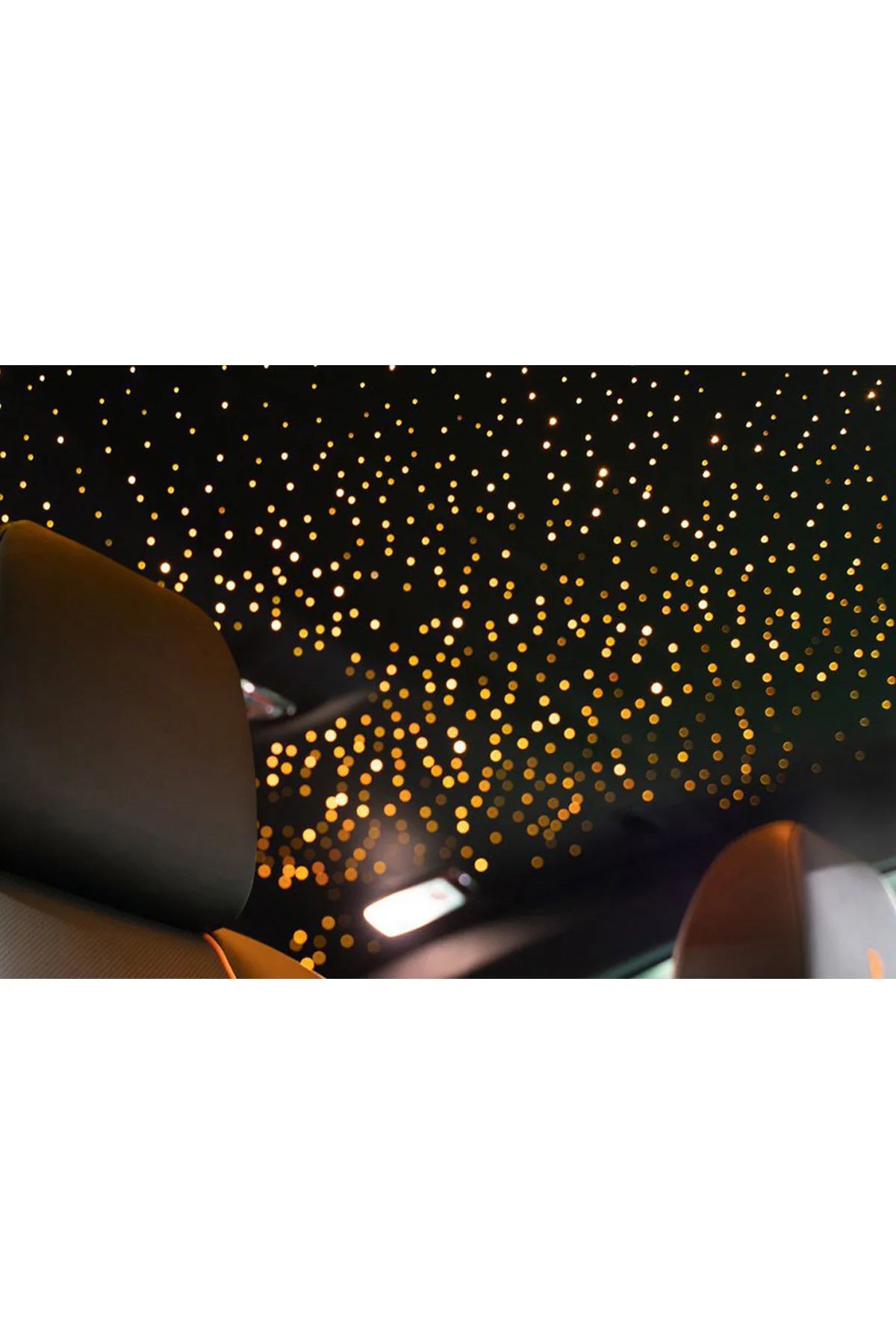
Last month, the owner of a newly opened boutique café, roughly 35 square meters in size, called me. "We want a cozy yet enchanting starry sky on our ceiling," they said excitedly, "but we don't know what to choose; the options have us confused." This dialogue perfectly encapsulates the dilemma at the heart of the question: 'Which light source should be chosen for a medium-sized star ceiling project?'. Therefore, we need to find a solution that isn't overly complex, doesn't strain the budget, yet is still impressive and reliable. My over ten years of industry experience show that projects of this scale are the most frequently encountered and enjoyable applications. On the other hand, the right choice adds a truly magical touch to the space.
Contents
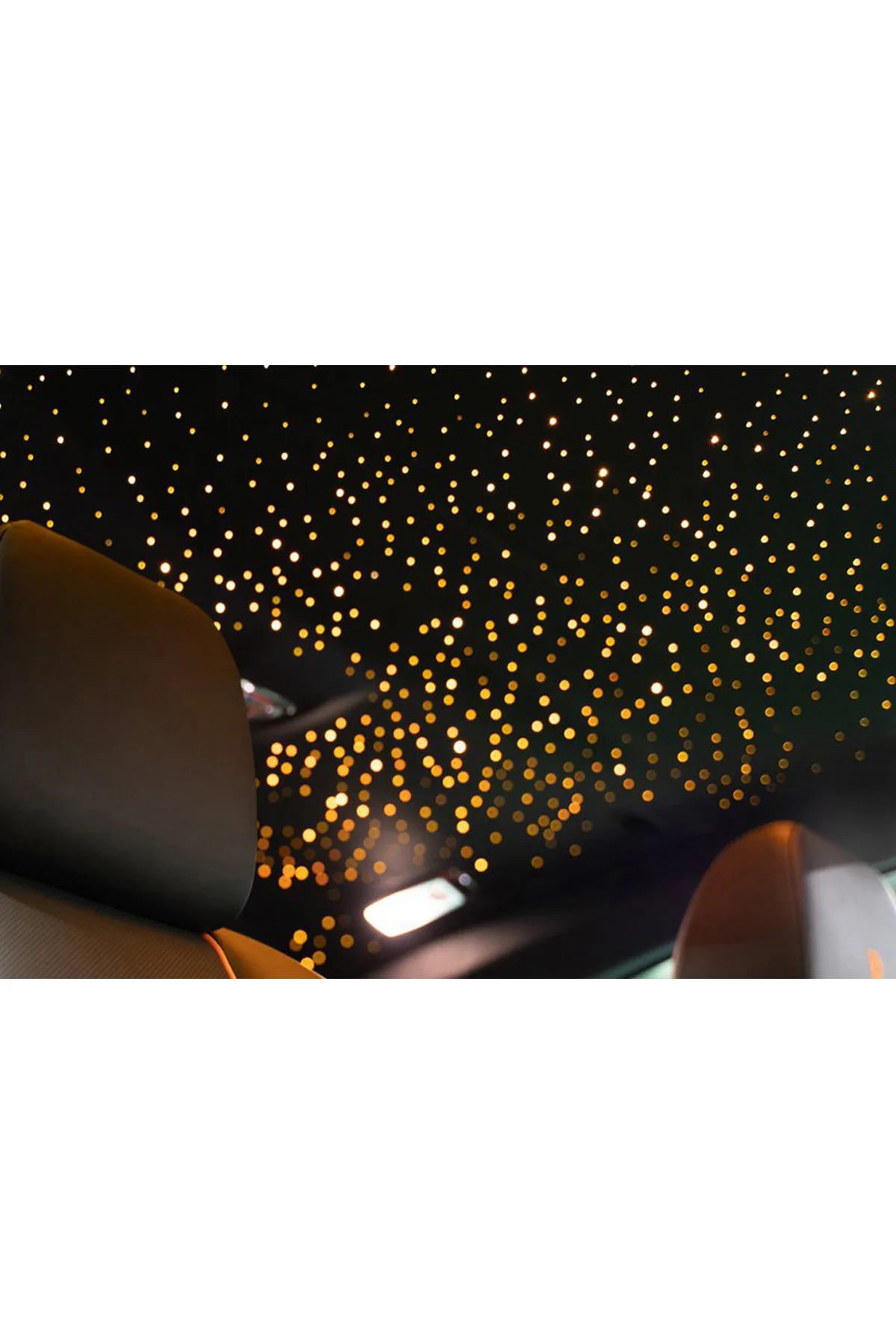
- Which Light Source Should Be Chosen for a Medium-Sized Star Ceiling Project? The Basic Decision Matrix
- Area and Density for a Medium-Sized Star Ceiling Project: 2026 Standards
- Light Source Technical Specifications for a Medium-Sized Star Ceiling Project: Power, Output, and Control
- 2026's Most Preferred Ready Sets for Medium-Sized Star Ceiling Projects
- The Cultural and Decorative Meaning of 'Medium' in Medium-Scale Projects: Not Just Numbers, but Ambiance
- Frequently Asked Questions (FAQ)
Which Light Source Should Be Chosen for a Medium-Sized Star Ceiling Project? The Basic Decision Matrix
Getting to the heart of the matter, in 2026, two main technologies stand out for medium-scale projects: Fiber Optik Systems and Direct LED Applications. So which one is for you? This actually depends on the soul of your project and its practical requirements. To put it simply, if you want flexibility, safety (light points away from heat and electricity), and a variety of realistic star effects, fiber optik systems are unquestionably ahead. Additionally, certain LED strip or point LED solutions can be considered for those seeking a more direct and relatively simpler installation.
Advantages of Fiber Optik Light Sources in Medium-Scale Projects
Fiber optik lighting carries light from a single powerful source (light engine/projector) to hundreds of points via thin fiber cables. For a medium-sized project, this offers perfect efficiency. Why?
- Centralized Control: You manage the brightness, color, and effect of all your stars from a single point. According to 2026 trends, 65% of users cite centralized and smart control as their primary reason for preference.
- Safety and Cold Light: There is no electricity at the fiber ends, and heat generation is minimal. This is a critical advantage, especially for children's rooms or spaces with wooden ceilings.
- Effect Richness: The twinkle effect appears much more natural and convincing in fiber optik systems compared to LEDs.
A rotating disk inside the light engine creates this effect physically.
However, installing these systems may require a somewhat more professional touch and planning for cable distribution. You can access details of the working principle via the link: How does a fiber optik light source work?.
LED-Based Alternatives: When Should They Be Considered?
Using LED strips or mini spots to create a star appearance directly on the ceiling can be tempting, especially for "DIY" projects with limited budget and time. But remember this: Each LED point requires its own separate electrical connection and voltage reducer. In a medium-scale project, 500 LED points could mean 500 connections, which increases the risk of failure and installation complexity. On the other hand, while evolving "pixel LED" technologies in 2026 offer partial solutions in this regard, they still lag behind fiber optik in terms of effect and naturalness. Therefore, LED solutions are more suitable for minimalist decorations where star density is low, such as in single-output module usage areas.
| Feature | Fiber Optik Light System | Direct LED System |
|---|---|---|
| Initial Installation Cost | Medium-High | Low-Medium |
| Long-Term Maintenance | Very Easy (Only the engine) | Difficult (Each point must be checked) |
| Effect Realism (Twinkle) | Excellent | Limited / Digital |
| Heat & Electrical Safety | Very High | Medium (Heating may occur) |
| Best Use Area | Bedroom, Living Room, Restaurant, Café, Spa | Hallway, Bar, Minimalist Decoration |
"In a medium-sized project, your goal is not just to illuminate, but to create an emotion. Fiber optik offers you the broadest palette to shape that emotion. LED is more like a sketch."
Area and Density for a Medium-Sized Star Ceiling Project: 2026 Standards
Although 'medium size' may seem like a relative concept, the industry's common consensus in 2026 has given this definition clear boundaries. In fact, this definition is related not only to area but also to the visual effect desired.
Critical Density Calculations for Areas Between 10-50 m²
The general consensus is that projects with a ceiling area between 10 and 50 square meters and featuring 200 to 1000 star points are considered medium-sized. The real determinant is the number of stars per square meter, i.e., density. For example, a density of 8-12 stars/m² is recommended for an intimate and romantic atmosphere, while 15-25 stars/m² is suggested for a denser, more impressive sky.
Let's do a simple calculation: You have a 30 m² living room and want a medium-density sky (12 stars/m²). You need 30 x 12 = 360 stars. This brings us to the lower-middle limit of medium size and directly affects the light source choice.
Lumen Values Per Light Point
How bright each fiber end or LED will be is directly proportional to the power of the light engine you choose and the fiber thickness. In a medium-sized project, a value between 0.5 and 2 lumens per star provides ideal brightness in a dark room. Moreover, higher lumens can make the star appear like a "point spotlight" and ruin the natural look. Therefore, choosing an engine with an appropriate number of outputs for balanced distribution is smarter than opting for a more powerful engine.
Light Source Technical Specifications for a Medium-Sized Star Ceiling Project: Power, Output, and Control
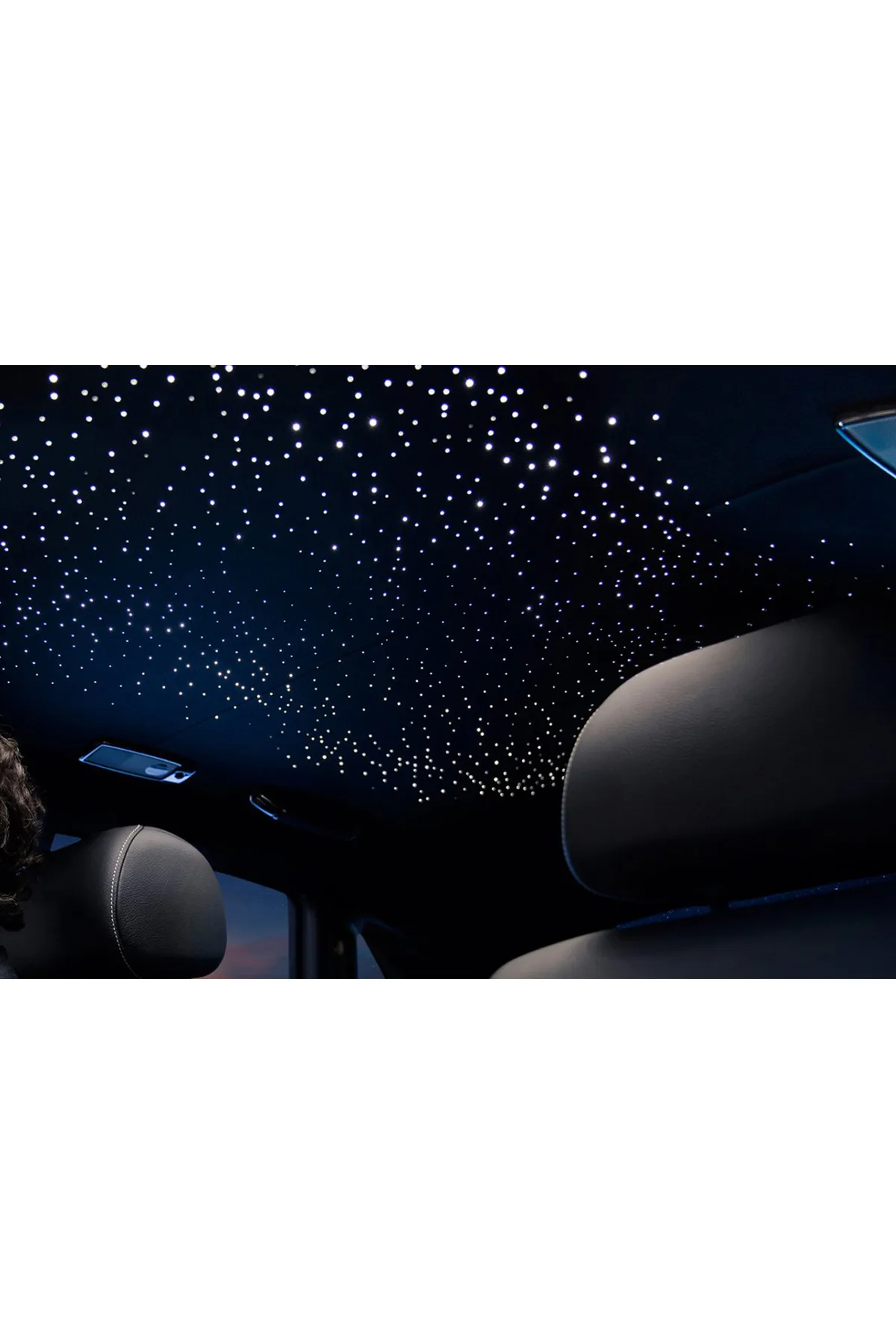
After understanding the size of your project, it's time to translate this information into technical choices. At this stage, you should focus on three basic components: Light Engine Power, Number of Outputs, and Color/Control Options.
Light Engine (Projector) Power Selection: 50W or 100W?
The answer to this question lies in how many stars you want to illuminate and how brightly. As a practical rule:
- 50W Engine: Sufficient to illuminate 400-500 standard (0.75mm) fibers at medium brightness. Ideal for areas of 20-25 m².
- 100W Engine: Comfortably powers 800-1000 fibers or allows you to operate fewer fibers at maximum brightness. Essential for medium-upper segment projects of 30-50 m².
Attention! Engine power refers more to light output capacity than energy consumption. According to 2026 data, a 72% majority in medium-scale projects prefer a 100W engine for the possibility of adding effects in the future.
Number of Outputs (Ports) and Use of Distributors
The number of main ports coming from the light engine (usually 1 or 2) can be multiplied using a distributor (manifold). For example, by connecting an 8-way distributor to the output of a 1-output 100W engine, you can control 8 separate fiber bundles. This allows you to create different effects in different zones. While module selection for large star ceiling projects is different, 8-12 outputs for medium scale provide excellent flexibility and redundancy.
What Does Single Color, RGB, or RGB+W Choice Mean in 2026?
This choice determines the mood of your project.
- Single Color (e.g., Warm White): For a classic, peaceful, and permanent atmosphere. The most common and economical option.
- RGB (Red, Green, Blue): Millions of color options and dynamic color transitions. Ideal for party areas or children's rooms.
- RGB+W (RGB + White): The most popular choice in 2026. Offers the luxury of switching to pure, bright white light when needed. Both colorful fun and calm white atmosphere in a single source.
In summary, the technical choice for a medium-sized project can be summarized with this formula: (Area m² x Density) = Total Stars → Number of Stars + Desired Effect = Engine Power & Color Option.
2026's Most Preferred Ready Sets for Medium-Sized Star Ceiling Projects
If you don't want to deal with technical details, ready sets pre-adapted to your needs will be your savior. Here are the two most in-demand set categories for medium-scale projects in 2026:
Economical and Practical Solution: 'Quick' and 'EKO Pro' Sets
These sets typically include a 50W single-color (warm white) or fixed-color light engine, a pre-cut specific number of fibers, and necessary accessories. For example, a package called "Quick 400 Set" offers 400 stars and a twinkle effect for an area of 20-25 m². Installation is extremely fast, making it ideal especially for home users. In short, it is also frequently preferred in commercial spaces like cafés or small shops.
'ARGB+W' Sets for Those Wanting Color and Animation Richness
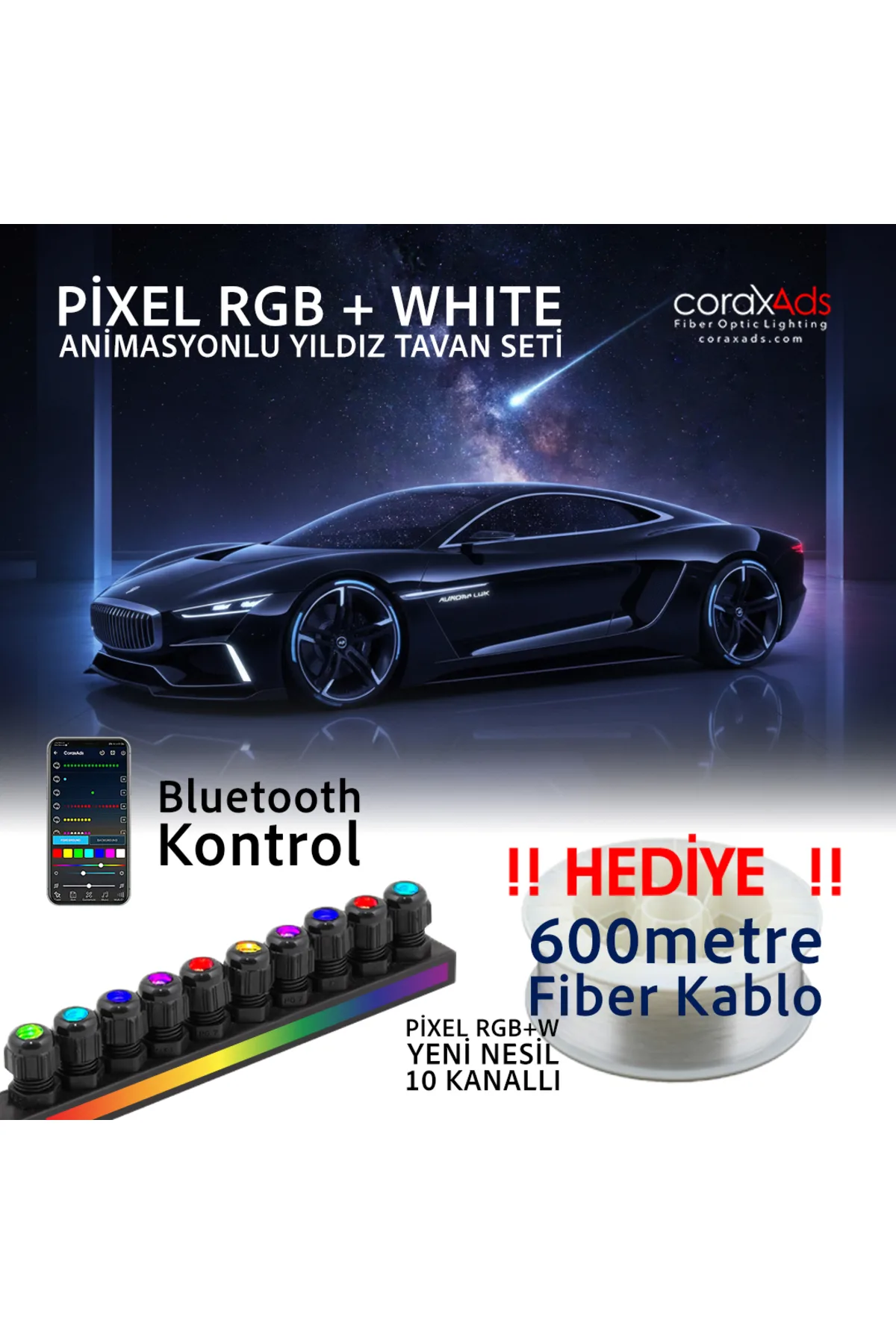
If you want color change and smart control, you should turn to products like the "ARGB+W 10 Port Master Set". These sets include a 100W RGB+W engine, a 10-output distributor, remote control, and even a WiFi/DMX control module. Thus, they are perfect for transforming the entire ceiling of a 30-50 m² restaurant. You can adjust the color of your stars according to the time of day or the venue's theme via a smartphone app. These kinds of sets also provide the most advanced answer to the question how is the twinkle effect created?.
The Cultural and Decorative Meaning of 'Medium' in Medium-Scale Projects: Not Just Numbers, but Ambiance
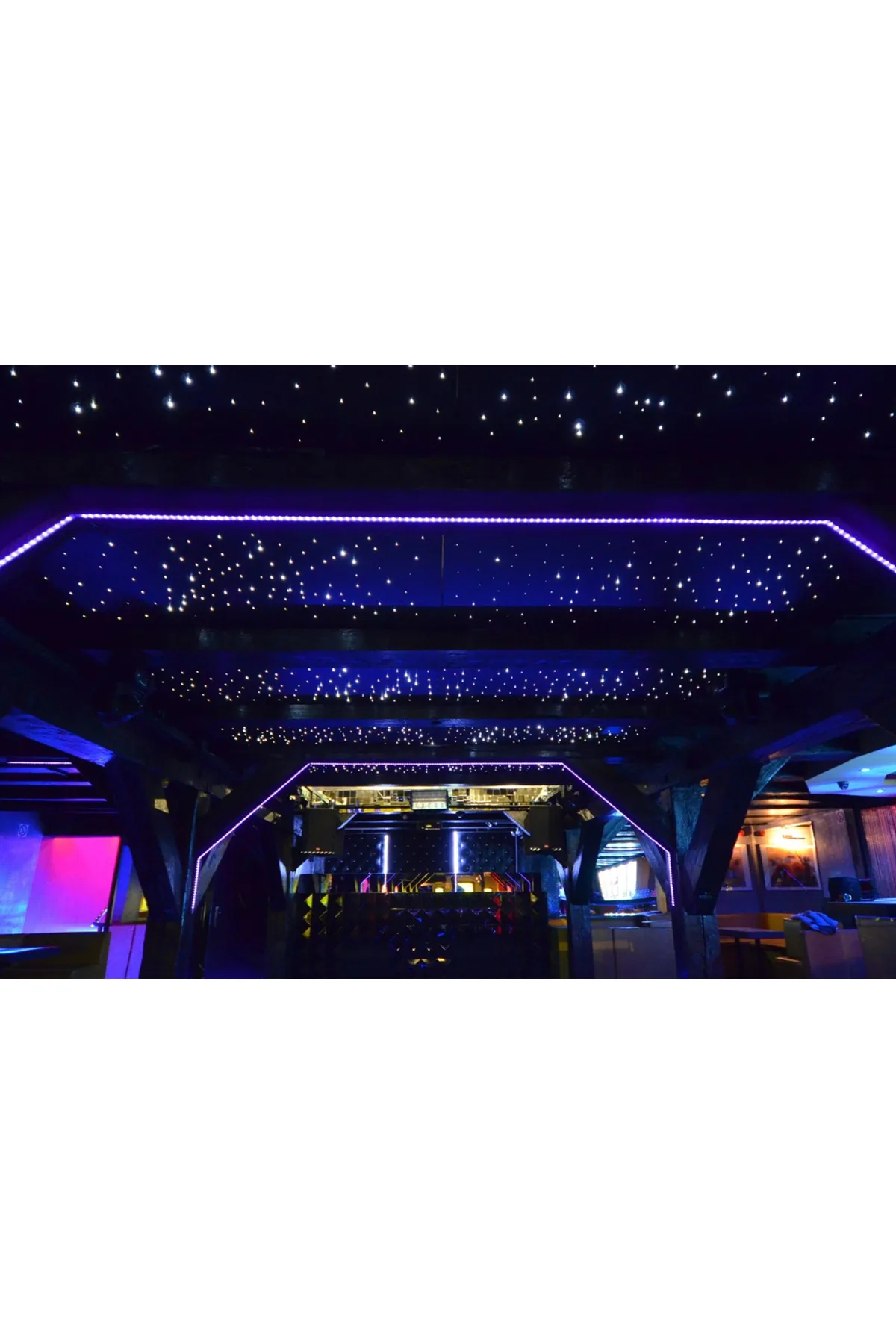
The word 'medium' often carries meanings of 'balance', 'moderation', and 'what is appropriate' in Turkish culture. It's the same in decoration. A medium-sized star ceiling project is neither as ambitious as a showy shopping mall chandelier, nor as niche as a cabinet interior lighting. It is precisely on a 'human' scale.
Home and Commerce Balance: Combining Intimacy with Impressiveness
This scale is the bridge between personal spaces (home, bedroom) and public yet intimate areas (café, boutique hotel lobby, restaurant). Your light source choice determines the tone of this bridge. Warm white promises peace and intimacy, while controlled color transitions give the space a dynamic and contemporary character. Throughout decoration history, the star motif has always been a symbol of balance and beauty. Achieving the same balance in your project is directly related to the capabilities of the light source. Like the golden ratio in aesthetics, your 'medium' should also create a harmony unique to you.
Frequently Asked Questions (FAQ): Light Source Selection for Medium-Sized Star Ceiling Projects 2026
For a medium-sized project, which is more economical: fiber or LED?
In terms of initial installation cost, some LED solutions may seem more affordable. However, in the medium and long term, fiber optik systems are more economical. The reason is this: In fiber optik, the only component that can fail is the light engine, and its replacement is easy. In LED systems, there are hundreds of connection points; in case of a fault, detection and repair can be difficult, time-consuming, and costly. Additionally, the energy efficiency of fiber optik is generally higher.
Is a 100W engine sufficient for a 50 m² area?
Yes, it is sufficient; but it depends on your star density. For a medium-density sky (12 stars/m²) in a 50 m² area, approximately 600 stars are needed. A 100W engine can efficiently illuminate 1000 thin fibers. Therefore, it easily has enough power for 600 stars. As the area grows, you can get efficiency from the same engine by slightly reducing the density or distributing the engine's outputs smartly.
Does choosing a color-changing (RGB) light source increase maintenance costs?
No, it does not cause a direct increase. RGB or RGB+W engines have the same lifespan and durability as single-color engines. The extra cost usually arises during the initial purchase due to more advanced control systems (smart remote, DMX module). Since the working principle is similar, they do not require extra maintenance.
Where should I hide the light source (engine)? Is it difficult to conceal?
One of the biggest advantages of medium-sized projects is that hiding the light source is relatively easy. You can easily place the engine inside a cabinet, in a service box in the ceiling, or behind a false ceiling. The important thing is to leave sufficient space (5-10 cm) around the engine for air circulation and to choose a location where the fiber cables can easily reach the engine. A professional team will offer you the most suitable solution in this regard.
How long should the fiber cables be? Is there a limit?
Yes, there is a practical limit. Light suffers a certain loss as it travels inside the fiber. The general rule is that a fiber optik fiber with a 0.75mm diameter significantly loses its brightness after a maximum of 8-10 meters from the engine. In medium-sized projects, it is possible to reach all points with fibers not exceeding this distance by positioning the engine in the center or on two sides of the area. Special thick fibers or intermediate engines can be used for longer distances.
Conclusion
The answer to the question which light source should be chosen for a medium-sized star ceiling project ultimately lies in your priorities. If you want longevity, safety, impressive natural effects, and flexible control, fiber optik systems maintain their undisputed leadership in 2026 as well. LED solutions can be considered for certain minimalist and budget-focused scenarios. Remember, choosing the right light source is the foundation of your dream sky. Laying this foundation solidly guarantees a magic that will last for years.
As the Corax Ads expert team, we are here to determine the most suitable light source for you and bring your project to life. You can examine popular shopping platforms to observe 2026 decoration trends, but for technical and lasting solutions, please contact us. Let's design your dream medium-sized star ceiling together with a personalized evaluation and free project drawing.