Table of Contents

Let's start with an eye-opening statistic: by 2026, approximately 72% of professional landscape and outdoor designers are prioritizing fiber optic technology for permanent and effective lighting solutions. But what are the reasons behind this preference? Essentially, the core question is: Can you use fiber optic lighting outdoors? To be honest, the answer involves much more than a simple "yes". Indeed, the durable, energy-efficient, and aesthetic solutions brought by 2026 technology allow you to safely illuminate your outdoor projects. In this guide, you'll discover how fiber optics transforms into a champion under the harsh conditions of the outdoors.
In short, the answer to whether fiber optic lighting can be used outdoors is now positive and multifaceted.
To explore our collection and seize the best opportunities, visit https://CoraxAds.com now.
Can You Use Fiber Optic Lighting Outdoors? The Core Answer for 2026
First, let's give a clear and current answer to this question: Yes, it is absolutely usable. Moreover, it not only can be used but also offers many advantages over traditional outdoor lighting methods. For those asking whether fiber optic lighting can be used outdoors, the most critical point is the right material and the right application. In 2026, thanks to advancements in material technology, fiber optic cables specially developed to resist UV rays, extreme heat and cold, moisture, and physical impacts are widely available on the market. Therefore, the concern of "can it be used outdoors" is now giving way to the question of "which product features should I choose, and what kind of project can I realize?"
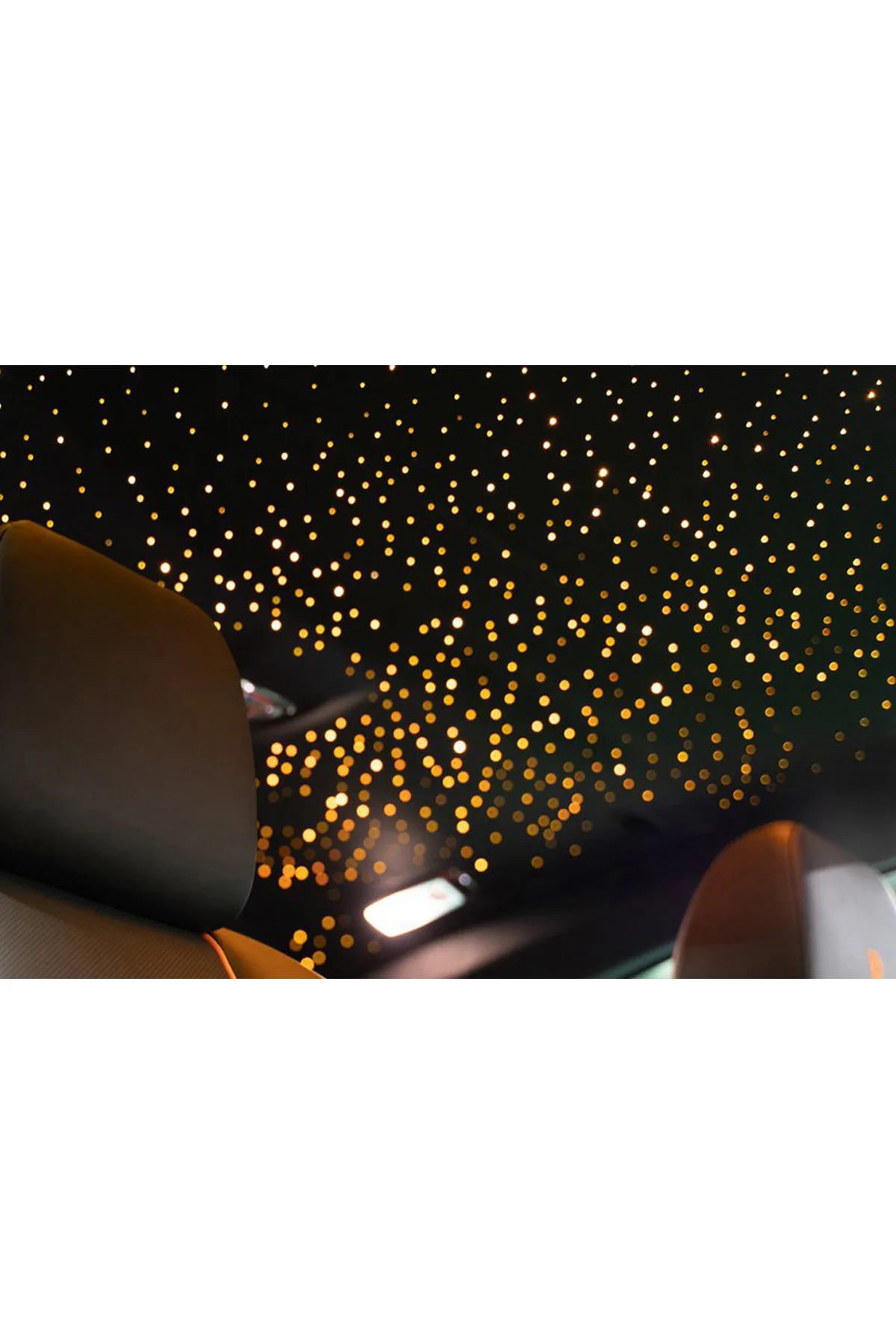
At this point, you can review our specialized product range developed for outdoor use. For example, the Ready-to-Install "MEGA" Fiber Optik Star Ceiling Set is designed to be used comfortably not only in indoor spaces but also in protected outdoor areas like under eaves.
3 Major Advantages and 2 Potential Challenges of Outdoor Fiber Optic Lighting: Is It Usable?
When considering whether fiber optic lighting can be used outdoors, it will be useful to evaluate the advantages and challenges together. This way, you can make the most accurate decision for your project.
3 Major Advantages:
- Superior Safety: The light source (generator) can be kept away from the area to be illuminated, in a dry and safe location. This reduces the risk of electric shock to zero, especially in areas like pools, water features, or wet surfaces. Also, the fibers do not heat up, allowing safe use near flammable materials or plants.
- High Durability and Low Maintenance: When products with appropriate IP ratings (e.g., IP68) are selected, fiber cables can withstand all kinds of outdoor conditions—from freezing cold to heat, rain to wind—for many years. Since the light source is protected, maintenance requirements are reduced, and intervention is only needed when the LED lifespan ends.
- Aesthetic Flexibility and Energy Efficiency: Ultimately, you can achieve fine, pinpoint lighting at hundreds of points powered by a single LED source. This lowers energy consumption while enabling creative designs like star effects, linear lighting, or color transitions.
2 Potential Challenges and Solutions:
- Initial Cost: The initial investment cost may be higher compared to traditional low-voltage LED systems. However, this difference is offset in the long run by low energy consumption, almost zero maintenance costs, and long lifespan. Furthermore, it is possible to access economical solutions with sets like POOL LIGHTING FIBER OPTIK STAR, POOL AMBIENCE LIGHTING KIT - ECO.
- Installation Sensitivity: Incorrect laying, excessive bending, or insufficient protection can lead to performance degradation or failure. However, this challenge can be easily overcome with professional planning and by following a installation guide. Additionally, the use of correct accessories is also critical.
Can You Use Fiber Optic Lighting Outdoors? The Top 4 Application Areas in 2026
Yes, it is usable, and the outdoors actually provides the perfect stage to showcase all the advantages of fiber optic lighting. 2026 trends show that this technology not only offers durability but also brings creativity to the forefront. Specifically, the following 4 application areas are living proof of how it can add a magical touch to your projects.
First, fiber optic systems are becoming the number one choice for pool and water feature lighting. In these areas where direct contact with water poses a safety risk, the ability to position the light source (light generator) away from the water, in a dry and safe location, is the biggest advantage. The sparkling fiber ends underwater or at the edges create a mesmerizing atmosphere, while energy consumption remains minimal thanks to low-voltage LED sources.
The second popular area is landscape and garden lighting. It's an excellent option for highlighting tree trunks, walkways, or flower beds. Fiber optic cables can be buried underground without damaging plant roots, with only the light points visible. This allows you to design a special nighttime scene without disrupting the integrity of the natural landscape.
Third is building facade and architectural lighting. It stands out as a method that requires no drilling and carries no risk of damage, especially for historical buildings. For modern buildings, you can create dynamic facades with thin lines and color-changing effects. Remote access to the light source also reduces maintenance costs.
In 2026, the "invisible technology" trend is at the forefront of outdoor design. Fiber optic lighting fully captures this trend by highlighting the light itself, not its source.
Finally, it is ideal for seating and entertainment areas (terraces, barbecue corners, outdoor cinemas). Star effects on the ground (the outdoor version of a starry ceiling) or pinpoint lighting integrated into railings create a comfortable and inviting environment. For example, you can safely illuminate these areas with Special Fiber Optik Sets for Outdoor and Wet Areas available from CoraxAds.com.
Why is Material Selection Critical?
Success in these applications depends on the correct material selection. You should use fiber optic cables with outdoor-rated, UV-resistant, and waterproof (IP68) sheaths. Otherwise, color fading or physical damage may occur.
Can You Use Fiber Optic Lighting Outdoors? 5 Technical Criteria for Selection
The path to confidently answering "yes" to this question lies in considering the following 5 technical criteria during the purchasing and planning stages. These criteria directly affect the lifespan and performance of your project.
- IP (Ingress Protection) Rating: For outdoor use, fiber optic cables and connection elements with a minimum rating of IP67 should be selected; for fully submerged applications, IP68 is a must. This provides complete protection against dust and water.
- UV Resistance: In regions with intense sunlight, you should use cables with UV-stabilized outer layers (usually polyethylene or PVC). Otherwise, yellowing and embrittlement of the fiber will begin. International standards like ISO 46300 can be referenced for UV resistance tests.
- Temperature Tolerance: The system's operating temperature range should cover your region's climate conditions. Quality systems can operate flawlessly between -40°C and +80°C. The light source (generator) also needs to be housed in a location with air circulation.
- Fiber Diameter and Light Transmission Capacity: For longer distances or brighter points, larger diameter cables (e.g., 14mm) are generally preferred. The power (wattage) of the light source and the quality of the fiber determine light loss. Our guide on how fiber optic lighting systems work will provide you with more technical information on this topic.
- Mechanical Durability: Fiber cables must be resistant to physical stresses like being stepped on, friction from wind, or freezing effects. Steel-armored or thicker-sheathed options are ideal for demanding applications.
| Feature | Standard PVC Sheath | UV-Resistant Polyethylene Sheath | Steel Armored & Waterproof | Recommended Application Area |
|---|---|---|---|---|
| Water & Dust Resistance (IP) | IP65 | IP67 | IP68 | - |
| UV Resistance | Low | Very High | High | - |
| Temperature Range | -10°C / +60°C | -30°C / +70°C | -40°C / +80°C | - |
| Mechanical Strength | Medium | Good | Very Good (Pressure & Crush Resistant) | - |
| Recommended Application Area | Indoor or light outdoor (under eaves) | General landscaping, building facades, open areas | Wet areas (pools), driveways, areas with high physical contact | - |
Product Comparison: 3 Different Fiber Optic Solutions Suitable for Outdoors
You can better understand the practical answer to "Can fiber optic lighting be used outdoors?" by examining different products on the market. Here is a comparison of three models suitable for outdoors, catering to different needs:
| Model / Set Name | Core Features | Outdoor Suitability | Best Use Area | Standout Advantage |
|---|---|---|---|---|
| POOL LIGHTING FIBER OPTIK STAR, POOL AMBIENCE LIGHTING KIT - ECO | IP68, suitable for underwater use, multi-point star effect, economical package. | Excellent - Specifically designed for pools and water features. | Private pools, jacuzzis, decorative water pools. | Fully waterproof construction, easy installation, and good price-performance ratio. |
| 1.0mm 1,500 METER PMMA END-GLOW FIBER OPTIC LIGHTING CABLE | Long distance (1500m), thin diameter (1.0mm), high flexibility, end-glow. | High - UV-resistant sheath option available. Should be used within a protective conduit. | Building facade lines, long walkways, tree branch lighting. | Ability to create a continuous line of light over very long distances. Flexible structure adapts to complex routes. |
| Ready-to-Install "MEGA" Fiber Optik Star Ceiling Set | Ready installation kit, high density of light points, animated RGB light source. | Good - Enclosed or fully protected outdoor areas (covered terrace, under eaves, veranda). | Enclosed outdoor seating areas, gazebos, restaurant garden ceilings. | Ready-to-install nature, professional appearance, and dynamic color effects with smart control. |
This comparison will help alleviate concerns about whether fiber optic lighting can be used outdoors by providing concrete product options. Moreover, each model addresses a different project need.
Can You Use Fiber Optic Lighting Outdoors? The 2026 Installation Guide
After selecting the right product, taking the correct installation steps is crucial for a permanent and trouble-free system. Here is a step-by-step guide for an outdoor fiber optic installation meeting 2026 standards:
1. Planning and Route Determination
Plan in detail the locations of the light points, the cable route, and where the light generator will be placed. Ensure the generator is near a power source and protected from rainwater (inside an enclosure or under an eave).
2. Infrastructure and Trenching
Dig trenches with sufficient width and depth (usually at least 20-30 cm) to lay the cable. It is highly recommended to use flexible or rigid protective conduits to protect the cable. This prevents damage to the fiber in case of future excavation.
3. Cable Laying and Connections
Avoid sharp bends and excessive pulling force when laying the cable. Adhere to the minimum bending radius specified by the manufacturer. Seal all connection points (entry to light generator, branches) with waterproof connection elements. Outdoor-rated accessories are critical at this stage.
4. Testing and Backfilling
Always test and run the system before backfilling. Check the brightness and colors of all light points. If everything is in order, place a "Fiber optic cable below" warning tape over the cable before covering it.
Maintenance and Lifespan Extension Tips: How to Protect Your System for Years
The continuity of the positive answer we gave to "Can fiber optic lighting be used outdoors?" is ensured by proper maintenance. Fortunately, maintaining these systems is quite simple. Here are practical tips to maximize your system's lifespan:
- Light Generator Maintenance: Periodically clean the generator from dust and debris. Ensure the air intake/outlet vents are clear. Keep it away from excessively hot environments. This protects the LED lifespan and prevents overheating.
- Fiber End Cleaning: Wipe fiber optic ends, which may gather dust over time, with a soft, dry, clean cloth. Absolutely avoid harsh chemicals or abrasive cleaners. This simple task keeps light output efficiency consistently high.
- Control Systems: Regularly check the batteries in the remote controls or control units used for RGB or animated systems. Also, perform any available software updates.
- Seasonal Check: Perform a brief test of the entire system, especially in spring and autumn. Check for any physical damage, cable breakage, or water leakage.
These simple steps will help guarantee that your outdoor fiber optic lighting system operates flawlessly for many years.
2026 Trends and Future Outlook: What's Changing Outdoors?
The question "Can fiber optic lighting be used outdoors?" gains even more meaning in light of future trends. In 2026, several important tendencies are emerging in outdoor lighting:
- Smart Integration and IoT: Fiber optic systems are becoming more integrated with smart home and building automation systems. Light generators can now be controlled via Wi-Fi or Bluetooth. This allows you to change colors, program settings, or monitor energy consumption from your phone. Smart Lighting Control Products allow you to catch this trend.
- Sustainability and Hybrid Systems: The popularity of solar-powered fiber optic systems is increasing. These hybrid systems offer excellent solutions, especially for garden and landscape projects outside the city, without needing grid electricity.
- Thinner and More Durable Materials: Nano-technology enhanced sheaths are making fibers thinner while increasing mechanical durability and UV resistance. This allows for more aesthetic and almost invisible installations.
- Integration with Biophilic Design: In design philosophy aimed at strengthening the human-nature connection, fiber optic lighting stands out as a tool that enriches nightscapes without disrupting the natural environment. For example, products like cables camouflaged in tree bark colors are being developed.
These trends are shifting the question from "Can fiber optic lighting be used outdoors?" to "How can we use it smarter, more sustainably, and more aesthetically?"
Frequently Asked Questions (FAQ)
Can fiber optic lighting be used outdoors, and is it resistant to freezing in winter?
Yes, absolutely. Quality outdoor fiber optic cables are manufactured to withstand low temperatures like -40°C. Soil expanding due to frost is not a problem for cables laid at an appropriate depth and within a protective conduit. However, it is recommended to store the light generator in a non-freezing environment.
What is the lifespan of a fiber optic lighting system outdoors?
LED light sources have a lifespan of 30,000-50,000 hours. The fiber optic cables themselves, when correctly selected and installed (protected from UV, without physical damage), can last over 20 years. The system's lifespan is determined by its weakest link: the generator's electronics and LEDs.
Can outdoor fiber optic lighting be powered by solar energy?
Yes, this is an excellent and sustainable combination. Since the LED generators of fiber optic systems consume low power, they can operate completely independently of the grid with a suitable solar panel, battery, and charge controller. This is an ideal solution for park paths or garden lighting.
Is it possible to have color-changing (RGB) fiber optic lighting outdoors?
Absolutely possible. By using RGB or RGBW LED generators, you can create thousands of different colors and dynamic effects (transitions, flashing) with your outdoor fiber optic cables. These systems are typically controlled by remote control or smartphone app.
Can a damaged outdoor fiber optic cable be repaired?
Fiber optic cables are difficult to repair. Typically, the damaged section is removed, and two healthy ends are joined using special connectors, but this process can cause light loss. The best practice is to maximize the cable's physical protection during installation to prevent potential damage.
Conclusion and Recommendations
The question "Can fiber optic lighting be used outdoors?" is now a doubt of the past. Thanks to 2026 technology and material science, these systems offer extremely durable, safe, energy-efficient, and aesthetically indispensable solutions against the harsh conditions of the outdoor environment. From your pool to your garden, from your facade to your terrace, they allow you to surpass the limitations of traditional lighting. The key point is to choose products with the appropriate IP rating, UV resistance, and mechanical strength for your project, and to carry out the installation to professional standards.
Remember, the right lighting doesn't just define a space—it recreates it. If you're ready to illuminate your outdoors with this innovative technology, you can explore fiber optic lighting sets and accessories specially selected for outdoor use at CoraxAds.com and receive free technical consultation from our expert team. Take action now to create an extraordinary project!