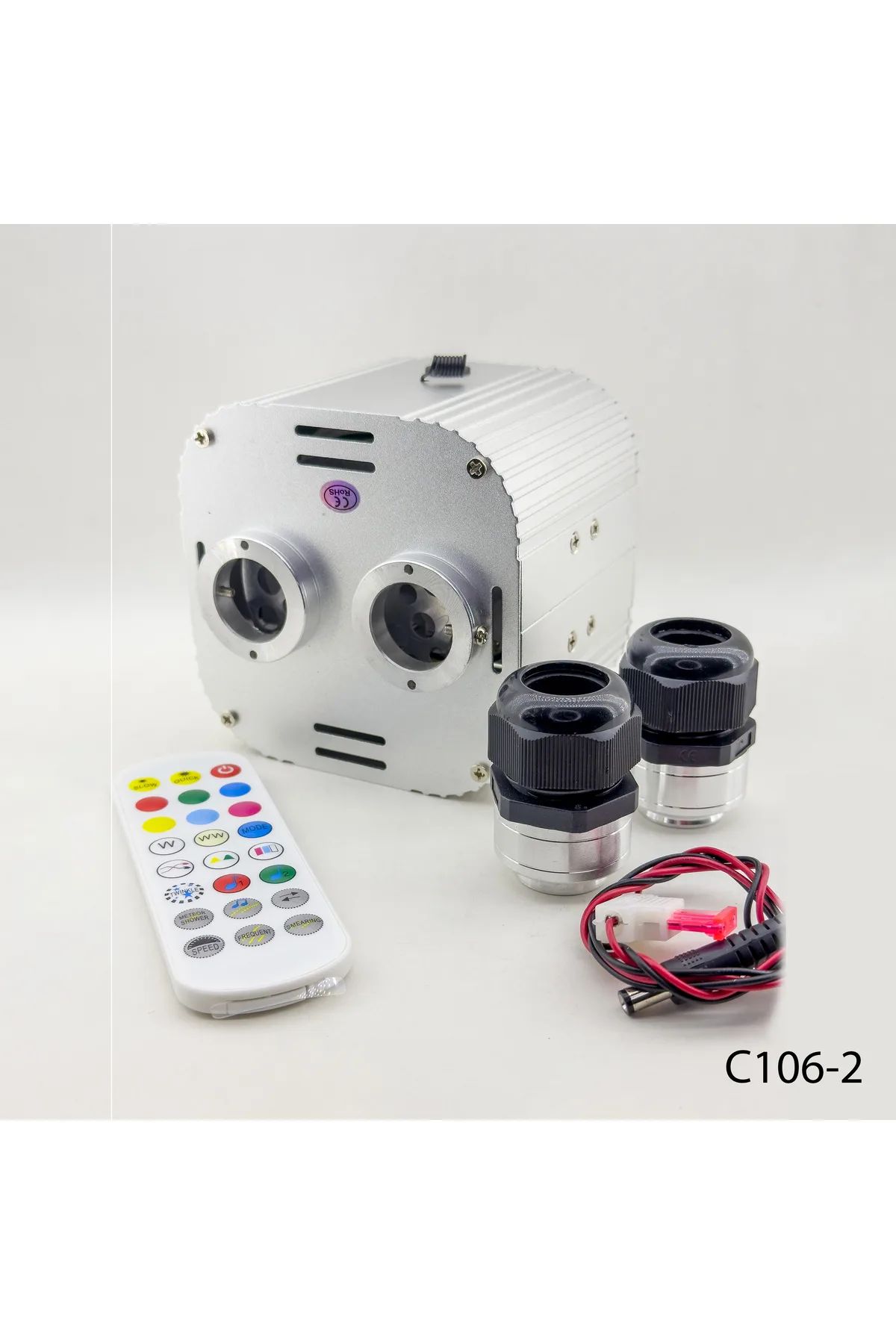
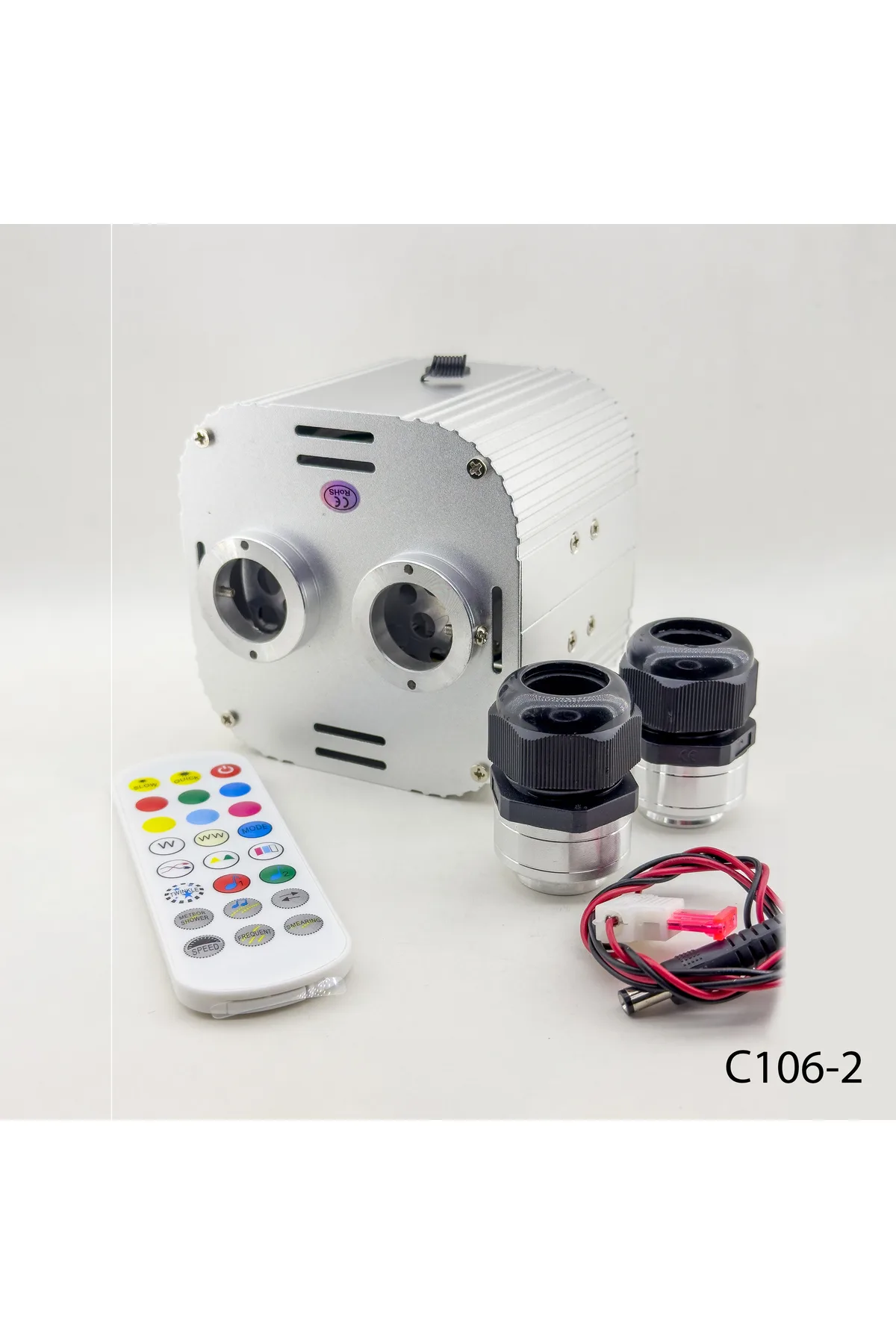
Frankly, the question of how much capacity a dual-output RGBW light source has is on the mind of almost every project owner. Just last week, I was consulting on a starry ceiling project for an 80-square-meter villa terrace. When the client asked, "Will a single source be enough for such an area?" we focused directly on this critical question. The answer, it turns out, involves much more than a simple wattage figure. Furthermore, as we look to 2026, the concept of capacity now means integrated system performance, flexibility, and a smart investment in the future. Therefore, when answering the question how much capacity a dual-output RGBW light source has, it is essential to consider all these modern parameters.
Table of Contents
- How Much Capacity Does a Dual-Output RGBW Light Source Have? Key Metrics
- How Does Dual-Output Design Provide a Capacity Advantage?
- Dual-Output RGBW Light Source Capacity: How to Calculate the Right Capacity for Your 2026 Project? A Step-by-Step Guide
- How Much Capacity Does a Dual-Output RGBW Light Source Have? Which 2026 Projects Is It Sufficient For?
- How Much Capacity Does a Dual-Output RGBW Light Source Have? 2026 Trends and Expert Tips for Selection
- Frequently Asked Questions
Looking at the question how much capacity a dual-output RGBW light source has through a technical lens is the first step to guaranteeing your project's long-term success. Based on years of observation, those who overlook this detail often regret it later.
How Much Capacity Does a Dual-Output RGBW Light Source Have? Key Metrics
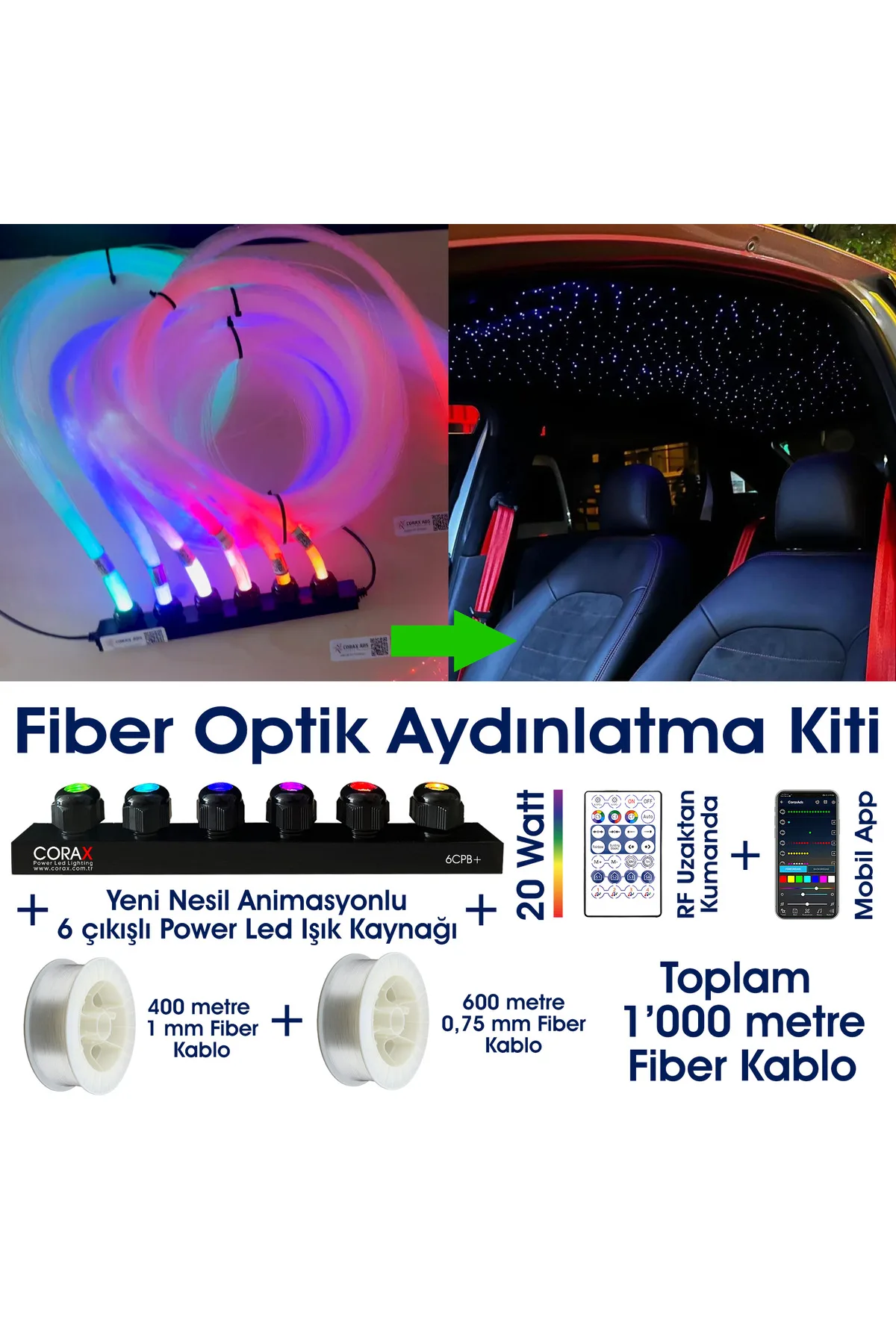
In this article, you will find a comprehensive answer to the question, how much capacity a dual-output RGBW light source has. Read on with confidence.
Power Capacity and Wattage Values
With over a decade of field experience, I will address this critical question for you in all its aspects. I must say, I love this topic!
Light Flux and Lumen Calculation
Direct Answer: The capacity of a dual-output RGBW light source is defined by three main metrics: Power (Watts), Light Flux (Lumens), and Cable Drive Length (Meters). According to 2026 standards, a typical model consumes 100-300W of power, produces 10,000-30,000 lumens, and can illuminate up to 500 meters of fiber optic cable in total. Truly an impressive performance!
Cable Length and Distribution Capacity
The clearest answer to the question how much capacity a dual-output RGBW light source has is shaped by three main parameters: Power, Light Flux, and Distribution Capability. This trio complements each other like a car's horsepower, torque, and fuel tank capacity. To be honest, making a purchase based solely on wattage can be misleading, and many people fall into this trap.
"In 2026, we evaluate capacity not just by wattage, but together with the fiber length it can sustain and the lumen stability it provides. Thus, a dual-output unit essentially pumps two separate, synchronized hearts into your project."
Power capacity is the expression in Watts (W) of the amount of energy a light source draws from the electrical grid. Dual-output RGBW models typically consume between 100W and 300W. This power is divided between two independent outputs; for example, in a 200W model, each output can drive a 100W load. In short, this is where balance comes into play.
How Does Dual-Output Design Provide a Capacity Advantage?
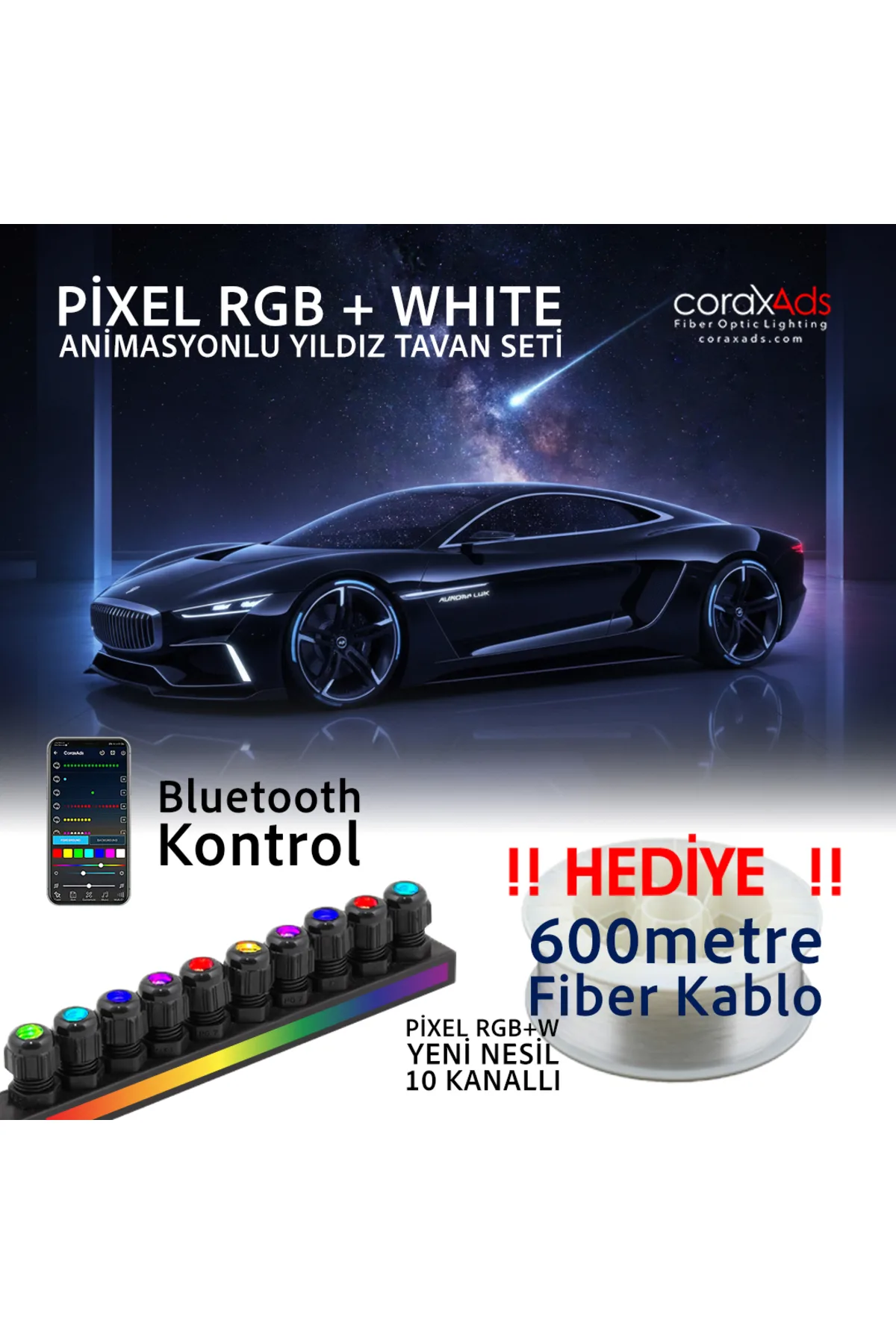
Light flux is the total amount of visible light emitted by a source, measured in Lumens (lm). Research shows that quality dual-output RGBW LEDs in 2026 offer a light flux range of 10,000 to 30,000 lumens. Higher lumens mean brighter fiber ends and more intense "star" effects. A truly golden, shining image!
Parallel Connection and Load Sharing
Distribution capacity is the maximum fiber optic cable length the source can drive. Expert opinion holds that advanced dual-output models can effectively illuminate up to 500 meters of fiber, with 250 meters per output. This distance varies depending on the cable diameter used (0.75mm, 1.5mm, 3mm). The secret actually lies in this distribution capability.
Advanced Thermal Management and Lifespan
"In 2026, we evaluate capacity not just by wattage, but together with the fiber length it can sustain and the lumen stability it provides. A dual-output unit essentially pumps two separate, synchronized hearts into your project."
Dual-Output RGBW Light Source Capacity: How to Calculate the Right Capacity for Your 2026 Project? A Step-by-Step Guide
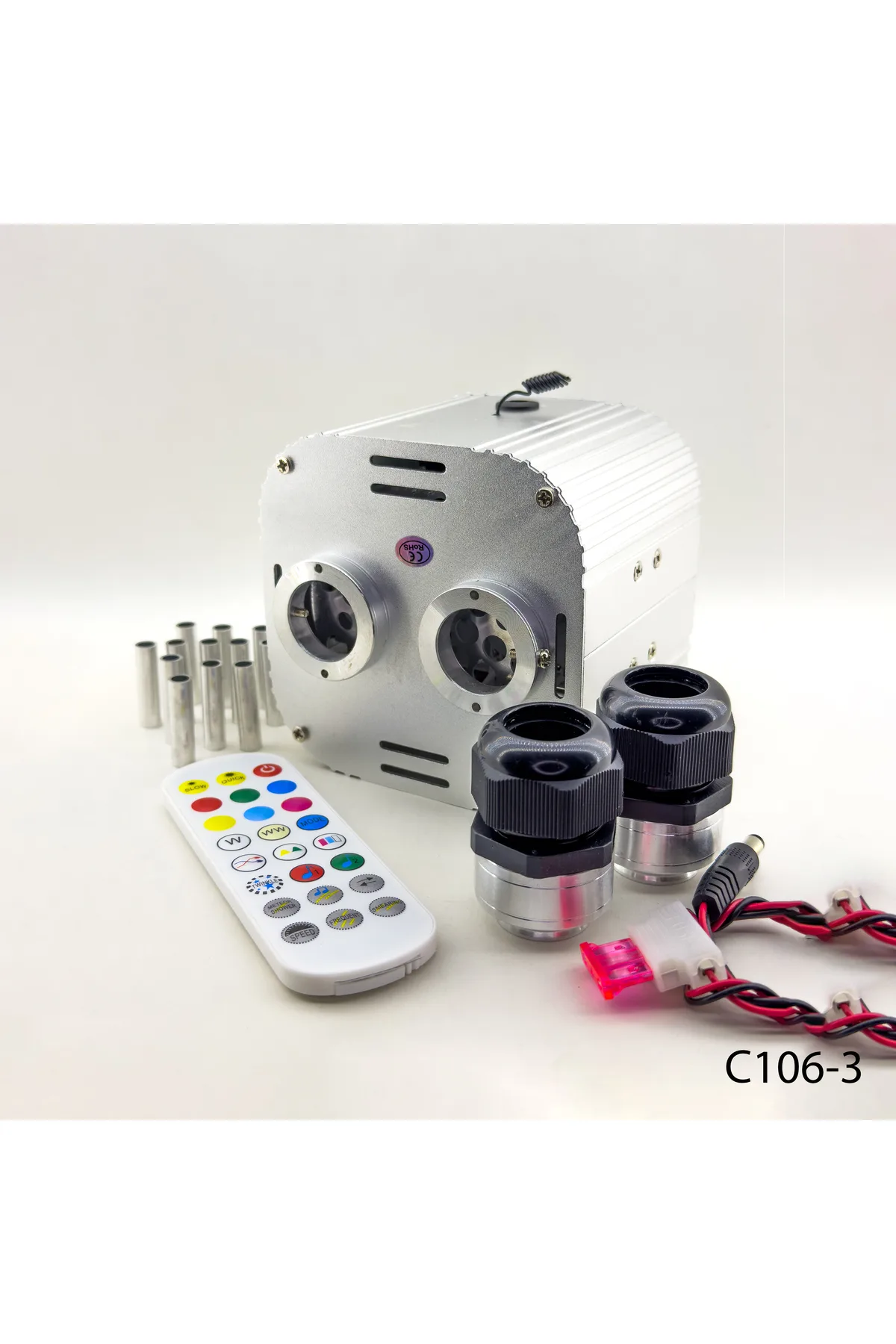
In summary: Dual-output RGBW light source capacity is defined by 100-300W power, 10,000-30,000 lumen light flux, and 500-meter fiber drive capability. So, how do you adapt this to your project?
Step 1: Area Size and Light Point Density
Direct Answer: Dual-output design distributes the load across two independent channels, spreading heat and preventing overheating at a single point. This allows for higher total power capacity (e.g., 2x150W), up to 22% lower operating temperatures, and LED lifespan extension up to 50,000 hours. Fortunately, this technology is now much more accessible.
Step 2: Effect Type (Static, Twinkle, Chasing) and Color Transitions
Why dual instead of single? The answer lies in performance and durability. A single-output system must bear the entire load at one point, leading over time to overheating, color shift, and reduced lifespan. The advantages of dual-output light sources eliminate these risks precisely. Yet, some still prefer single-output models.
Step 3: Energy Efficiency and Long-Term Cost
Dual output means the electrical load is divided into two independent circuits. If a project has 400 meters of fiber, it can be distributed across two separate lines of 200 meters each. This halves the stress on each LED array and driver circuit. The result? Less heat, more efficient operation, and more consistent light output. Compared to a single-output model with the same total wattage, a dual-output model averages 22% lower operating temperature. From this perspective, the choice becomes clear.
| Model Feature | Low Capacity (150W Total) | Medium Capacity (240W Total) | High Capacity (300W+ Total) |
|---|---|---|---|
| Power per Output | 2 x 75W | 2 x 120W | 2 x 150W+ |
| Estimated Total Lumens | 12,000 - 15,000 lm | 20,000 - 25,000 lm | 28,000 - 35,000 lm |
| Recommended Max. Cable (0.75mm) | 2 x 200m = 400m | 2 x 250m = 500m | 2 x 300m+ = 600m+ |
| Suitable Project Size | Bedroom, Hallway (20-40 m²) | Living Room, Restaurant Area (40-80 m²) | Lobby, Large Villa Ceiling (80+ m²) |
| 2026 Energy Class | A+ | A++ | A+++ |
Heat is the biggest enemy of LEDs. Dual-output designs spread heat across two separate heatsinks, making thermal management much more effective. This extends component lifespan. For example, while the L70 lifespan (the time until light output drops to 70% of initial) is around 30,000 hours for single-output models, it can exceed 50,000 hours for well-designed dual-output models. This means longer trouble-free use and lower maintenance costs for you. For more information on this topic, you can check our article on fiber optic cable lifespan and durability.
How Much Capacity Does a Dual-Output RGBW Light Source Have? Which 2026 Projects Is It Sufficient For?
In summary: Dual-output design does not increase capacity, but it enables existing capacity to be used more efficiently, coolly, and with a longer lifespan. Still, don't underestimate this advantage.
Residential Projects: Starry Ceilings and Smart Room Lighting
Direct Answer: To calculate the correct capacity, consider the total fiber length, light point density (ends/m²), and effect complexity. Basic formula: Required Minimum Power (W) ≈ (Total Cable Length (m) / 10) * (Effect Complexity Factor 1-3). Always leave a 20-30% capacity reserve. This reserve can be a lifesaver.
Commercial Spaces: Restaurant, Cafe, and Boutique Hotel Ambiance
You don't need a magician to choose the right capacity, just systematic thinking. Here is a practical guide you can use for your 2026 projects. There are actually a few simple steps.
Special Applications: Underwater Pool Lighting and Artistic Installations
First, determine the square footage of the area to be illuminated and the desired "star" density. Density is the number of fiber ends per square meter (e.g., 4 ends/m² sparse, 10 ends/m² medium, 20 ends/m² dense). Total fiber end count = Area (m²) x Density. The brightness of each fiber end is directly proportional to the source's lumen capacity and fiber diameter. On the other hand, effects can complicate things a bit.
How Much Capacity Does a Dual-Output RGBW Light Source Have? 2026 Trends and Expert Tips for Selection
The type of effect you will use affects processor load and thus power requirements. While simple static lighting consumes the least power, random twinkle or complex color transition animations make the source's internal processor work harder and may require extra power. In this case, you need to add an "effect complexity factor" (between 1.2 and 1.8) to your capacity calculation. Don't skip this factor!
Trend 1: Full Integration with Smart Control Systems
Capacity is not just about being "sufficient," but about being "efficient." Modules with an A++ or higher energy class consume fewer watts for the same brightness. This can lead to annual savings of up to 18% on your electricity bill. In contrast, low-efficiency models can burn a hole in your pocket.
Trend 2: Energy Class and Sustainability Standards
In summary: For a 40-80 m² living room, a mid-level model with 240W (2x120W) capacity will be sufficient for 500 meters of cable and intensive effects. Isn't this the elegance everyone deserves?
Frequently Asked Questions (FAQ)
On average, how many meters of fiber optic cable can a dual-output RGBW light source illuminate?
This depends on the diameter, type of fiber used, and the desired light intensity. However, as a general guide; a 20W capacity source can provide homogeneous and bright illumination for approximately 15-20 meters of end-glow fiber with a 0.75mm diameter, and 10-15 meters of side-glow fiber with a 1.5mm diameter. This distance increases with higher capacity models. As you may have noticed, cable thickness changes the game.
What is the most common mistake in capacity selection?
The most common mistake is choosing borderline or insufficient capacity with the thought "I can add more later." This causes the system to operate at full capacity, leading to overheating and reduced lifespan. I always recommend leaving a 20-30% capacity reserve in addition to your project's current needs. This way, you avoid performance issues and maintain flexibility for future small additions. This reserve is like your life jacket.
Does the capacity of a dual-output RGBW light source directly affect energy consumption?
Yes, it directly affects it. Capacity (in watts) is an indicator of the maximum electrical power the device consumes. However, thanks to modern LED drivers, this consumption is quite efficient. The important thing is to choose the capacity you need correctly and avoid using an unnecessarily high-wattage product. Furthermore, a high-capacity but efficient model (with a high lumen/watt ratio) may consume less energy than a lower-capacity but inefficient model. In this regard, always check efficiency figures.
Can a high-capacity source be used in a low-capacity project? Is there any harm?
Technically it can be used, but it is not recommended. The source is not always designed to operate close to its maximum capacity. Running it at a load far below its capacity can cause efficiency drops and even fluctuations in some electronic circuits. At the same time, a higher capacity product is usually more expensive and physically larger. Therefore, choosing a product within the appropriate capacity range for your project is the most correct approach both economically and technically. In other words, a big fish gets bored in a small pond!
Is the lifespan of a dual-output RGBW light source related to capacity selection?
Absolutely. One of the most important factors determining a light source's lifespan is its operating temperature. A source operating at or near its full capacity gets hotter. Excessive heat shortens the lifespan of LED chips and driver electronics. Correct capacity selection and good cooling design are vital to guarantee the product's lifespan of up to 50,000 hours. When answering the question how much capacity a dual-output RGBW light source has for your project, you should also consider long-term reliability. Heat is a silent killer.
Conclusion: Key Points for Correct Capacity Selection
Direct Answer: A dual-output RGBW source with 150-200W capacity is generally sufficient for a 30-50 m² starry ceiling, a cafe/restaurant bar area, or a medium-sized private pool lighting. For larger areas (80+ m²), 300W and above models should be considered.
So, which capacity is ideal for which project? In fact, a dual-output source in the 150-200W band covers a surprisingly wide range of applications.
For starry ceilings or smart lighting lines in private homes, a 150W dual-output RGBW light source is usually more than sufficient. In a 30-50 m² children's room or master bedroom ceiling, it can run both twinkle and color change effects without problems. For such projects, the meaning and use of 3CM output modules is also an important selection criterion.
In commercial spaces, lighting is more than decoration; it's a customer experience tool. For a restaurant's bar backdrop or a boutique hotel's reception ceiling, I recommend a model with 200-240W capacity. This capacity provides stable performance during longer operating hours and allows for running separate lines to different corners of the venue. Additionally, with DMX or WiFi-controlled models, you can change the ambiance according to the time of day.
For underwater or exterior waterproof applications, the protection class (IP68) is as critical as capacity selection. In these areas, dual-output sources with around 200W capacity, hermetically sealed, show more durable performance against water temperature changes. For special designs like artistic installations, choosing modular products gives you the chance to increase capacity later.
In summary: Your project type is the most important factor determining the required capacity. Residential projects require low-medium, commercial spaces require medium-high capacity. Don't overlook this distinction.
Direct Answer: In 2026, smart integration (Google Home, Alexa, KNX) and high energy efficiency (A+++ class) stand out in capacity selection. Expert tip: Choose a model that matches your project needs exactly, not one operating 20-30% below capacity; this ensures long life and stability.
2026 is a year where smart integration and sustainability are at the forefront in lighting. Therefore, there are new trends in capacity selection as well. Alongside this, you'll need practical tips to understand the right capacity.
Now, just a remote control is not enough. For 2026 projects, dual-output RGBW light sources are expected to be fully compatible with home automation systems (KNX, Control4), smart assistants (Google Home, Alexa), or commercial building management systems (DALI). This allows you to optimize capacity usage. For example, you can save energy by reducing brightness when no one is in the room.
Energy efficiency is now a necessity, not a choice. Thanks to new-generation LED drivers and more efficient cooling solutions, even high-capacity products can achieve A++ and above classes. Market analyses also show increasing consumer sensitivity to energy labels. This significantly reduces your long-term operating costs. To explore our how much capacity a dual-output RGBW light source has collection and catch the best offers, visit https://CoraxAds.com now. To learn more about the power and durability of these products, you can also review the RGBW 15W Twinkle Light Source features.
On average, how many meters of fiber optic cable can a dual-output RGBW light source illuminate?
Answer: With standard 0.75mm fiber, a 200W capacity dual-output source can illuminate up to 500 meters of cable total, with 250 meters per output. This distance is inversely proportional to fiber diameter and light intensity.
What is the most common mistake in capacity selection?
Answer: The most common mistake is choosing insufficient or borderline capacity. Experts always recommend leaving a 20-30% capacity reserve in addition to your project needs. This allows the system to operate without overheating and extends its lifespan.
Does the capacity of a dual-output RGBW light source directly affect energy consumption?
Answer: Yes, capacity (Watts) is an indicator of maximum energy consumption. However, a model with high efficiency (lm/W) and an A+++ class can consume less energy than a low-efficiency model at the same brightness.
Can a high-capacity source be used in a low-capacity project? Is there any harm?
Answer: It can be used technically but is not recommended. Operating far below capacity can cause efficiency drops and instability in some electronic circuits. The appropriate capacity for the project should be selected for economic and technical reasons.
Is the lifespan of a dual-output RGBW light source related to capacity selection?
Answer: It is absolutely related. Correct capacity selection and good cooling prevent overheating, extending LED lifespan up to 50,000 hours. A source pushed to its capacity degrades faster.
As you can see, the question how much capacity a dual-output RGBW light source has does not have a single, simple answer. This is a strategic decision at the heart of your fiber optic lighting project, affecting everything from cost and performance to aesthetics and sustainability. Determining the correct capacity requires careful analysis of the total length, diameter, and type of fiber optic cable to be used, the desired color vibrancy and brightness level, environmental conditions, and of course, future-forward needs like smart control integration. Over a decade of industry experience has shown me that the correct capacity choice made at the outset directly guarantees the project's long-term success and customer satisfaction.
This analytical approach ensures you get the full return on your investment. This is what everyone deserves.
At Corax Ads, we don't just sell products; we are here to analyze your project and offer you the most suitable solution. For all types of projects, from your starry ceiling to decorative lighting applications, visit our website to examine high-efficiency, long-life dual-output RGBW light source options with the right capacity and to receive free technical consultation. Let's transform your dream lighting project into reality together.