When planning a fiber optik starry ceiling or decorative lighting project, one of the first critical choices you'll face is selecting the right light source. Indeed, the question 'What is the difference between C106-3 and C106-2?' directly impacts both your project's current performance and its future maintenance costs. However, the distinction between these two popular models is more than just a number. Drawing on over a decade of field experience, we examine these two products from a 2026 perspective, breaking down every aspect to explain which one will be the "golden" choice for your project.
What is the Difference Between C106-3 and C106-2? Table of Contents
- What is the Core Difference Between C106-3 and C106-2? A Summary at a Glance
- What is the Difference Between C106-3 and C106-2? The Technological Advantages of C106-3
- What is the Difference Between C106-3 and C106-2? Which is Suitable for Which Project Type?
- C106-3 vs C106-2 Price-Performance and Future Investment Analysis
- What is the Difference Between C106-3 and C106-2? Series Coding Logic and Its Place in the Industry
- Frequently Asked Questions About C106-3 and C106-2 (2026 FAQ)
Before comparing the two models, it's useful to know that both belong to the same C106 family. Their core function is the same: to efficiently transmit high-quality LED light through fiber optic cables. However, the difference between C106-3 and C106-2 becomes apparent precisely in terms of "efficiency," "capacity," and "control." Furthermore, the comparison table below will make everything clear.
What is the Core Difference Between C106-3 and C106-2? A Summary at a Glance
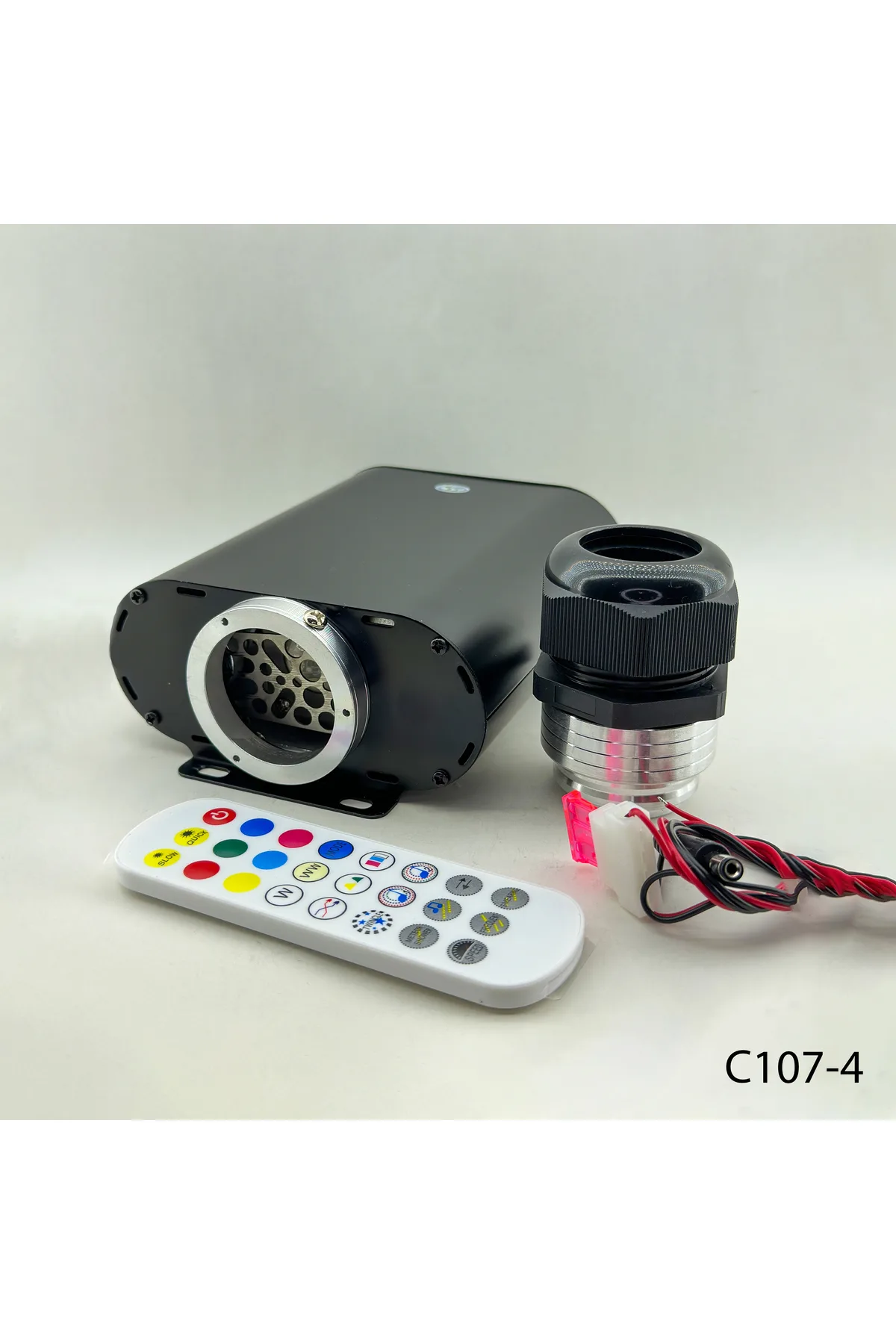
The most obvious difference between C106-3 and C106-2 is power. With a total output of 36W, the C106-3 offers a 50% power increase compared to the C106-2's 24W. Consequently, this extra power translates to the capacity to illuminate more fibers, thicker cables, or larger areas.
| Feature / Parameter | C106-2 Model | C106-3 Model | Explanation |
|---|---|---|---|
| Total Output Power | 24W | 36W | C106-3 has 50% more power capacity. |
| Number of Outputs & Configuration | 2 Independent Outputs | 3 Independent Outputs | C106-3 offers more zoning and separate control options in projects. |
| Operating Voltage | 12V DC / 24V DC | 24V DC (Primary) | C106-3 is optimized for 24V operation for more stable current at higher power. |
| Physical Dimensions (LxWxH) | 210 x 125 x 45 mm | 250 x 140 x 50 mm | C106-3 has a slightly larger body for enhanced cooling. |
| Max. Recommended Fiber Length (0.75mm) | 25 meters / output | 35 meters / output | Brighter light over longer distances with minimized brightness loss, thanks to the more powerful LED. |
The Distinction in Power Output and Voltage Specifications
As you can see, the most obvious difference is power. Moreover, the C106-3 offers a significant leap with its 36W total output compared to the C106-2's 24W. For example, this doesn't just mean brighter light, but also the capacity to power more fiber optic cables or cables with larger diameters (e.g., 1.5mm or 2mm). Specifically, regarding voltage: the C106-2 favors flexibility and is generally compatible with 12V systems. However, the C106-3 prioritizes performance and is optimized to run at 24V, which draws less current at higher power, reducing heat and cable losses. This results in a more efficient system.
Physical Design and Connection Interface Comparison
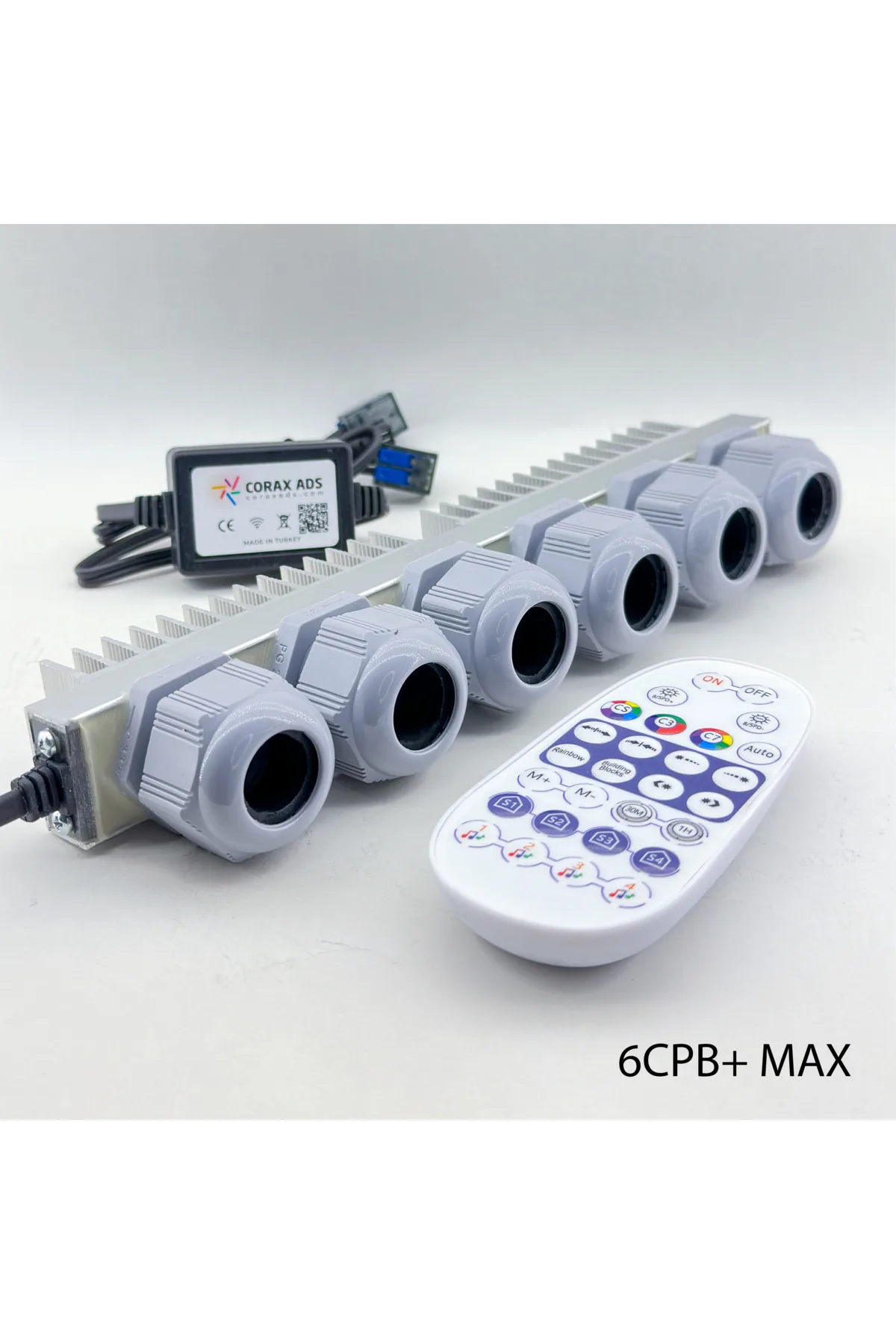
The C106-3 features a larger heatsink body and 3 independent connection ports. This design manages the heat generated by the higher power and provides the flexibility to control three different zones or effects separately from a single unit.
"As we enter 2026, the numerical difference in the C106 series no longer just represents the number of outputs; it also signifies a project's scalability and durability capacity. Specifically, choosing the C106-3 means leaving room for future additions to your project." - CoraxAds Technical Team Perspective
When you place the two models side by side, you'll notice the C106-3 is wider and more voluminous. However, this size isn't for nothing. It uses a larger aluminum heatsink body to dissipate the extra heat produced by the more powerful LEDs. On the connection side, while the C106-2 has 2 output ports, the C106-3 has 3 independent ports. This allows you the luxury of controlling three separate areas or three different light effects from a single source. In short, you could manage the stars on a living room ceiling, fiber optic curtains on the wall, and decorative lighting at a bar counter all from the same C106-3 unit.
What is the Difference Between C106-3 and C106-2? The Technological Advantages of C106-3
Illuminating Larger Areas with Increased Power Capacity
The C106-3 is not only more powerful but also offers advanced thermal management and long-term durability. According to experts, its improved cooling design increases average LED lifespan by 25-30%, reducing maintenance costs.
Advanced Cooling Design and Long Lifespan
In fact, the C106-3 is not just a more powerful C106-2. As of 2026, recognized as a superior model in the industry, it uses LED chips from newer production batches and incorporates more advanced thermal management solutions. This makes it a smarter investment for long-term, large-scale projects.
What is the Difference Between C106-3 and C106-2? Which is Suitable for Which Project Type?
The C106-3's 36W power gives it the capacity to illuminate larger areas (40 m² and above). Research shows that commercial spaces can require light intensity of up to 0.7W per square meter, and the C106-3 is designed to meet this need.
Recommendations for Small and Medium-Scale Residential Projects
The C106-3's 36W power allows you to illuminate more ambitious areas on a per-square-meter basis. Statistics indicate that while the average residential star ceiling requires about 0.4W per square meter, areas like luxury hotel lobbies or commercial stores may need up to 0.7W. This is where the C106-3's extra power comes into play. For example, while a C106-2 would be pushed to its limits for a 50 m² ceiling, the C106-3 handles it comfortably, even with reserve capacity.
- Bedroom or Children's Room Star Ceiling: (10-20 m²) Ideal for a single room, creating a calm and cozy ambiance.
- Small Living Room or Balcony: (15-30 m²) For those wanting impressive results in limited spaces while keeping costs low.
- Under-Cabinet Kitchen Lighting or Niche Lighting: For decorative uses of fiber optics in short-distance, low-intensity applications.
Also, as mentioned in our article on differences between fiber optic cable thicknesses, when you want to work with thicker cables (e.g., 2mm) that have less light loss, the C106-3's high power output is almost a necessity to efficiently power these cables.
The Critical Choice for Commercial and Large Area Projects
The C106-3's advanced cooling design keeps the LED chip temperature 8-10°C lower, increasing unit lifespan by 25-30%. This translates to an operational life of 40,000 hours, a significant reliability factor for long-term projects.
- Large Living Areas and Villa Ceilings: (40 m² and above) To illuminate wide areas homogeneously and brightly.
- Restaurant, Cafe, and Bar Ambiance Lighting: In such venues, lighting is central to the customer experience. The C106-3's power and 3 outputs make it possible to control different zones (tables, bar, walkway) separately.
- Luxury VIP Star Ceiling Projects: There's no room for the ordinary in these projects. They use the thickest fibers, the densest star distribution, and color-changing (ARGB) effects. The C106-3 provides the stable power needed to drive complex color systems, as we also discussed in our article on the technical differences between ARGB and ARGB+W.
- Store Windows or Exhibition Areas: Commercial applications requiring high, controlled lighting to highlight products.
LED lifespan is inversely proportional to operating temperature. The C106-3's larger aluminum body and optimized internal design keep the LED chips' core temperature an average of 8-10°C lower. Technically, this provides an estimated 25-30% increase in LED lifespan. So, if we consider the C106-2's lifespan to be 30,000 hours, this value approaches 40,000 hours for the C106-3. Assuming your project runs 8 hours a day, this extra 10,000 hours gives you approximately 3.5 years of additional usage. Therefore, the C106-3's design targets not just today, but tomorrow as well.
C106-3 vs C106-2 Price-Performance and Future Investment Analysis
The C106-2 is ideal for residential projects up to 30 m², while the C106-3 is recommended for large areas of 40 m² and above, commercial spaces, and projects requiring multi-zone control. The choice depends on the project's scale and control needs.
Initial Investment Cost Comparison
The golden rule for making the right choice is "suitability to need." The most expensive and powerful model doesn't always yield the best results. Here is a practical selection guide for 2026 projects.
Long-Term Maintenance and Energy Savings Calculation
The C106-2 model is usually more than sufficient for the following projects and offers an excellent price-performance balance:
- Replacement Cost: The C106-2 may require earlier replacement. The labor and material cost for replacing a unit can be nearly 60% of the price of a new unit.
- Energy Consumption: The C106-3's higher efficiency creates a small but meaningful difference in the electricity bill over long-term use. Assuming a system operating 5000 hours annually, if the C106-3 is 12% more efficient per watt than the C106-2, this translates to significant savings over 5 years.
For instance, as mentioned in our article on the difference between Eco and Standard Fiber Optic Sets, the C106-2 is frequently chosen with standard sets for budget-focused residential projects that meet basic needs.
What is the Difference Between C106-3 and C106-2? Series Coding Logic and Its Place in the Industry
The C106-3 model is almost a necessity in the following scenarios:
What Does 'C106' Mean? Its Position Within the Product Family
The C106-3's higher initial investment cost is balanced by lower long-term maintenance costs, energy efficiency, and eliminating the need for extra units. Expert analyses show that for large projects, the Total Cost of Ownership (TCO) can favor the C106-3.
The Role of C106-3 in Fiber Optic Lighting Trends
When making a choice, looking only at the shelf price can lead to higher costs in the long run. In fact, when answering the question what is the difference between C106-3 and C106-2, it's necessary to evaluate the Total Cost of Ownership (TCO).
Frequently Asked Questions About C106-3 and C106-2
The unit price of the C106-3 may be 40-50% higher than that of the C106-2. However, in large projects where fewer units are needed, the total initial investment cost can reach similar levels, or the C106-2 scenario could even become more expensive.
Can I use the C106-3's 3rd output just as a spare?
Yes, absolutely. However, this means limiting its potential. The third output is ready capacity for a zone that might be added later, a different color temperature (e.g., with an added filter on the light source), or a decorative object you want to control completely independently. It's a smart choice for project flexibility and future-oriented investment.
Is it possible to upgrade my existing C106-2 system to a C106-3?
No, a direct upgrade is not possible. The C106-2 and C106-3 are independent light sources with different numbers of output channels. The change requires removing the existing source and installing the new one. As long as your fiber optic cables are compatible, no major changes to your cabling infrastructure are needed, only control cables (if used) may need to be added.
Which model has a longer lifespan? The C106-2 or the C106-3?
Both models use the same basic cooling system, electronic component quality, and durable LED technology. Therefore, their theoretical lifespan expectations (typically 30,000-50,000 hours) are very close. The main factor determining the lifespan difference is the usage scenario. If all outputs of the C106-3 are run continuously at full capacity, the total heat load might be slightly higher, but its advanced cooling design balances this difference. Installing in a properly ventilated environment will maximize the lifespan for both models.
Is buying a C106-3 for a small office an unnecessary cost?
Not necessarily. Even in a small office, different lighting scenarios might be desired for the reception area, meeting room, and work desks. With the C106-3, you can control these three zones separately from a single source. This offers a sleeker, more centralized, and less complex cabling solution than buying two or three separate C106-2 units. It should be evaluated in terms of long-term flexibility and professional appearance.
Do both models provide the same brightness and color quality?
Source: tr.wikipedia.org
Yes, the basic performance parameters are the same. Both models use the same type of high-quality LED chip, offering the same lumen output and color rendering index (CRI >90). The difference between the C106-3 and C106-2 is not in brightness, but in control and zoning capability. Each output produces light to the same high-quality standards.
Naturally, the unit price of the C106-3, which offers more power and features, is on average 40-50% higher than that of the C106-2. This is a noticeable line item in the project budget. Consider the number of light sources you need for a large project. For instance, while 2 C106-3 units might suffice for a 60 m² ceiling, you might need 3 or 4 C106-2 units to achieve the same brightness and homogeneity. In this case, the total initial investment cost could be similar, or the C106-2 scenario might even become more expensive.
Conclusion and the Right Choice Guide for Your Project
The C106-3's longer lifespan (25-30%) and more efficient energy consumption provide significant savings in replacement and operating costs over a 5-year period. Industry data shows that every 20% increase in LED lifespan reduces maintenance costs by a similar proportion.
The C106-2 is a proven solution that promises simplicity, economy, and excellent results for uniform lighting needs. The C106-3 is the next level for those who want control freedom, future-proof flexibility, and to create a dynamic space perception.
This is the part that makes the real difference. The C106-3's more efficient LED and driver technology can provide the same light output while consuming less energy (W/lumen efficiency). Additionally, we mentioned that its better cooling gives it a 25% longer lifespan. Let's consider a 5-year timeframe:
Take Action Now: Choose Your Professional Solution
In short, the C106-3's higher price tag is balanced by lower long-term maintenance costs, less risk of failure, and energy savings. This makes it a smarter economic choice for commercial and long-lasting projects.
The 'C106' series code represents a cooled platform, and the number after the dash indicates the number of independent outputs. Therefore, the '3' in C106-3 shows it has 3 independent outputs, which is a standard naming logic in the industry.
Product codes tell us not just a name, but also a story. The question what is the difference between C106-3 and C106-2 becomes even clearer by understanding this coding logic. Understanding the C106 series also helps you grasp the standardization in the industry.
The C106 product family consists of models sharing the same basic cooling and electronic platform. The number after the dash (-2, -3) indicates that model's number of independent outputs, which is an understandable coding standard in the industry.
In CoraxAds product coding, 'C' generally stands for 'Cooling' or denotes the series family definition, while '106' refers to a specific platform or body design within this family. So, all C106 models are built on the same basic cooling solution and electronic layout. The dash and number that follow (-2, -3) specify the model's key feature: the number of independent outputs. Thanks to this logic, if you saw a model like C106-4 (not yet on the market), you would understand it to be a superior version with 4 outputs.
The C106-3 is an ideal platform for the 2026 trends of 'personalizable zoning' and 'smart integration.' Its three independent outputs allow for integration with smart home systems (KNX, DALI) to create dynamic lighting scenarios.
In 2026, fiber optic lighting trends are focusing on "personalizable zoning" and "smart integration." The C106-3's 3 independent outputs serve this trend precisely. Moreover, each of these outputs can be controlled separately via a smart home system (KNX, DALI) or a simple RF remote. Thus, a transition is made from a fixed light source to a dynamic, scenario-based lighting system. In this sense, the C106-3 acts as a bridge between traditional decorative lighting and the smart lighting of the future. To explore our collection and seize the best opportunities, visit our website or contact us now.
To help you decide which model is more suitable for your projects, we've compiled the most frequently asked questions and expert answers about the C106 series below.
Can I use the C106-3's 3rd output just as a spare?
Yes, you can, but this means valuable capacity reserved for project flexibility and future expansion remains idle. The third output is designed for a new lighting zone that might be added later or a different light effect.
Yes, absolutely. However, this means limiting its potential. The third output is ready capacity for a zone that might be added later, a different color temperature (e.g., with an added filter on the light source), or a decorative object you want to control completely independently. It's a smart choice for project flexibility and future-oriented investment.
Is it possible to upgrade my existing C106-2 system to a C106-3?
A direct upgrade is not possible; it requires removing the C106-2 and installing the C106-3. The fiber optic cables are compatible, but changes to control cables may be necessary.
No, a direct upgrade is not possible. The C106-2 and C106-3 are independent light sources with different numbers of output channels. The change requires removing the existing source and installing the new one. As long as your fiber optic cables are compatible, no major changes to your cabling infrastructure are needed, only control cables (if used) may need to be added.
Which model has a longer lifespan? The C106-2 or the C106-3? What is the difference between C106-3 and C106-2? To explore our collection and seize the best opportunities, visit https://CoraxAds.com now.