
How many output modules are needed for large star ceiling projects? As we enter 2026, this question remains one of the most critical planning steps. The correct answer directly impacts not only aesthetics but also your project's long-term reliability, cost efficiency, and ease of management. In fact, according to 2025 industry reports, approximately 35% of early failures and performance drops in large-scale projects stem from incorrect module selection and capacity calculation errors. In this guide, we don't just provide a numerical formula; we share over a decade of field experience to explain how you can future-proof your project.
Table of Contents

- Basic Calculation Formula: How Many Output Modules Are Needed for Large Star Ceiling Projects?
- How to Choose the Most Suitable Module Type for Large Projects in 2026?
- Module Calculation for Large Star Ceiling Projects: Real Scenario Examples
- Special Planning Needs Brought by Being 'Large' in Large Star Ceilings
- Module Selection Checklist for Your Large Star Ceiling Project (2026)
- How Many Output Modules Are Needed for Large Star Ceiling Projects? | Frequently Asked Questions (2026)
Basic Calculation Formula: How Many Output Modules Are Needed for Large Star Ceiling Projects?
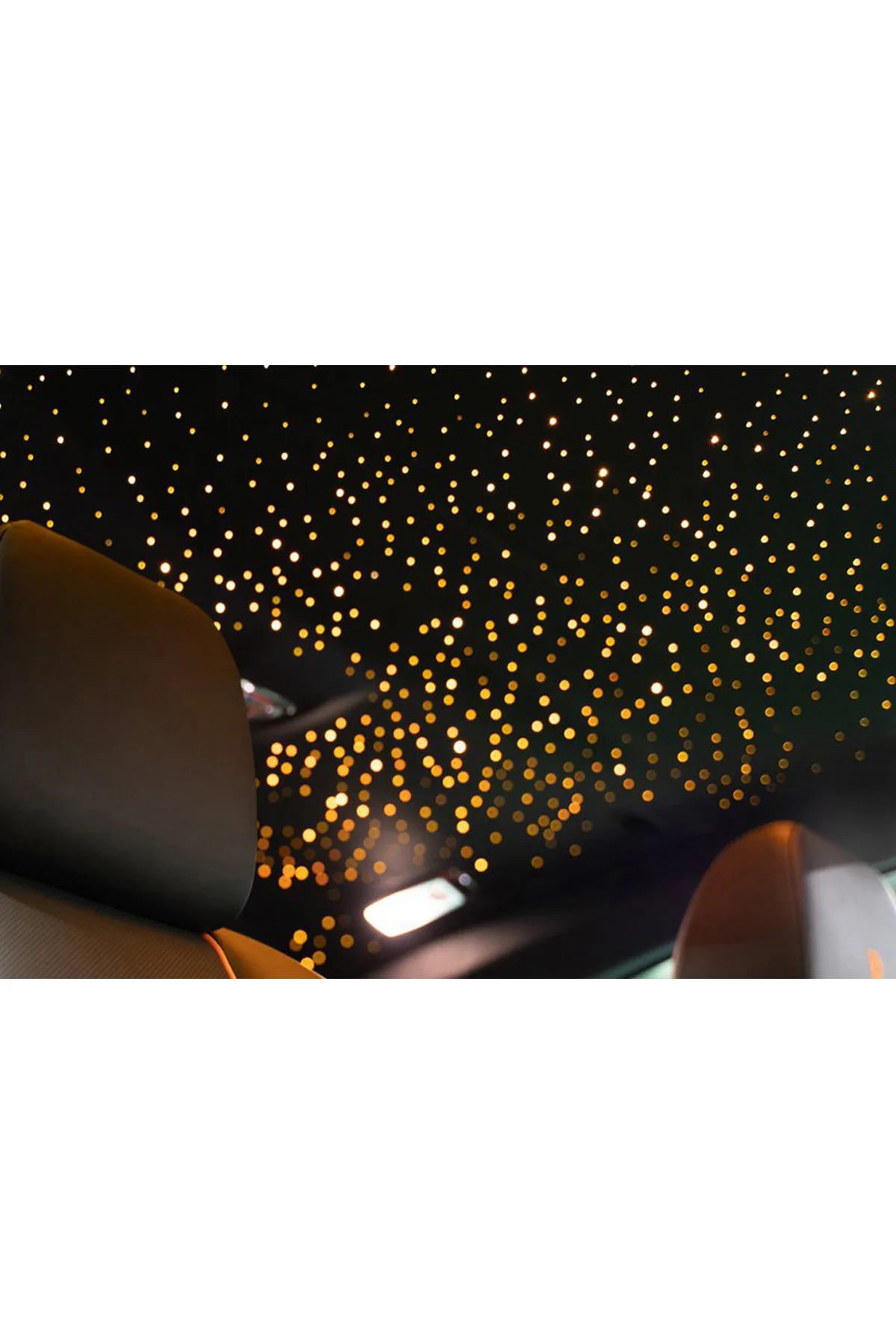
When we say "large project," think of areas of at least 50 square meters. However, the key at this scale is actually hidden in a fairly simple formula. Once you grasp this formula, everything will become clear. Therefore, anyone asking how many output modules are needed for large star ceiling projects must first understand this foundation.
Basic Formula: Area, Density, and Module Efficiency
How many output modules are needed for large star ceiling projects? Here is the key to the answer:
Required Number of Modules ≈ [ Total Area (m²) x Desired Star Density (units/m²) ] / [ Outputs per Module x Fiber Length per Output (m) x Average Stars per Meter ]
Let's break down this formula:
- Total Area: The actual measurement of the ceiling where you will scatter the stars.
- Star Density: How many stars per square meter. Do you want a calm space? 5-10 units/m² is enough. A dazzling show? Then aim for 15-25 units/m².
- Outputs per Module: The number of fiber outputs on the module you are using (e.g., 1, 4, 8, 10).
- Fiber Length per Output: The maximum meters of fiber you can connect to a single output. With a quality professional module, 15-20 meters is comfortable.
- Average Stars per Meter: Varies depending on the fiber type you use. For thin fibers, 10-15 stars/meter is a reasonable figure.
Understanding How Many Meters of Fiber Optik Cable One Output Can Carry
Pay attention here! Each output can handle a specific electrical and light load. Indeed, according to 2026 standards, 18-20 meters is a practical limit for a quality LED source and 0.75 mm fiber. Therefore, as you approach this limit, the likelihood of a noticeable brightness difference between the first and last stars increases. Additionally, distributing the load across multiple outputs rather than concentrating it on a single point is always the golden rule.
How Many Output Modules Are Needed for Large Star Ceiling Projects? | How to Choose the Most Suitable Module Type for Large Projects in 2026?
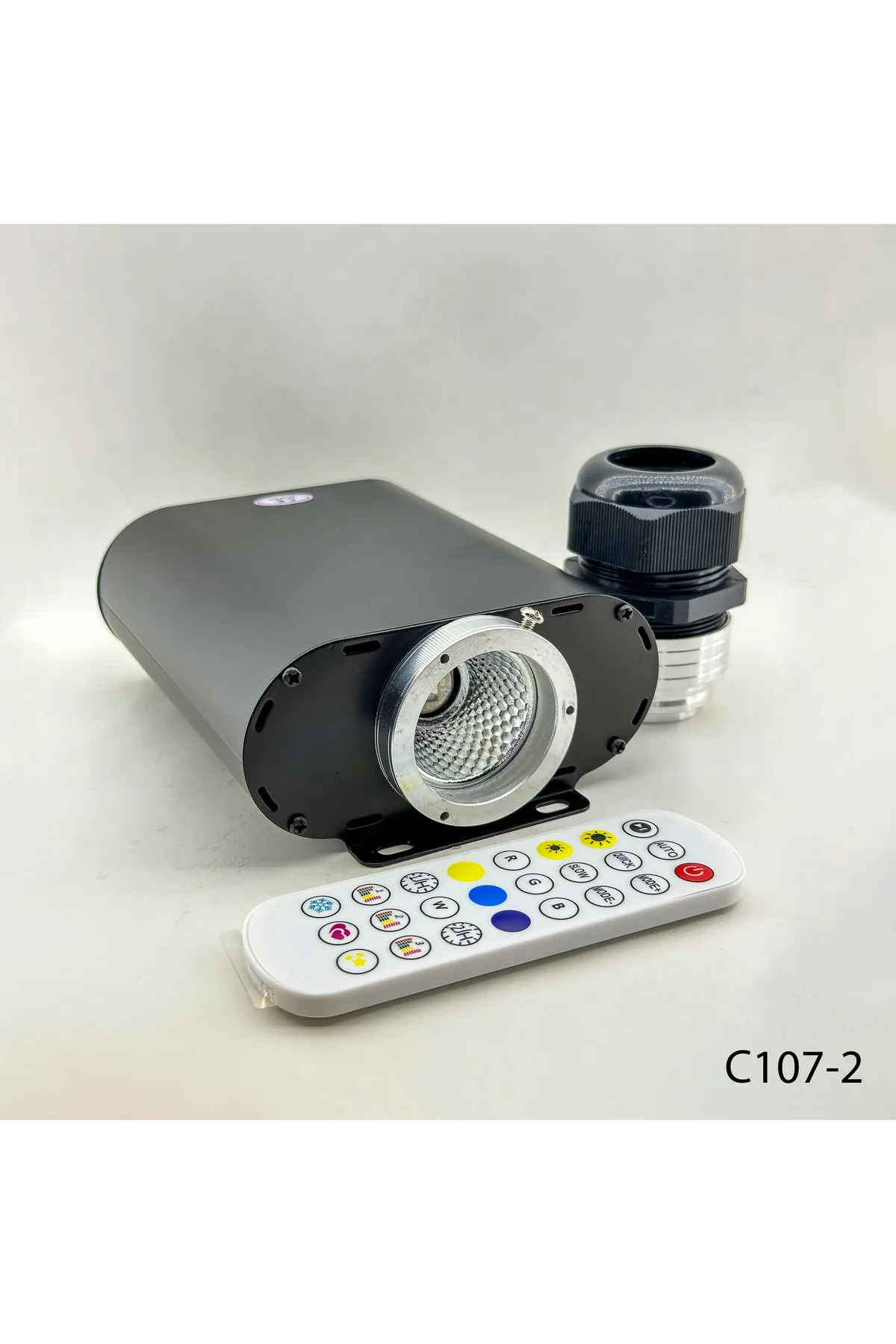
Here's the question that confuses people the most! The market has single-output modules and 10-output ready-made sets. Which one suits your project? In fact, by making this choice, you will also grasp the essence of the question, "How many output modules are needed for large star ceiling projects?"
Single-Output Professional Modules or Multi-Output Sets?
Let's compare the two models. The table below summarizes the crucial points for large projects:
| Comparison Criterion | Single-Output Professional Module (e.g., C107 Series) | Multi-Output Package Set (e.g., 8 or 10 Output Sets) |
|---|---|---|
| Control Flexibility | High-end. Each module is independent, allowing for different effects and brightness. | Limited. All outputs are usually connected to a single controller, providing the same effect. |
| Failure Risk and Maintenance | Distributed risk. If one module fails, only the stars connected to it go out. Easy to replace. | High central risk. If the main unit fails, all connected stars go out. |
| Installation Ease | Wiring can be a bit complex, requiring separate connections for each module. | More organized. Distribution is from a single point. |
| Expandability | Excellent. To enlarge the area, simply add a new module. | Limited. The set's capacity is fixed; a second set is needed for more. |
| Initial Investment Cost | Cost per module may be higher, but efficient in the long run. | Initial cost per meter/star is generally lower. |
3 Critical Factors Affecting Module Selection: Control, Maintenance, Expandability
2026 trends focus on flexibility and durability in large projects. If you base your decision on these three factors, your chance of error drops significantly. For instance, imagine a hotel lobby where you want to project different colors in each corner. Independent control is a must! This situation directly leads you to single-output professional modules. However, if you have a high ceiling where uniform light is sufficient and maintenance is difficult, robust multi-output sets might be a more practical friend.
Module Calculation for Large Star Ceiling Projects: Real Scenario Examples
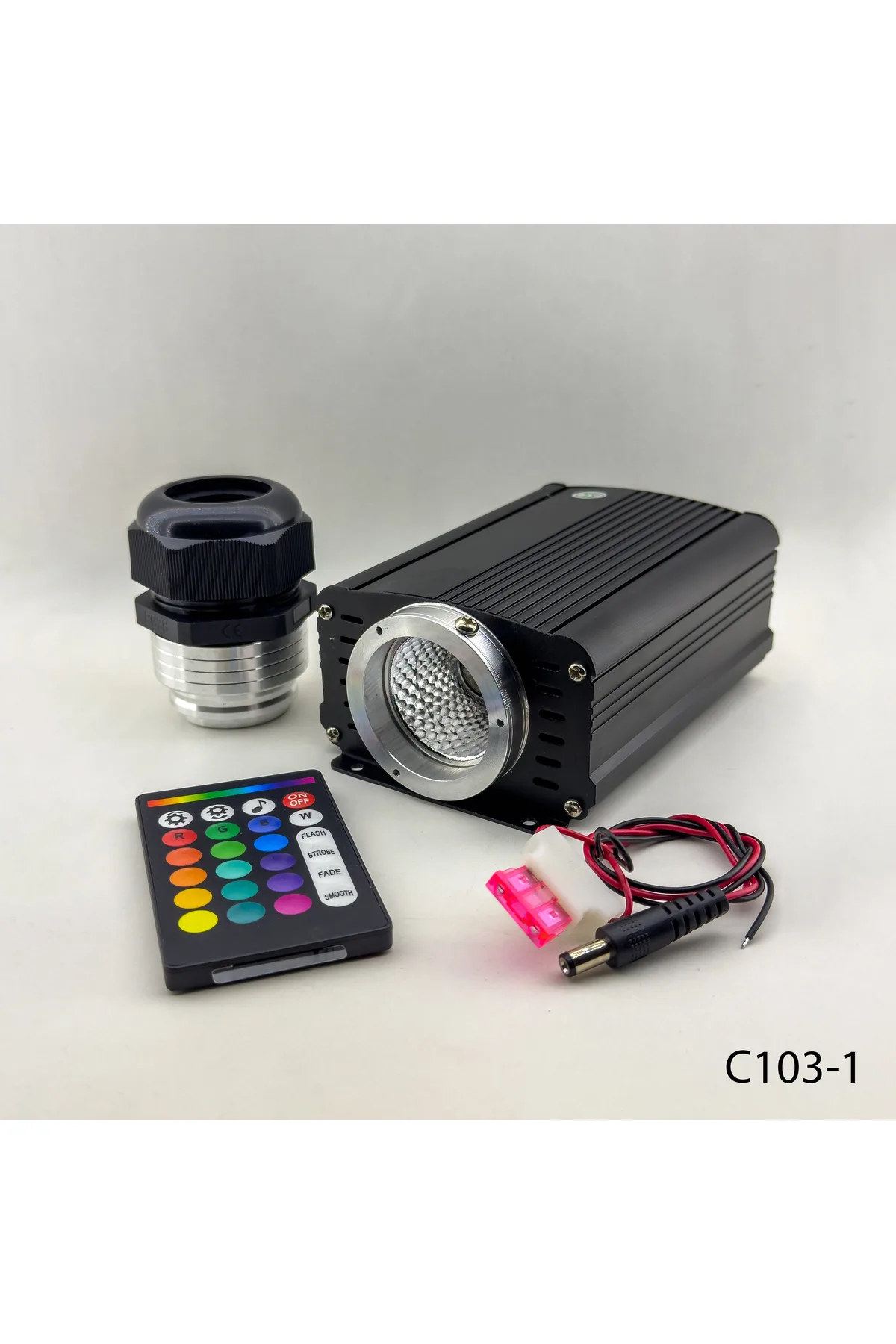
So, how do we put all this into practice? Here are three different projects we frequently encounter in 2026, with step-by-step module calculations for each. You will see how we found the answer to "how many output modules are needed for large star ceiling projects" in each scenario.
Scenario 1: A 120 m² Restaurant or Cafe
- Area: 120 m²
- Desired Density: 8 stars/m² for a relaxed ambiance
- Total Stars: 120 x 8 = 960 units
- Module to Use: A 10-output pixel LED set. Let each output carry 20 meters of fiber and 12 stars per meter.
- Capacity of One Set: 10 outputs x 20 m/output x 12 stars/m = 2400 stars (Theoretical capacity is sufficient).
- Result: A single 10-output set will do the job. However, to prevent light loss and ensure homogeneity, it's wise to keep fibers at 15-18 meters.
Scenario 2: Interior of an 80 m² VIP Bus or Minibus
The area may seem small. However, challenging conditions and high expectations make this project "large." Yes, the question of how many output modules are needed for large star ceiling projects is valid here too.
- Area: 80 m² (ceiling area)
- Desired Density: 18 stars/m² for flashy and dynamic effects
- Total Stars: 80 x 18 = 1440 units
- Module to Use: Vibration-resistant, special 4-output modules. Each output: 15 meters fiber, 10 stars per meter.
- Capacity of One Module: 4 outputs x 15 m x 10 stars/m = 600 stars.
- Required Number of Modules: 1440 / 600 = 2.4 → 3 modules required.
- Result: Use 3 units of 4-output modules to distribute the load evenly. Even if a failure occurs due to vibration, the entire system won't crash.
Scenario 3: A 200 m² Wedding Hall or Lobby
This is truly large scale! Flexibility and reliability come before everything else. Therefore, in such a project, just a formula is not enough; you must also consider the system architecture.
- Area: 200 m²
- Desired Density: 12 stars/m² for an impressive and luxurious look
- Total Stars: 200 x 12 = 2400 units
- Module to Use: Single-output, high-efficiency professional C107 series modules. Let each module (1 output) carry 18 meters fiber, 15 stars per meter.
- Capacity of One Module: 1 output x 18 m x 15 stars/m = 270 stars.
- Required Number of Modules: 2400 / 270 ≈ 8.9 → 9 modules.
- Result: Connect 9 single-output modules to a master controller. This gives you the flexibility to divide the hall into zones (dance floor, seating area) and run different shows for each. Moreover, power distribution becomes child's play thanks to the modular structure.
How Many Output Modules Are Needed for Large Star Ceiling Projects? – Special Planning Needs Brought by Being 'Large'
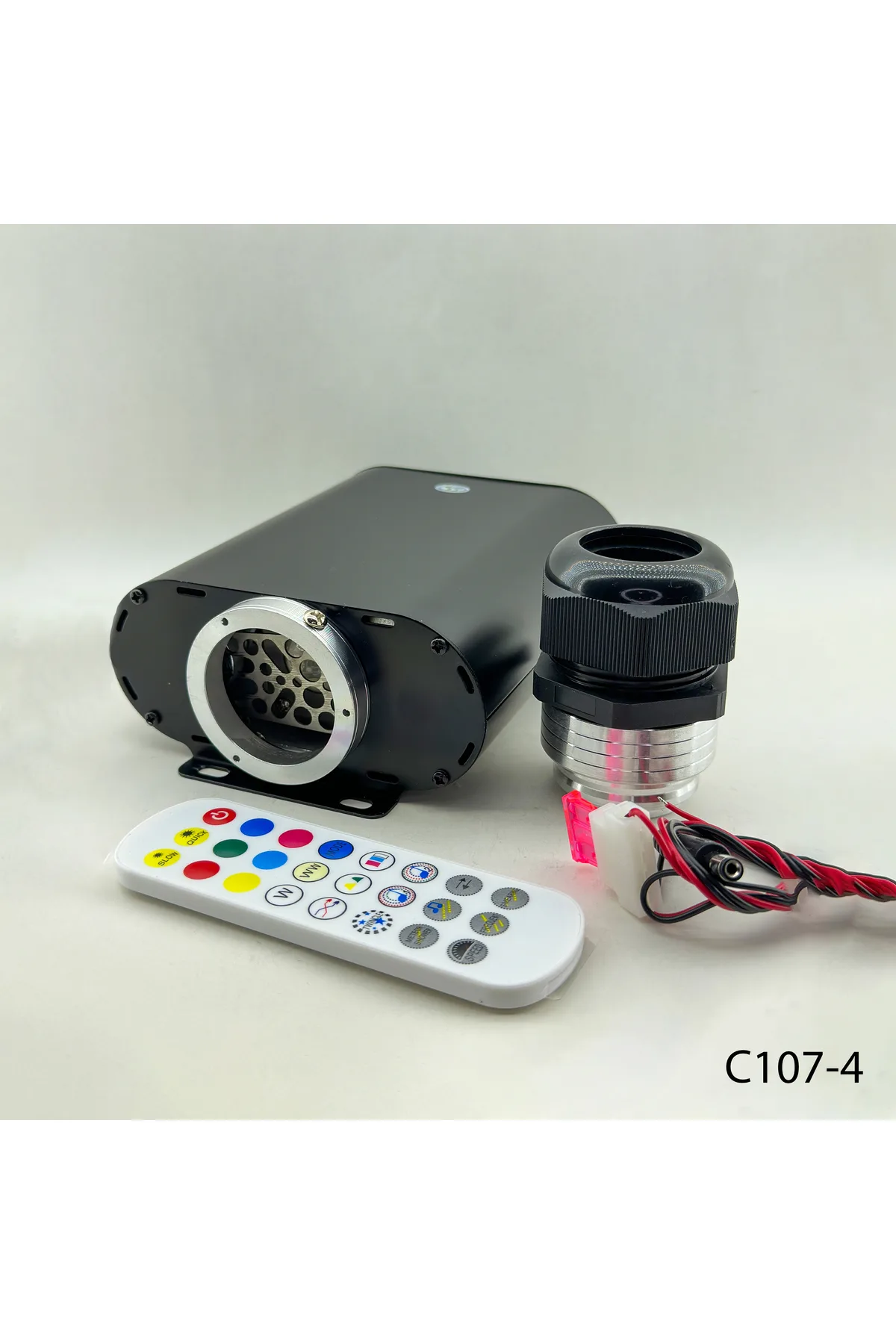
"Large" means not just area, but complexity. As in the history of decoration—like in jewelry design—the importance of details multiplies as the scale grows. Calculating the number of modules is only the first step. The real answer to how many output modules are needed for large star ceiling projects emerges when these details are planned.
Power Distribution and Electrical Infrastructure
Many modules and hundreds of meters of fiber mean a serious electrical plan. You must sum the current drawn by each module and run separate lines with thick-gauge cables. An overloaded line will lead to voltage drop and dimness in all stars. Select your power supplies with 20-30% reserve capacity; this is now a must in 2026.
Light Source Placement and Cooling
A large number of modules or powerful light sources generate heat. Therefore, place these sources in accessible, well-ventilated spots. Overheating is the primary enemy that rapidly consumes the lifespan of LEDs. In short, creating a cooling plan is as important as aesthetics to protect your valuable system, like gold.
Module Selection Checklist for Your Large Star Ceiling Project (2026)
We have prepared a checklist that brings together everything we've discussed. In summary, when deciding how many output modules are needed for your large star ceiling project, follow these steps.
Technical Checks
- Is the Area and Density Determined? Write down the exact square meters and your desired star frequency.
- Is the Total Star Count Calculated? (Area x Density) = Total Stars.
- Is the Module Type Selected? Single-output or multi-output set? Refer to the comparison table.
- Is the Unit Capacity Checked? Calculate the maximum number of stars one unit of the selected module type can carry.
- Is the Required Number of Units Calculated? (Total Stars / Unit Capacity) and round up.
- Is the Power Requirement Calculated? Determine the total power consumption of all modules in watts.
Cost and Operational Checks
Technical calculations alone are not enough. For the project to be long-lasting, you must also consider cost and operation.
- Is a Spare Parts Plan Made? Budget for at least 1 spare module or main unit.
- Is Control System Compatibility Checked? Are the selected modules compatible with the intended master controller/application?
- Is Installation Access Considered? Are the locations where you will install and later maintain the modules accessible?
- Is Expansion Possibility Evaluated? Can new modules be added to the system if the area expands in the future?
- Is the Total Cost of Ownership Calculated? Have you considered not just the product cost, but also installation, maintenance, and energy costs?
How Many Output Modules Are Needed for Large Star Ceiling Projects? | Frequently Asked Questions (2026)
1. Can you give a definitive number of modules for a 100 m² area?
Unfortunately, no. Because it depends on your desired star density and the module's capacity. However, with an average density (10 stars/m²) and a 10-output set, a single set might theoretically suffice. Still, for better homogeneity, using two 4-6 output modules yields better results. Single-output modules are also among your options.
2. Is using a multi-output module set always more economical?
In terms of initial purchase cost, they are generally more economical. However, when operational costs and risks come into play, the situation can change. A failure in the main unit can affect a much larger area, leading to potentially high loss costs. If long-term, uninterrupted use is your priority, a modular structure might actually be a more economical choice.
3. How can we increase the fiber length we can connect to one module?
Trying to "increase" the fiber length is not correct; it creates light loss. Instead, you can use a more powerful (higher lumen value) LED light source or increase the fiber cable diameter (e.g., from 0.75 mm to 1.0 mm). The most guaranteed solution is to divide the load, i.e., use more outputs.
4. My project is very large (500 m²+). How should I group the modules?
In giant projects, you must divide the area into logical zones. Use separate module groups and, if possible, separate power supplies for each zone. This simplifies control, limits failure impact, and distributes the cabling load. Calculate each zone separately using the formula in this article.
5. Which technological development should I pay most attention to in module selection in 2026?
In 2026, the most critical developments will be in "smart integration" and "energy efficiency." When selecting modules, prefer those that work seamlessly with popular home automation systems (Alexa, Google Home) or professional DMX systems. Also, lean towards models that offer higher lumen output per watt (lm/W), meaning they consume less energy for the same brightness.
Conclusion
How many output modules are needed for large star ceiling projects? The answer to this question goes beyond dry mathematics; it lies in understanding your project's breath. For a successful large project in 2026, you must think not just about numbers, but about control, durability, the future, and infrastructure as a whole. The formula, examples, and checklist in this guide will provide you with a solid foundation. The final decision, however, rests with your project's spirit and your vision.
If you wish to receive personalized module calculation and technical consultancy for your large star ceiling project, do not hesitate to contact our expert team. Let's plan the most suitable, efficient, and impressive solution together. To explore our collection for "How many output modules are needed for large star ceiling projects?" and seize the best opportunities, visit https://CoraxAds.com now.