Table of Contents
- Is Fiber Optic Application on a Bathroom Ceiling Safe? 2026 Technical Analysis
- Is Fiber Optic Application on a Bathroom Ceiling Safe? Advantages and Safety
- Is Fiber Optic Application on a Bathroom Ceiling Safe? 2026 Set Selection Guide
- Is Fiber Optic Application on a Bathroom Ceiling Safe? Recommendations by Bathroom Type
- Is Fiber Optic Application on a Bathroom Ceiling Safe? Common Mistakes and Solutions
- Maintenance Tips and 2026 Trend Analysis
- Frequently Asked Questions (FAQ)
Recently, a client told me they dreamed of a starry sky on the ceiling of their newly built luxury bathroom. However, I immediately noticed the concern in their voice: "Is fiber optic application on a bathroom ceiling safe?" In my over ten years of experience, I've encountered this question hundreds of times. The truth is, the answer to whether it's safe is more complex than a simple yes or no. In this article, I will blend 2026 standards with my personal project experience to explain the 5 critical points that determine safety. If you're wondering is fiber optic application on a bathroom ceiling safe, you must first understand these technical details. Therefore, the answer is clearer than you might think.
Is Fiber Optic Application on a Bathroom Ceiling Safe? 2026 Technical Analysis
The clear answer is this: with 2026 technology, using the correct moisture-resistant components, adequate electrical insulation (IP67/IP68), and professional installation, fiber optic application on a bathroom ceiling is completely safe. Moreover, the real risk comes from incorrect materials and amateur workmanship. Indeed, the right technical knowledge transforms these risks into a system polished like gold. Additionally, it's essential to follow current standards. Technically speaking, we can comfortably answer "yes" to the question is fiber optic application on a bathroom ceiling safe. However, the foundation of this safety is material quality.
What Are Moisture and Steam Resistant Components?
Moisture and steam, the essentials of a bathroom, are the arch-enemies of electronics. But a fiber optic system is very different from others: the light source, i.e., the LED projector, sits in another room, in a dry corner. Thus, only the optical fibers that carry the light, which do not conduct electricity, reach the ceiling. However, the key point is the outer coating of these fibers and the connection points. Furthermore, in 2026, quality sets on the market use fibers with special moisture-resistant PVC or PE coatings and stainless steel connectors. In summary, manufacturers put these components through rigorous tests for compliance with international standards like TSE EN 60793-1-40 and IEC 60793-1-40.
These tests are the most concrete basis for alleviating concerns about is fiber optic application on a bathroom ceiling safe.
Electrical Insulation and IP Protection Ratings
The second pillar of safety is protection ratings. The IP (Ingress Protection) code indicates how resistant equipment is to dust and water. In an environment like a bathroom, every part of the system that comes into contact with moisture must have at least IP67 protection. IP67 means complete protection against dust and resistance to water immersion at 1 meter depth for 30 minutes. For harsher conditions (like a steam room), IP68 is required. This protection is vital, especially for the connectors attached to the light source and the junction boxes within the ceiling. To be honest, many budget sets overlook this detail and create a security vulnerability.
From this perspective, when asking is fiber optic application on a bathroom ceiling safe, you must check the IP protection ratings.
"In a bathroom project, safety lies in the most frequently overlooked details. It's not just the light source that needs to stay dry, but all electrical connection points. The 2026 standards are now very clear on this point." - Ahmet K., Electrical Engineer & Lighting Consultant
Is Fiber Optic Application on a Bathroom Ceiling Safe? Advantages and Safety
Fiber optic lighting keeps the light source away from the humid environment and transmits only cold light. Therefore, risks of electric shock, short circuits, and overheating are greatly reduced compared to traditional fixtures. Consequently, it offers an ideal safety profile for bathrooms. As a result, the answer to the question is fiber optic application on a bathroom ceiling safe is strengthened by these advantages. But for this safety to be continuous, correct product selection is essential. Moreover, their low voltage is another factor that increases safety.
Low Voltage and Reduction of Electric Shock Risk
Fortunately, most modern fiber optic systems operate with low-voltage (SELV - Safety Extra Low Voltage) LED sources like 12V or 24V. Furthermore, these voltage levels do not pose a vital risk to the human body. The chance of an electric shock when touching the fiber ends on the bathroom ceiling is zero because fibers do not conduct electricity. Indeed, in a traditional chandelier or spot fixture, insulation can deteriorate in a humid environment and cause serious risks. Thus, this fundamental difference largely alleviates concerns about is fiber optic application on a bathroom ceiling safe. In short, low voltage also provides energy efficiency.
Minimizing Heating and Fire Risk
Traditional halogen or some older LED fixtures can overheat. However, in a closed and steamy environment like a bathroom, dissipating this heat is difficult. In fiber optic systems, the LED source is in a ventilated projection box and located outside the bathroom. The fibers transmit light cold. Research shows that fiber optic lighting reduces heat increase in the ceiling area by an average of 92% compared to traditional methods. This is a factor that almost eliminates fire risk. Cold light transmission also increases bathroom comfort.
Is Fiber Optic Application on a Bathroom Ceiling Safe? 2026 Set Selection Guide
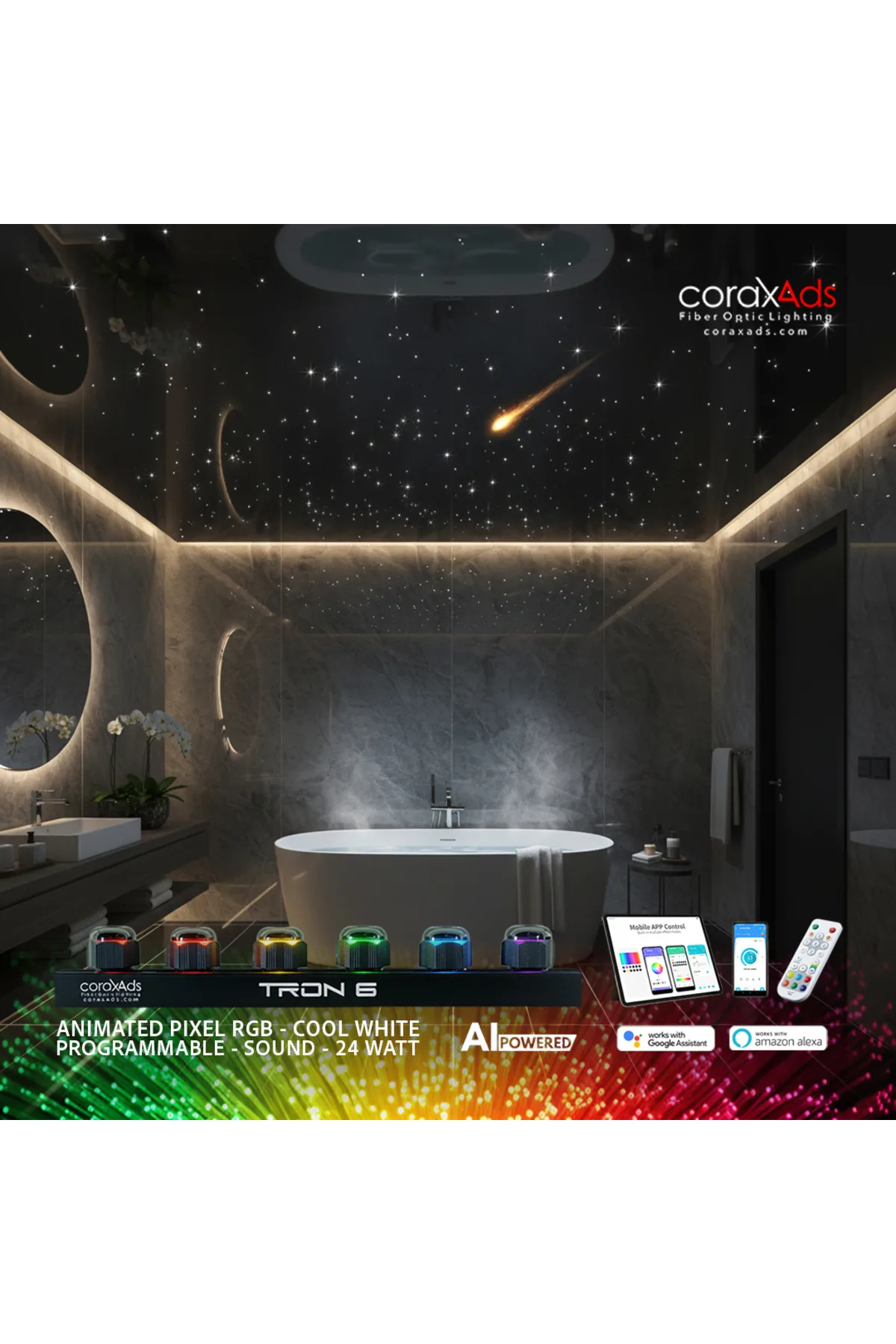
When choosing a safe set for your bathroom in 2026, pay attention to these points: The light source and all connection points must have at least IP67 protection, cables must have moisture-resistant PVC coating, and the set must be suitable for professional installation. Comparing different models is wise for price-performance balance. You should make your selection while keeping the question is fiber optic application on a bathroom ceiling safe in mind. In short, the right set is the cornerstone of safety and provides long-term satisfaction.
The Importance of IP67 and IP68 Certifications
Just the phrase "water-resistant" is never enough. The IP code must be clearly stated on the product box or technical datasheet. IP67 is the minimum starting point for the light source and extension cables. If the application will be in an area of your bathroom where water could splash directly, IP68 should be sought. These certifications are proof that the product has passed laboratory tests. Additionally, requesting these documents is a way to measure the seller's reliability. Ultimately, these certifications provide a concrete answer to the question is fiber optic application on a bathroom ceiling safe.
Moisture-Resistant Cable and Connector Checklist
Use this list before purchasing:
- Fiber Outer Coating: Must be special moisture-barrier (Anti-Humidity Barrier) PVC or PE.
- Connector Material: Stainless steel or high-quality, UV and moisture-resistant fiber optic.
- Light Source: Must have IP67 or higher protection, with a ventilated metal housing.
- User Manual: Must contain special instructions for bathroom/humid environment installation.
- Warranty: The product must be covered by at least a 3-year warranty. This shows the manufacturer's confidence.
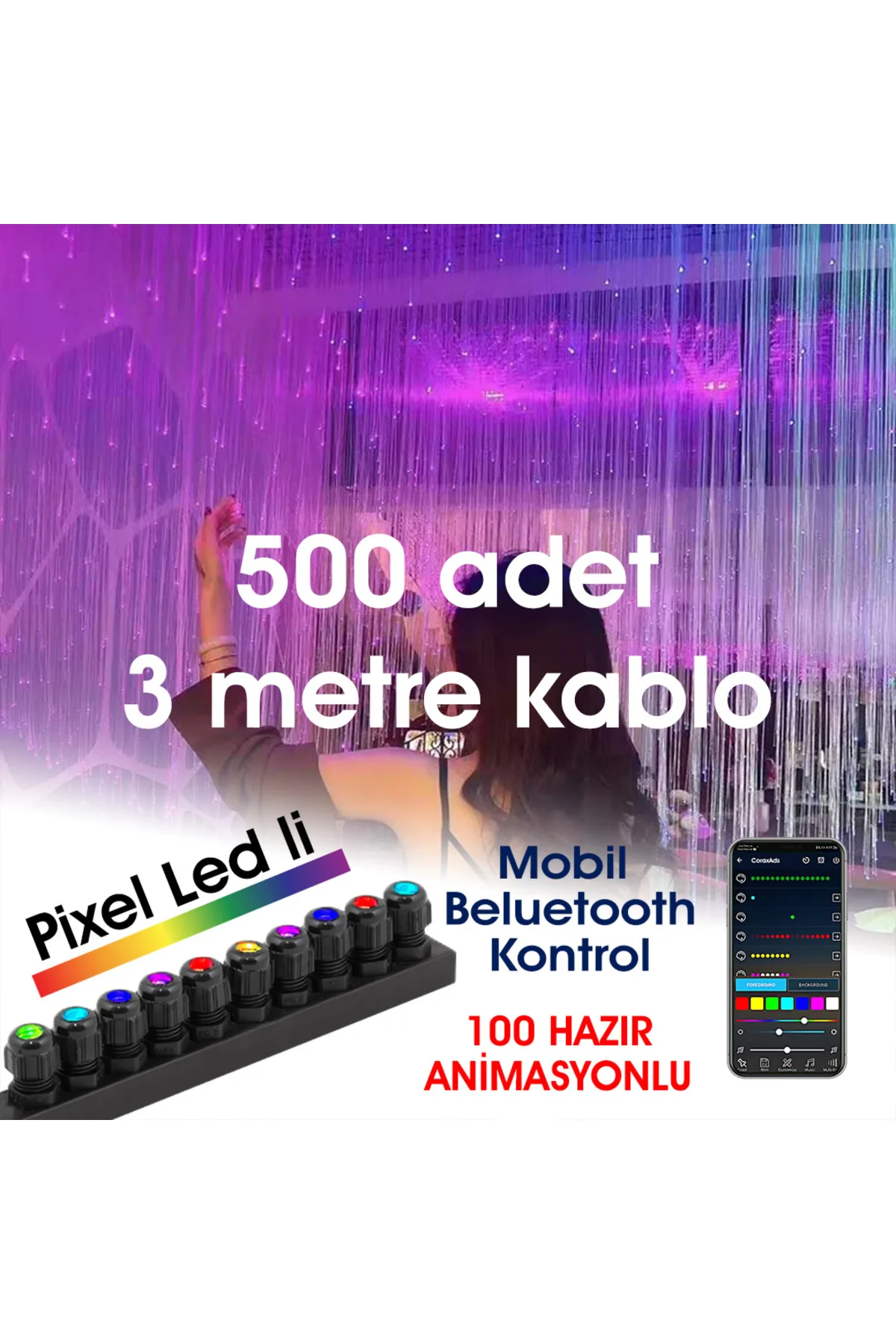
For example, at Corax Ads, in our special sets like the BATHROOM AMBIENCE LIGHTING STAR CEILING APPLICATION SET, we include components that meet all these criteria, with IP68 protected connectors and waterproof fibers. Such sets offer longevity and safety. On the other hand, especially avoid general-purpose sets with unclear protection ratings for bathrooms. When researching products on platforms like Trendyol, pay attention not only to visuals but also to technical specifications. You can use this checklist to alleviate your concerns about is fiber optic application on a bathroom ceiling safe.
2026 Fiber Optic Set Purchase Guide: Step by Step
Follow these steps for a safe purchasing process. First, prepare your bathroom's technical drawing and measurements. Identify a dry area where you can place the light source. Then, evaluate different sets on the market according to the checklist above. Be sure to read customer reviews and expert opinions. Finally, contact the seller to ensure you can get technical support. These steps are the practical way to get a positive answer to the question is fiber optic application on a bathroom ceiling safe. Applying each step without skipping will be beneficial. This guide provides a safe purchasing experience.
Is Fiber Optic Application on a Bathroom Ceiling Safe? Recommendations by Bathroom Type
Safety varies according to your bathroom type. While IP67 is sufficient in standard bathrooms, in extremely humid environments like steam rooms, the light source must absolutely remain outside, and the entire system must be protected with IP68. There are sets specially produced for each bathroom type. This customization largely alleviates concerns about is fiber optic application safe. You should analyze your bathroom well before starting your project. This analysis also facilitates correct material selection.
Recommendations for Standard Bathrooms (Shower/Bathtub)
Most modern apartment bathrooms in Turkey fall into this category. If applying directly above a shower cabin or bathtub enclosure, it's wise to leave at least a 50 cm lateral distance as a precaution against water splashing. You can mount the light source inside a cabinet just outside the bathroom door or in an adjacent dry room. This is the most basic safety rule, as detailed in our article on the waterproofness of bathroom fiber optic lighting. The question is fiber optic application on a bathroom ceiling safe becomes clear with these simple precautions. These measures also extend the system's lifespan.
Extra Precautions for Steam Rooms or Bathrooms with Jacuzzis
These areas, frequently encountered in luxury projects, present extreme conditions. Temperature and humidity levels are very high. The golden rule for fiber optic application here is: All electronic components (light source, dimmer, controller) must be OUTSIDE the steam room. Only the fiber bundle should be brought into the room through an IP68 protected gland. The fibers used must be of a type resistant to high temperatures (stable against expansion). You must strictly adhere to this rule in traditional Turkish bath renovations as well. These precautions provide a "yes" answer to the question is fiber optic application on a bathroom ceiling safe for these types of bathrooms.
Maintenance Tips for Bathroom Fiber Optic Systems
Regular maintenance is essential for safety to be sustainable. Ensure the ventilation holes of the light source are free of dust and cobwebs. Checking every six months is a good idea. Never spray chemical cleaners on the fiber ends on the bathroom ceiling; only wipe them lightly with a dry, soft microfiber cloth. Having a qualified technician check the system's electrical connections once a year prevents possible loosening. These simple tips extend the system's lifespan and permanently eliminate concerns about is fiber optic application on a bathroom ceiling safe. You should not neglect maintenance.
Is Fiber Optic Application on a Bathroom Ceiling Safe? Common Mistakes and Solutions
The main cause of insecurity is common mistakes: using moisture-susceptible cables, making electrical connections inside the bathroom, or drilling holes in drywall ceilings that exceed load capacity. These mistakes can lead to water leakage, cable deterioration, and even structural damage. Recognizing and preventing these mistakes is very important. In fact, all these mistakes stem from a lack of knowledge and are preventable. Avoiding these mistakes allows you to answer "yes" to the question is fiber optic application on a bathroom ceiling safe.
Wrong Cable Selection and Moisture Damage Risk
The biggest mistake is using standard fiber optic cables produced for indoor or dry environments in a bathroom. The coating of these cables absorbs moisture, leading to mold over time and loss of optical properties. The solution is simple: purchase products clearly labeled "for humid environments" from sellers specialized in fiber optic cable durability in humid environments. This choice directly determines the long-term safety of your project. Additionally, this choice strengthens your answer to the question is fiber optic application on a bathroom ceiling safe.
Risks of Non-Professional Installation (DIY)
Many people want to do the installation themselves. However, critical mistakes can be made:
- Making Electrical Connections Inside the Bathroom: The 220V power line to the light source should not be joined in a humid environment. This connection must be made in a dry distribution box.
- Excessive Drilling: Drilling too many and too large holes in a drywall ceiling for the star effect can weaken the ceiling's supporting profile. Professionals know the minimum required hole size without damaging the supporting structure.
- Not Insulating Connectors: Connection points in the ceiling void can be affected by moisture. You must protect these points with waterproof junction boxes or insulation tape.
The table below compares recommended set models and critical features by bathroom type:
| Bathroom Type | Recommended Set Model | Minimum IP Protection | Light Source Location | Extra Precaution |
|---|---|---|---|---|
| Standard Bathroom (Shower/Bathtub) | Basic Moisture Resistant Set | IP67 | Just outside bathroom, dry cabinet | 50 cm distance from shower curtain edge |
| Jacuzzi or Large Steam Area | Advanced Steam Resistant Set | IP68 | Definitely a different, ventilated room | High-temperature resistant fiber, gland |
| Fully Open / Semi-Open Bathroom | Industrial Outdoor Set | IP68 & UV Resistance | Enclosed, rain-sheltered cabinet | Avoid direct sunlight |
Maintenance Tips and 2026 Trend Analysis
After installing a safe system, protecting it is also important. In 2026, smart and autonomous maintenance trends are emerging for bathroom fiber optic lighting systems. Some next-generation light sources can monitor performance with internal sensors and alert the user about maintenance time. These developments reassure users about is fiber optic application on a bathroom ceiling safe. These trends also increase user comfort.
Bathroom Fiber Optic Trends for 2026 and Beyond
So, what does the future bring us? First, personalized lighting scenarios are becoming widespread. Fiber optic sets integrated with smart home systems will automatically adjust light color and brightness according to your bathroom routine. Second, energy efficiency will increase further. Advancements in micro-LED technology promise up to 30% less energy consumption for the same brightness. The third trend is health and wellness-focused lighting. Systems offering invigorating blue tones for morning showers and relaxing amber tones for evening baths are gaining popularity. All these trends go beyond the question is fiber optic application on a bathroom ceiling safe, combining comfort and technology.
These trends also help increase safety.
Material Comparison for Long-Term Durability
Material choice directly affects long-term safety. Below is a table comparing the durability performance of different fiber coating materials under bathroom conditions:
| Material Type | Moisture Resistance | Heat Resistance (Max) | Lifespan (In Bathroom Environment) | Cost |
|---|---|---|---|---|
| Standard PVC | Low - Absorbs moisture | 60°C | 3-5 Years | Low |
| Moisture-Barrier PVC | High | 75°C | 8-12 Years | Medium |
| Special PE (Polyethylene) Coating | Very High | 85°C | 15+ Years | High |
| Fluoropolymer Coating | Excellent (Chemically resistant) | 105°C | 20+ Years | Very High |
This comparison shows that moisture-barrier PVC or special PE coated fibers are the most sensible choice for bathroom applications for longevity and safety. When seeking an answer to is fiber optic application on a bathroom ceiling safe, focusing on material quality will be correct. This material selection will also determine your project's success.
Frequently Asked Questions (FAQ)
What happens if the fiber optic cables in the bathroom ceiling are exposed to moisture in the ceiling void/attic?
A very valid concern. The ceiling void or attic can also be humid. Therefore, the fiber optic cables chosen for the bathroom must have moisture-resistant coatings not only for the parts inside the bathroom but also for those in this void. A quality set minimizes this risk. The light source must absolutely be placed in a dry environment, not in this void.
Does a fiber optic system require grounding in the bathroom?
If the light source (LED projector) operates on 220V, then of course it must be grounded. However, since the projector itself is outside the bathroom, the grounding process is carried out in a dry and safe electrical panel. There are no electronic components inside the bathroom that require grounding. This is also a safety advantage.
Can plastering or painting be done after fiber optic application on a bathroom ceiling?
Yes, but care must be taken. You should not cover the fiber ends with plaster or paint, except at the effect points. During application, you should cover the fiber ends with protective tape. You can remove this tape after the process is complete. You can easily plaster or paint the fiber body; this does not affect its performance.
How far should the fiber optic light source be from the bathroom?
The ideal distance can vary between 1 and 10 meters, provided the source is in a completely dry environment. As the fiber distance from the light source to the ceiling increases, light loss also increases. Therefore, keeping the distance as short as possible is good for brightness, but safety (dry environment) always takes priority. A professional installer will strike this balance.
Does a bathroom fiber optic system require maintenance?
It requires very little maintenance. Basic maintenance involves periodically, for example once a year, cleaning the filters and fan of the light source (LED projector) from dust. You should not manually clean the fiber ends on the bathroom ceiling; you can only wipe them lightly with a dry, soft cloth. If the system is installed correctly, as shown in the technical details of star ceiling application in bathrooms, it will work flawlessly for decades.
Conclusion and Evaluation
In fact, fiber optic application on a bathroom ceiling is definitely safe with 2026 standards and the correct approach. It even offers superior safety compared to traditional lighting: low voltage, cold light, and electrical components away from moisture. The key to safety is choosing IP67/IP68 certified moisture-resistant components and leaving the installation to professionals skilled in this work. Quality material will bring you both peace of mind and stunning aesthetics; just like a carefully chosen piece of jewelry, it will complete your space and retain its value. This meticulousness ultimately means making an investment of gold standard.
In summary, the question "is fiber optic application on a bathroom ceiling safe" should no longer be a concern, but the starting point for proper planning.
Call to Action (CTA): If you dream of a star ceiling to safely illuminate your bathroom, take the right step and contact us today. Let us offer you security-certified fiber optic set recommendations suitable for your specific bathroom type and professional installation services. Remember, safety lies in the details. Is fiber optic application on a bathroom ceiling safe? Visit https://CoraxAds.com now to explore our collection and seize the best offers.