Recently, we had a client who wanted a "magical" atmosphere for the lobby of their newly opened boutique hotel. However, the space was only 25 square meters. On top of that, they envisioned independent, dynamic lighting effects in every corner. Furthermore, our 3-output models wouldn't suffice, while the 10-output ones exceeded both their budget and needs. It was at this precise point that the hero of the project emerged: the 6-output ARGB power pixel. So, how much area can this flexible and powerful solution, the 6-output ARGB power pixel, effectively cover? Let's explore the answer together, based on our decade of field experience and 2026 standards. In addition, the answer is actually hidden within a range that will be shaped by your project details.
Table of Contents
- How Much Area Does a 6-Output ARGB Power Pixel Cover?
- How Much Area Does a 6-Output ARGB Power Pixel Cover? What Are Its Technical Specifications?
- How Much Area Does a 6-Output ARGB Power Pixel Cover? Which Projects Is It Ideal For? (2026 Project Examples)
- How Much Area Does a 6-Output ARGB Power Pixel Cover? Planning and Installation (2026 Tips)
- How Much Area Does a 6-Output ARGB Power Pixel Cover? Advantages and Limitations (2026 Comparison)
- Frequently Asked Questions About 6-Output ARGB Power Pixel (2026 FAQ)
- Conclusion: Transform Your Space in 2026 with a 6-Output ARGB Power Pixel
How Much Area Does a 6-Output ARGB Power Pixel Cover?
Let's start with the direct answer: According to 2026 market standards, a 6-output ARGB power pixel controller can effectively and evenly light an interior space averaging 20 to 35 square meters. Fortunately, this wide range indicates there isn't a single "right answer." It can flex based on your project details. However, the precise answer to "how much area does a 6-output ARGB power pixel cover?" begins with understanding the following principles. This way, you can make the most accurate estimate for your own project.
Basic Calculation Principles
When calculating the area, what matters is not the controller itself, but rather the total length and density of the LED pixel strips or fiber optik ends you will connect to it. The 6 outputs give you the luxury of dividing this total length into 6 different zones or even 6 different color/effect sequences. For example, using a classic calculation, let's assume you use a strip that is 5 meters long per output with a density of 30 pixels (LEDs) per meter. This means a total of 30 meters of strip and 900 pixels. Consequently, this many pixels can deliver extremely impressive results in a 25-30 m² area (for details like ceiling perimeter and central sections, for instance).
By correctly applying these principles with a 6-output ARGB power pixel, you can control a sizable area.
Area Calculation with Example Scenarios
Let's see how much area a 6-output power pixel system can cover in different scenarios:
- Scenario 1 (Intense Effects): A living room starry ceiling. You connect 4 meters of strip with 60 LEDs/m density to each output. With a total of 24 meters of strip and 1440 pixels, a 15-20 m² ceiling transforms into an incredibly vibrant and detailed sky.
- Scenario 2 (Decorative Accent): Wall niches and shelf lighting in a cafe. 3 outputs are used for 5-meter shelves each, and 3 outputs for 2-meter niche lighting each. With a total of 21 meters of strip, the atmosphere of a 30-35 m² main seating area is shaped. The answer to how much area a 6-output ARGB power pixel covers becomes clear with such scenarios.
Critical Factors Affecting Coverage Area
The clear answer to the how much area it covers question depends on these factors:
- Pixel Density: Choosing 30, 60, or 144 LEDs per meter directly affects the frequency of lighting and thus the visual area covered.
- Power Supply Capacity: It's not the controller, but the wattage of the power supply feeding it (e.g., 200W vs. 400W) that limits the total number of LEDs you can operate.
- Purpose of Lighting: Do you want just spot star effects or continuous line lighting? With spot usage, you can address a larger area with the same controller.
“In 2026, we're no longer just talking about square meters, but 'light density area.' In short, a 6-output system means 6 separate stages in a medium-sized venue where you can manage the viewer's visual attention. In summary, this is a strategic advantage.” - Corax Ads Technical Project Manager
How Much Area Does a 6-Output ARGB Power Pixel Cover? What Are Its Technical Specifications?
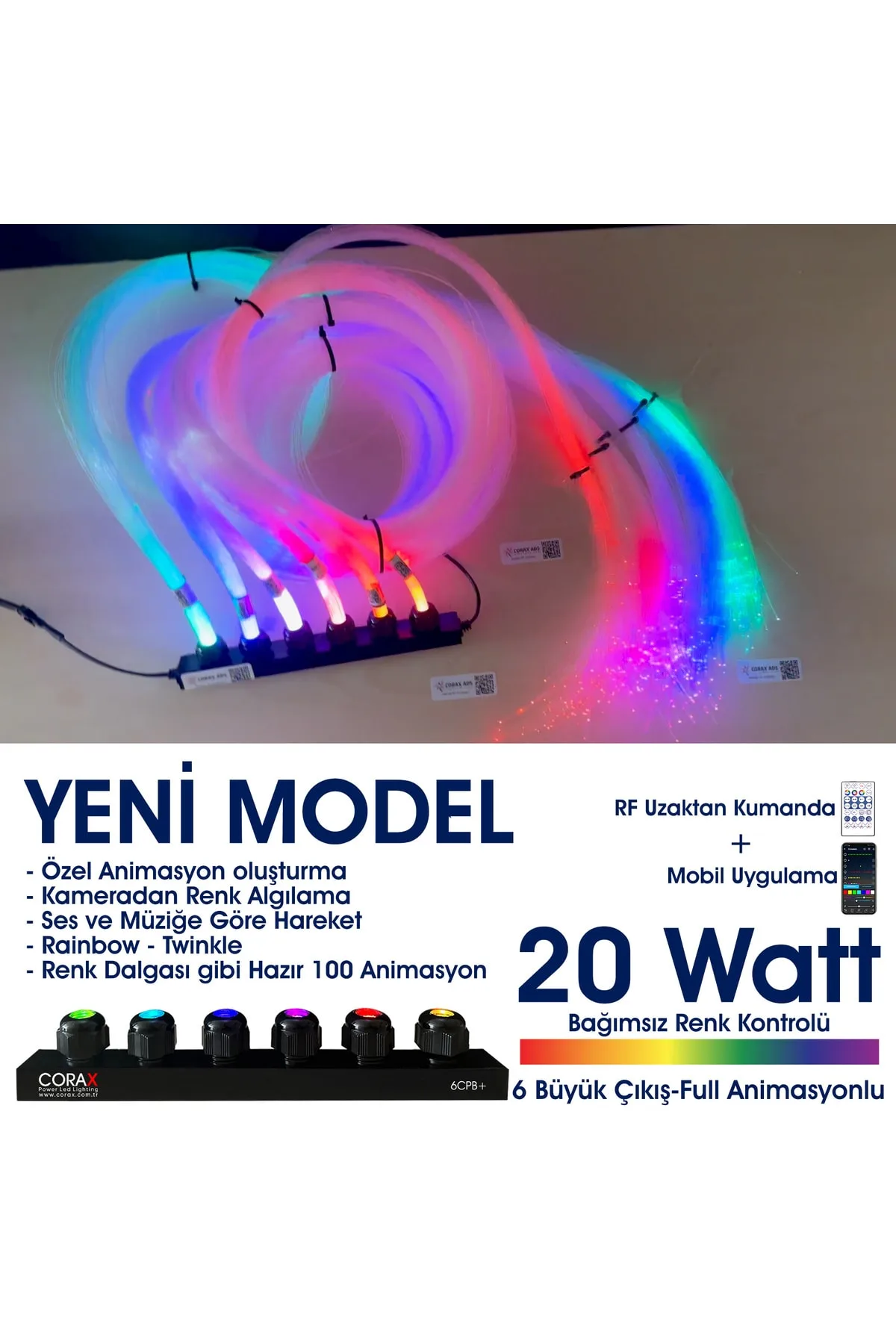
The answer this system provides to the area coverage question is directly related to its underlying technical infrastructure. In summary, 2026 models are much smarter and more powerful compared to a few years ago. A user asking "how much area does a 6-output ARGB power pixel cover?" should first know these technical specifications well. That is, the right technical choice directly increases your area efficiency.
Power and Current Values Per Output (2026 Standards)
Current 6-output ARGB power pixel modules typically support a 5V or 12V DC operating voltage. The current capacity of each output varies between 3A and 6A depending on the model. For example, let's say you have a model with 5V/3A outputs; each output can provide a maximum of 15W (5V*3A) of power. For 6 outputs, this totals 90W. However, in practice, accounting for power supply efficiency and cable losses, you can safely use about 80% of this value. Thus, this gives us an effective LED power capacity of 70-75W. With this power, it's possible to light a 25-30 m² area with medium-density LEDs.
Control Protocols and Software Compatibility
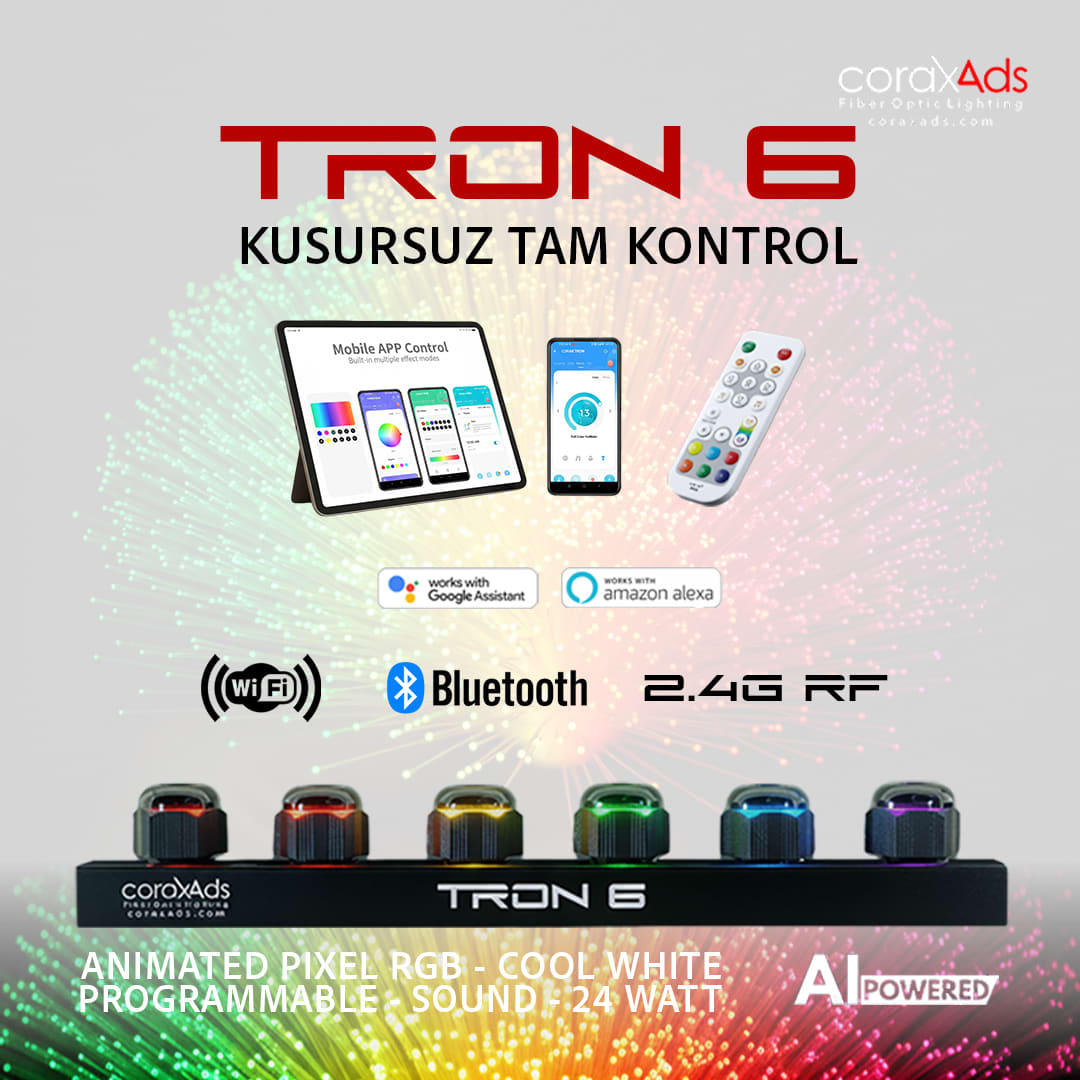
A must-have for 2026 is multi-protocol support. Models that can integrate and work with professional protocols like DMX512, Art-Net (over network), and even Bluetooth Mesh are now common, moving beyond simple remotes. This way, you can connect a 6-output power pixel system to your smart home system (IoT) and synchronize it with sound, motion, or timers. Moreover, on the software side, user-friendly interfaces allow you to independently program each output (and each LED on that output). Indeed, this control flexibility positively affects the answer to "how much area does a 6-output ARGB power pixel cover?"
| Feature Level | Current Per Output | Control Protocol | Waterproof Rating (IP) | Estimated Price Range (TL) |
|---|---|---|---|---|
| Entry Level | 2.5A - 3A | Remote / Basic APP | IP20 (Indoor) | 450 - 700 |
| Mid Level | 3A - 4.5A | APP + DMX / WiFi | IP65 (Dust/Spray Resistant) | 700 - 1,200 |
| Professional Level | 4.5A+ | Art-Net, sACN, IoT Integration | IP67 (Limited Immersion Resistant) | 1,200 - 2,500+ |
Physical Connection and Connector Types
Connection reliability is one of the topics we complain about most, especially in decorative projects. In 2026, while 3-pin or 4-pin JST connectors are still standard, locked connector options are becoming prominent, especially for outdoor or high-vibration areas. In 6-output models, having each output easily accessible and labeled makes installation and future maintenance incredibly easy. Moreover, this reliable connection ensures your system works flawlessly for a long time, continuing to light the area you calculated.
How Much Area Does a 6-Output ARGB Power Pixel Cover? Which Projects Is It Ideal For? (2026 Project Examples)
Based on our experience, the 6-output ARGB power pixel is a perfect "Goldilocks" (just right) solution. It's neither too little nor too much. Furthermore, most people asking "how much area does a 6-output ARGB power pixel cover?" envision the following project types. Here are the most common ideal application areas we encounter in 2026:
Small and Medium-Scale Interior Projects
Rooms in the 20-35 m² range are tailor-made for these systems. For instance, in a 30 m² bedroom; you could use 2 outputs for ceiling coving lighting, 2 outputs for star ceiling effects, 1 output for headboard backlighting, and 1 output for closet interior lighting. Moreover, all can be managed from a single controller with different effects and timings. This flexibility provides more zonal control with less equipment. A 6-output ARGB power pixel delivers perfect results in such projects. With similar logic, 3-output power pixel models and their application areas may suffice for smaller rooms.
Commercial and Decorative Applications
Small boutiques, hair salons, cafe corners, or 30-40 m² office receptions... In all these spaces, lighting is not just for seeing, but for feeling. Thus, with 6 outputs, you can separately program display window, logo lighting, shelf lights, and general ambient lighting. Indeed, different light scenarios can activate based on customer traffic. For example, in a restaurant, warm tones during dinner hours and dynamic color transitions late at night can be enabled.
Projects Requiring Special Effects and Animation
If your goal is not just solid color but creating animations like shooting stars, color waves, or sound-synchronized light shows, 6 outputs offer a perfect canvas. By assigning a different animation to each output, you can create a dynamic light flow within the space. This is ideal especially for home cinema rooms, custom-designed bars, or personal art installations. As a result, the answer to how much area a 6-output ARGB power pixel covers allows you to push your limits in such creative projects.
How Much Area Does a 6-Output ARGB Power Pixel Cover? Planning and Installation (2026 Tips)
Proper planning determines your project's lifespan and performance. Here is a step-by-step guide:
Step 1: Power Requirement and Cable Cross-Section Calculation
First, calculate your total LED power. Let's say you will connect a total of 30 meters of strip consuming 14.4W per meter to the 6 outputs. Total power: 30m * 14.4W/m = 432W. Therefore, your power supply should be at least 20% higher, i.e., 520W. In addition, with such high power, using 12V systems and thick-gauge (e.g., 14AWG) power cables is essential to prevent voltage drop. Also, as mentioned in our article fiber optik cable lifespan and durability tests (2026), quality transmission materials pay off in the long run.
Step 2: Control Unit Placement and Software Setup
Place your 6-output power pixel controller in a central location where the cable distance to all connection points will be equal. This is crucial for signal integrity. 2026 software is now very advanced. Therefore, after installation, you can name each output (like "Left Wall", "Center Stars") and independently adjust the color, brightness, and effects of the LEDs connected to these outputs. Some software even offers pre-made professional effect libraries.
Step 3: System Test and Calibration
Never "install first, test later." After completing all wiring and connections, run a burn-in test for at least 1-2 hours with the system completely exposed. Check all outputs one by one, ensure colors are displayed correctly and animations run smoothly. In short, this test allows you to detect a potential connector fault or insufficient power before the project is finished. This way, your "how much area does a 6-output ARGB power pixel cover" plan is implemented flawlessly.
How Much Area Does a 6-Output ARGB Power Pixel Cover? Advantages and Limitations (2026 Comparison)
Like any product, 6-output models have their strengths and weaknesses. However, in the right project, weaknesses can be minimized.
Advantages: Flexibility, Control, and Cost-Effectiveness
Its greatest advantage is the balance it offers. It provides almost twice as many independent control points compared to 3 outputs, while being much more affordable than 8 or 10-output pixel LED models and capacity comparison. Additionally, being able to control 6 different zones provides sufficient flexibility even in complex spaces. In 2026, serious steps have also been taken in energy efficiency; new generation models consume almost zero power in standby mode. Therefore, the 6-output ARGB power pixel offers both performance and economy.
Limitations: Power Distribution and Distance Constraints
As a limitation, it's important not to forget that each output has a physical power limit. Connecting more LEDs to a single output than its capacity can cause brightness loss or controller overheating. Furthermore, for signal quality, the distance from the controller to the farthest LED pixel should generally not exceed 5-10 meters. For longer distances, you may need to use a signal amplifier.
2026 Trends: Smart Integration and Energy Efficiency
This year's trend is the deep integration of lighting with other smart devices. The 6-output ARGB power pixel is no longer just a light source but is becoming an "emotional interface" fed by many data sources, from your home's sound system to weather apps. In decorative terms, to show the diversity of popular home decor and lighting trends in 2026, the variety in the market is increasing. In aesthetic design, the application of the golden ratio principle to lighting arrangement can also be more easily applied to your projects thanks to this control flexibility.
Frequently Asked Questions About 6-Output ARGB Power Pixel (2026 FAQ)
1) On average, how many meters of LED strip can be connected to a 6-output power pixel, and what area does this correspond to?
Taking a safe average of 4-5 meters per output, a total of 24-30 meters of strip can be connected. This is sufficient for an area of approximately 25-35 m² for medium-density decorative lighting. However, as density increases, the total meters and visual area covered will decrease.
2) What is the general power requirement for a 6-output system?
The power requirement depends entirely on the connected LEDs. For 30 meters of standard LED pixel strip (5V, 60/m), a power supply of approximately 200-250W is sufficient. Choosing your power supply at least 20% above the total calculated power increases its lifespan and stability.
3) Can computer case lighting be done with a 6-output power pixel?
Technically yes, but this would be "overkill." For case lighting, 1 or 2 outputs are enough. A 6-output unit is logical if you want complex zonal lighting inside the case or a large lighting system integrated into your desk.
4) Are 6 outputs sufficient for just a room corner or closet interior lighting?
This is far more capacity than you need. For a corner or closet lighting, even 1 output might be excessive. A 6-output system is for controlling an entire room or several different decorative elements (bookshelf, painting, ceiling) simultaneously. To explore our collection for 'How much area does a 6-output ARGB power pixel cover?' and catch the best offers, visit https://CoraxAds.com now.