Table of Contents
- How Much Area Does a 30W Light Source Illuminate?
- 5 Key Factors Affecting the Illumination Area of a 30W Light Source
- 30W in Fiber Optic Lighting: Which Projects is it Ideal for in 2026?
- What to Consider When Choosing a 30W Light Source? Wattage, Lumens, and Controllability
- The Cultural and Contextual Meaning of 30W: The Perception of 'Sufficient Power' in Decoration and 2026 Trends
- Frequently Asked Questions About 30W Light Sources (2026 FAQ)
How much area does a 30W light source illuminate? This question, which occurs to almost everyone entering the decorative lighting business, cannot actually be answered with a simple number. However, frankly, the answer can range widely from 5 to 30 square meters. In this article, drawing on our years of industry experience, we will examine all the details that shape the performance of a 30W light source. Ultimately, with practical examples and trends set to define 2026, you will find a comprehensive answer to the question: how much area does a 30W light source illuminate?
How Much Area Does a 30W Light Source Illuminate? Basic Principles
The illumination capacity of a 30W light source varies between 5 and 30 square meters depending on the technology used and its purpose. Therefore, for general lighting, it can illuminate an average area of 15-20 m². Moreover, what about decorative applications? Indeed, that's where things change. Consequently, in special projects like fiber optic starry ceilings or pool lighting, 5-15 m² delivers an excellent result. Additionally, the real determining factors are the lumen value produced by the light source and how intelligently that light is distributed.
Simple Calculation: What are Lumens and Lux?
Watt (W) refers to the power consumed by the device. But what's truly important is Lumens (lm), i.e., luminous flux. Furthermore, lux (lx) is the amount of illumination falling on a surface. So, let's give an example: A modern 30W LED with an efficiency of 100 lm/W produces approximately 3000 lumens. In fact, if you want to illuminate a comfortable living room (150 lux) with this light, the formula is simple: Area (m²) = Total Lumens / Required Lux. That is 3000 lm / 150 lx = 20 m². In short, however, these calculations remain on paper; in real life, many more variables come into play.
"According to 2026 data, high-efficiency 30W LED light sources can produce light in the range of 2700-3300 lumens. This makes them an extremely suitable option for the general lighting needs of standard residences and small commercial spaces."
The Place of 30W in Fiber Optic and LED Technology
The situation is completely different in fiber optic systems. Here, a 30W light source distributes its dazzling light across hundreds of thin fiber optic cables. However, the illuminated area depends on the number of fibers used, their thickness, and distribution density. In short, for example, a 30W source can feed 500-800 thin fibers, transforming a 10-15 m² ceiling into a mesmerizing starry sky. Because, therefore, unlike traditional lighting, we can say it creates an "emotion" and "ambiance" rather than merely "illuminating" an area.
5 Key Factors Affecting the Illumination Area of a 30W Light Source
The area illuminated by a 30W light source depends on five main factors: 1) The lumen/watt efficiency of the light source, 2) The beam angle of the light, 3) The reflectance coefficient of surfaces in the environment, 4) The function of the lighting (task lighting or ambiance?), and 5) In fiber optic systems, the number and diameter of fibers used. In summary, if these factors are not optimized correctly, you will get very different results from the same 30W source.
Factor 1: Light Source Technology and Efficiency (lm/W)
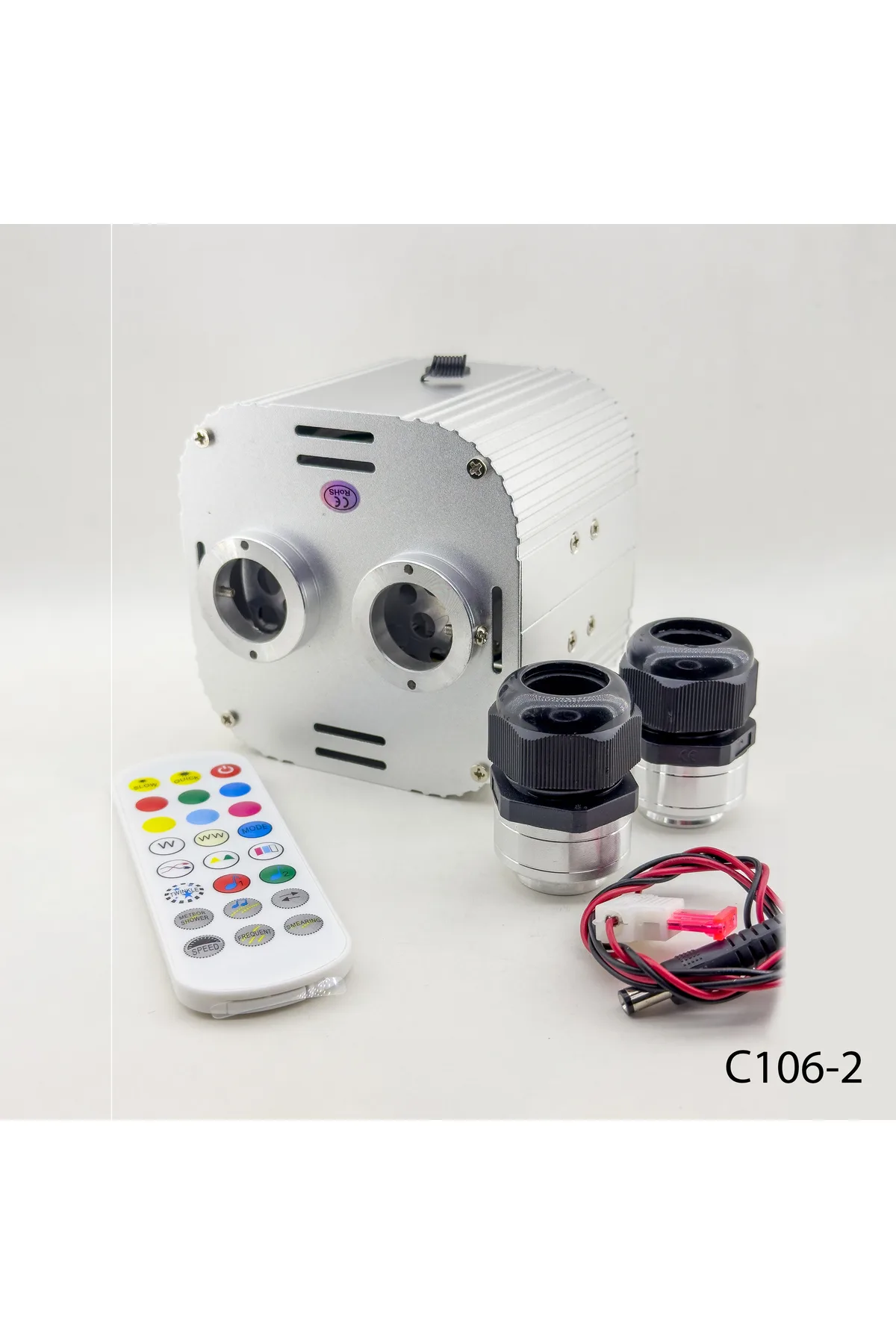
Even at the same 30W power, there is a world of difference between an old-type LED light source (~300 lm) and a new-generation LED (~2700 lm). In summary, special models like the Dual Output Light Source take things a step further. Because, while the RGBW Twinkle Light Source is tailor-made for color transitions and twinkle effects, the ARGB Power Pixel Light Source 9 Output model delivers superior performance with each output independently controllable. Both operate at around 30W, but the latter promises much more controlled lighting over a wider area.
Factor 2: Beam Angle and Distribution Characteristics
If light spreads at a wide angle like 120 degrees, it illuminates an area broadly but with less intensity. In contrast, a 30-degree narrow-angle spot literally makes a small area shine like gold. However, in fiber optic systems, light spreads pointwise from the ends of the fibers. Nevertheless, the created point density directly determines the impact of the lighting.
Factor 3: Environment Reflectivity (Walls, Ceiling, Floor)
Light-colored, matte painted walls and ceilings reflect light almost like a mirror. Additionally, this means broader and more homogeneous lighting with the same 30W light source. On the other hand, dark-colored or fabric-covered surfaces absorb light, narrowing the effective illuminated area.
Factor 4: Purpose of Lighting (General, Task, Decorative)
- General Lighting: Illuminating the entire room. Requires 150-300 lux. 30W LED ~20 m².
- Task Lighting: Reading, desk work. Requires 300-500 lux. 30W spot ~3-5 m².
- Decorative Lighting: Starry ceiling, niche lighting. Lux is not important; perception and ambiance are. 30W fiber optic source ~10-15 m².
Factor 5: Fiber Diameter and Density in Fiber Optic Applications
Using 1000 fibers with a 0.75 mm diameter versus 300 fibers with a 1.5 mm diameter allows you to create different visual spectacles from the same 30W light source. In conclusion, thin and dense fibers provide a more realistic starry sky effect. Moreover, the number of light points per area increases, giving the space a "full" feeling.
30W Light Source in Fiber Optic Lighting: Which Projects is it Ideal for in 2026?
Looking at 2026, 30W fiber optic light sources are tailor-made for areas of 10-25 square meters. Furthermore, VIP minibus and bus interior lighting, small cafe corners, youth rooms, and special pool niches are leading the way among high-impact projects where this power is most preferred.
2026 Trend: 30W Moving Star Sets in Buses and Minibuses
Fiber optic lighting has become indispensable for enhancing the perception of luxury in public transport. Moreover, 30W sets like the BUS AMBIANCE LIGHTING FIBER OPTIC STAR CEILING SET - MOVING STARS - ECO PRO create flowing stars across the ceiling even in vehicles with limited electrical systems. Indeed, they transform confined spaces into wide and magical places. In fact, 30W power offers the perfect balance between energy efficiency and sufficient light output for these types of mobile applications.
30W Solutions for Small and Medium-Scale Spaces
30W is more than sufficient to transform a specific corner of a 30-40 m² cafe or a 12-15 m² children's room. For example, packages like the YOUTH ROOM STAR CEILING COLORED FIBER OPTIC LIGHTING AMBIANCE SET - MINI provide thousands of star effects and color control with a single light source. Alongside this, in these projects, a 30W light source typically covers a 5-8 square meter ceiling area and completely changes the room's atmosphere.
| Project Type | Recommended Set / Light Source | Covered Area (Estimated) | Main Feature |
|---|---|---|---|
| VIP Minibus / Bus Ceiling | BUS AMBIANCE SET (Moving Stars) | 8-15 m² | Moving effects, low energy consumption |
| Youth / Children's Room | YOUTH ROOM SET - MINI (RGBW) | 5-12 m² | Color change, remote control |
| Cafe / Restaurant Corner | ARGB Power Pixel Light Source 9 Output | 10-20 m² | Regional pixel control, dynamic scenes |
| Pool or Fireplace Niche | Fixed White or Blue Light Source | 3-8 m² | Intense, fixed ambiance lighting |
What to Consider When Choosing a 30W Light Source? Wattage, Lumens, and Controllability
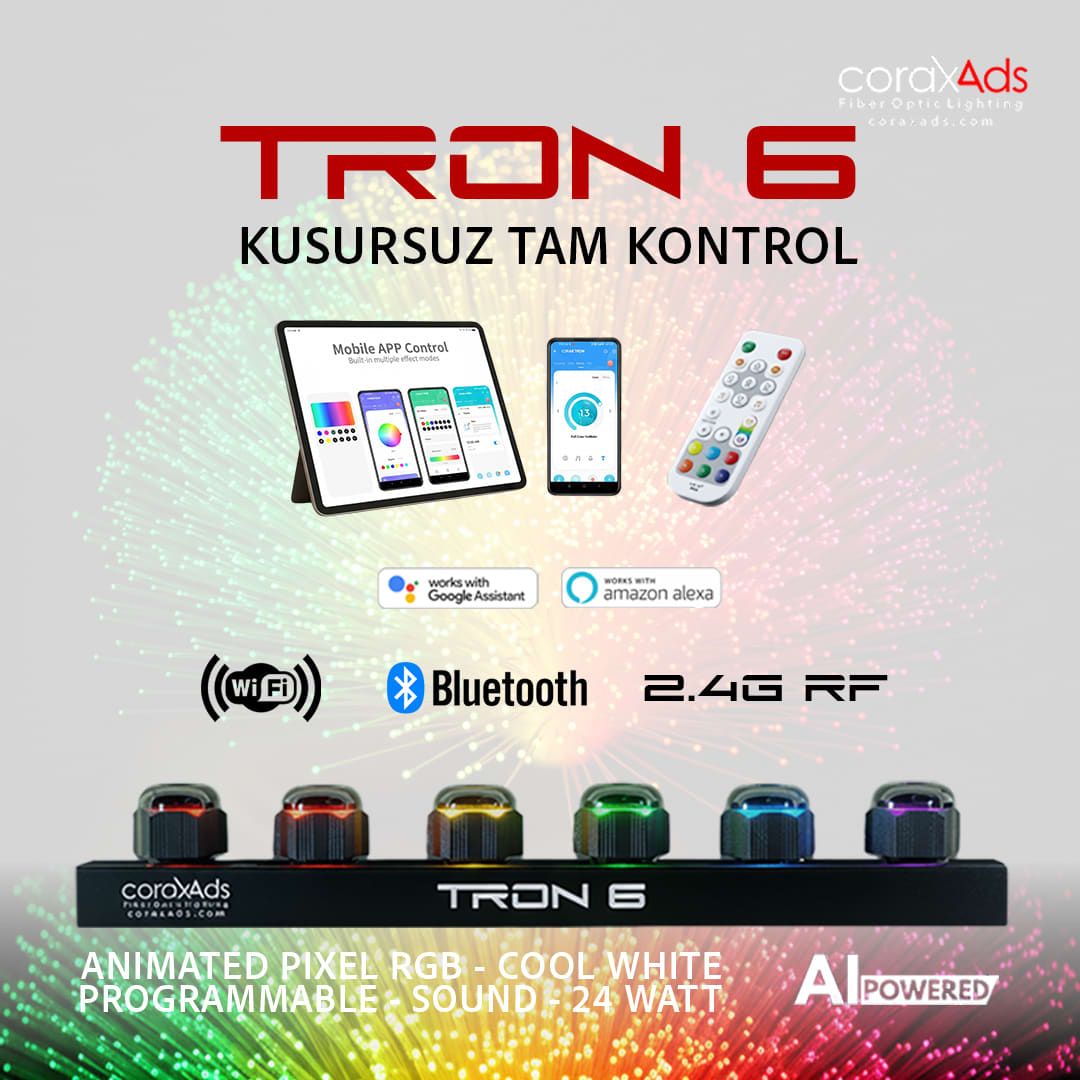
When choosing a 30W light source, don't get stuck just on the wattage value. In addition, the first thing you should look at is the product's lumen output. However, for fiber optic applications, the number of outputs and whether these outputs can be controlled independently (pixel control) is another critical point. On the other hand, programmable pixel light sources like TRON 6 offer much more dynamic effects and area utilization compared to fixed-color sources.
Wattage or Lumens? Tips for Making the Right Decision
When shopping, check the product box or technical datasheet for this information:
- Lumen (lm) Value: The actual brightness of the light.
- Efficiency (lm/W): Shows how efficiently it operates. Above 100 lm/W is good for 2026 standards.
- Color Temperature (K): Such as warm white (2700K), cool white (6500K).
- Color Rendering Index (CRI/Ra): The natural appearance of colors. 80+ is preferred.
Control Options: Fixed Light or Programmable Pixel?
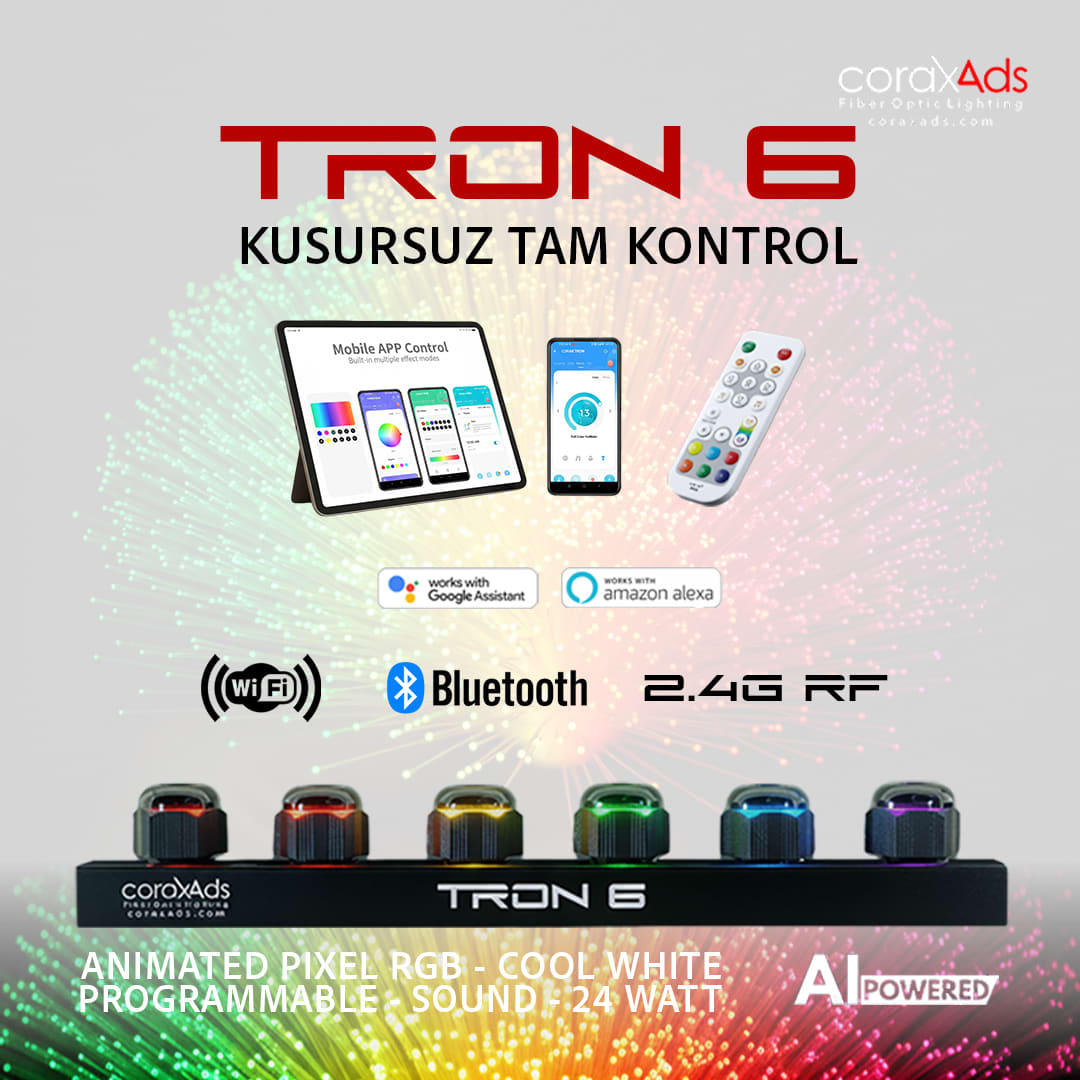
The number of outputs on a 30W fiber optic source determines the flexibility of your project. Additionally, a 6-output source allows you to control 6 separate zones, while a 30-output model enables much more detailed mapping. For example, for special effects like Twinkle Effect, you should choose sources with special drivers. The TRON 6 - Programmable 6-Channel Pixel A-RGB-W Power LED Light Source allows you to program each output separately, enabling you to use the 30W power by dividing it across 6 different areas. With a single 30W unit, you can create complex scenes like moving stars across the ceiling, fixed constellations, and color transitions.
In contrast, for larger projects, models like the ARGB Pixel Light Source 30 Output are preferred, while for medium-scale projects, 6-10 output 30W models offer a perfect balance.
The Cultural and Contextual Meaning of 30W: The Perception of 'Sufficient Power' in Decoration and 2026 Trends
In the 2026 decoration understanding, medium-power light sources like 30W have become a reflection of the 'doing more with less' and 'smart consumption' philosophy. Used not only for illumination but also to create emotion and ambiance, these sources, combined with technological advancements, can efficiently deliver effects that previously required much higher power.
Minimalism and Efficiency: The Place of 30W in Modern Decoration
The tendency to avoid physical clutter in modern interior design brings hidden and point-source lighting solutions to the fore. A 30W light source, with its high performance that can fit into a small housing, can be easily integrated into ceiling voids or cabinet interiors. This perfectly serves the minimalist design philosophy of "invisible to the eye but felt in effect."
The Concept of 'Sufficient Power' in 2026 in Light of Technological Developments
The perception of 'more watts, better lighting' is giving way to an understanding of 'more control, smarter distribution'. Today, with a WiFi-controllable light source, you can program an infinite number of scenes from a 30W system according to the time of day or your mood. In this respect, what determines sufficient power in 2026 is not wattage, but the emotional richness and control flexibility it provides. Industry data shows that approximately 70% of decorative lighting products sold in 2026 are sought with smart control features. When asking how much area a 30W light source illuminates, be sure to consider this control capability as well.
Frequently Asked Questions About 30W Light Sources (2026 FAQ)
1. On average, how much area does a 30W light source illuminate?
It's difficult to give a precise area. It varies by technology and purpose. Still, let's give a general range: A high-efficiency (100+ lm/W) 30W LED can illuminate a 15-25 m² area for general lighting. In decorative fiber optic starry ceiling work, a 30W source is ideal for an 8-15 m² ceiling.
2. Is there a difference in illumination area between a 30W LED light source and a 30W incandescent light source?
Yes, and a very big difference. A 30W incandescent source produces only ~300 lumens, perhaps dimly illuminating 2-3 m². A modern 30W LED can produce 2700-3300 lumens. That's almost 10 times that of incandescent. It illuminates a much wider area. That's why you should look at the lumen value, not the wattage.
3. Is a 30W light source sufficient for a living room or office?
If considered as a single-point main chandelier, a high-lumen (3000+ lm) 30W LED may be sufficient for rooms up to 20 m². However, for more homogeneous and quality lighting, we recommend dividing the light into multiple points. In offices, higher lumens and good color rendering (CRI >80) are essential to prevent eye strain.
4. How much area does a 30W spot light illuminate?
Spotlights, being narrow-angled, highlight a specific point rather than a wide area. A high-lumen 30W LED spot with a 30-degree angle can very effectively illuminate a painting or desk at a distance of 3-5 meters. The area it covers, depending on the light cone, does not exceed a few square meters.
5. What is the most important technical feature affecting the illumination area when choosing a 30W fiber optic light source?
The two most important features: the source's total lumen output and the number of outputs it has. High lumen means brighter stars and the ability to power more fibers. A high number of outputs (like 6, 9, 30 outputs) allows you to distribute light across more fiber groups, covering a wider area or creating complex effects. For control flexibility, you can learn about high-efficiency LED technologies or examine models with pixel control features like TRON 6.
Conclusion and Next Step
As you can see, there is no single, simple answer to the question, "How much area does a 30W light source illuminate?" It's like asking a chef what they can cook with their ingredients. The result depends on the ingredients (technology), the recipe (purpose), and the kitchen (environment). The correct answer is found by analyzing your project's scale, purpose, and environmental conditions. If you have a decorative or general lighting project for an area between 10-25 m², modern 30W light sources will likely offer the balance you're looking for.
Time to take action: To clarify whether a 30W system is suitable for your project or to discuss technical details, you can contact our expert team. The right lighting adds value to your space. To explore our collection of how much area a 30W light source illuminates and catch the best offers, visit https://CoraxAds.com now.