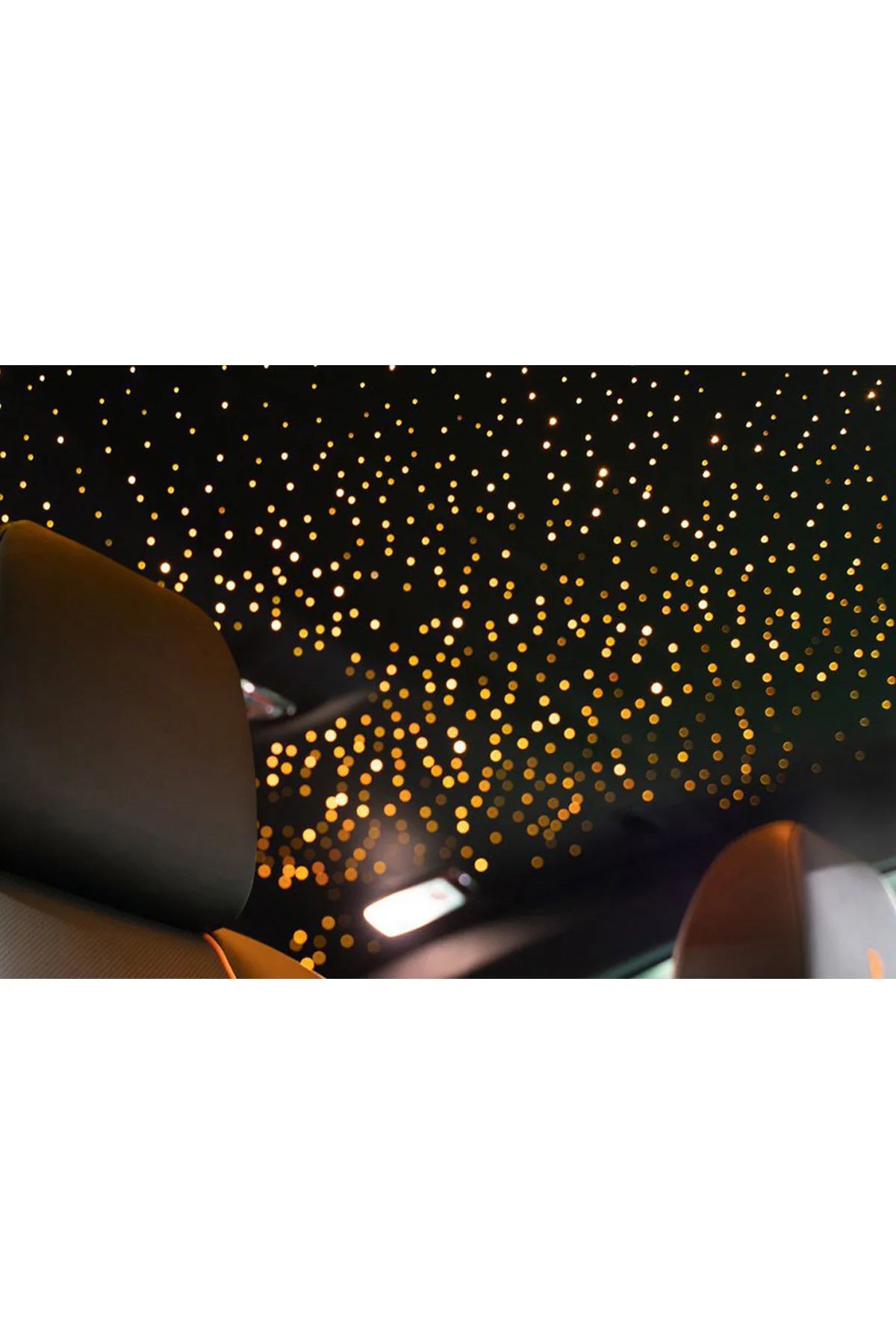
You're watching a captivating show. The light vibrates with every note and flashes with every bass beat. Behind this magic lies a triple harmony: an audio processor, a dynamic RGB LED light source, and fiber optik cables that disperse the light throughout the space. The audio processor meticulously dissects the music's frequency, intensity, and tempo within milliseconds, instantly showering the light source with color and brightness commands. The light then filters through the fiber cables, dancing in perfect sync with the music's rhythm. Crucially, 2026 technology has made this synchronization seamless and fully customizable. Now, light doesn't just illuminate—it adds emotion.
Table of Contents
- How Does Music-Mode Fiber Optic Lighting Work? Core Components and Process
- How Does Music-Mode Fiber Optic Lighting Work? 2026 Installation Guide
- How Does Music-Mode Fiber Optic Lighting Work? Light's Response to Different Rhythms
- 2026 Product Comparison and Maintenance Tips
- How Does Music-Mode Fiber Optic Lighting Work? Purchasing Checklist (2026)
- Frequently Asked Questions (FAQ)
The secret to this system's golden glow lies in the perfect symphony of three core components. Without them, we cannot answer the question: how does music-mode fiber optic lighting work? So, let's take a closer look at this trio.
How Does Music-Mode Fiber Optic Lighting Work? Core Components and Process
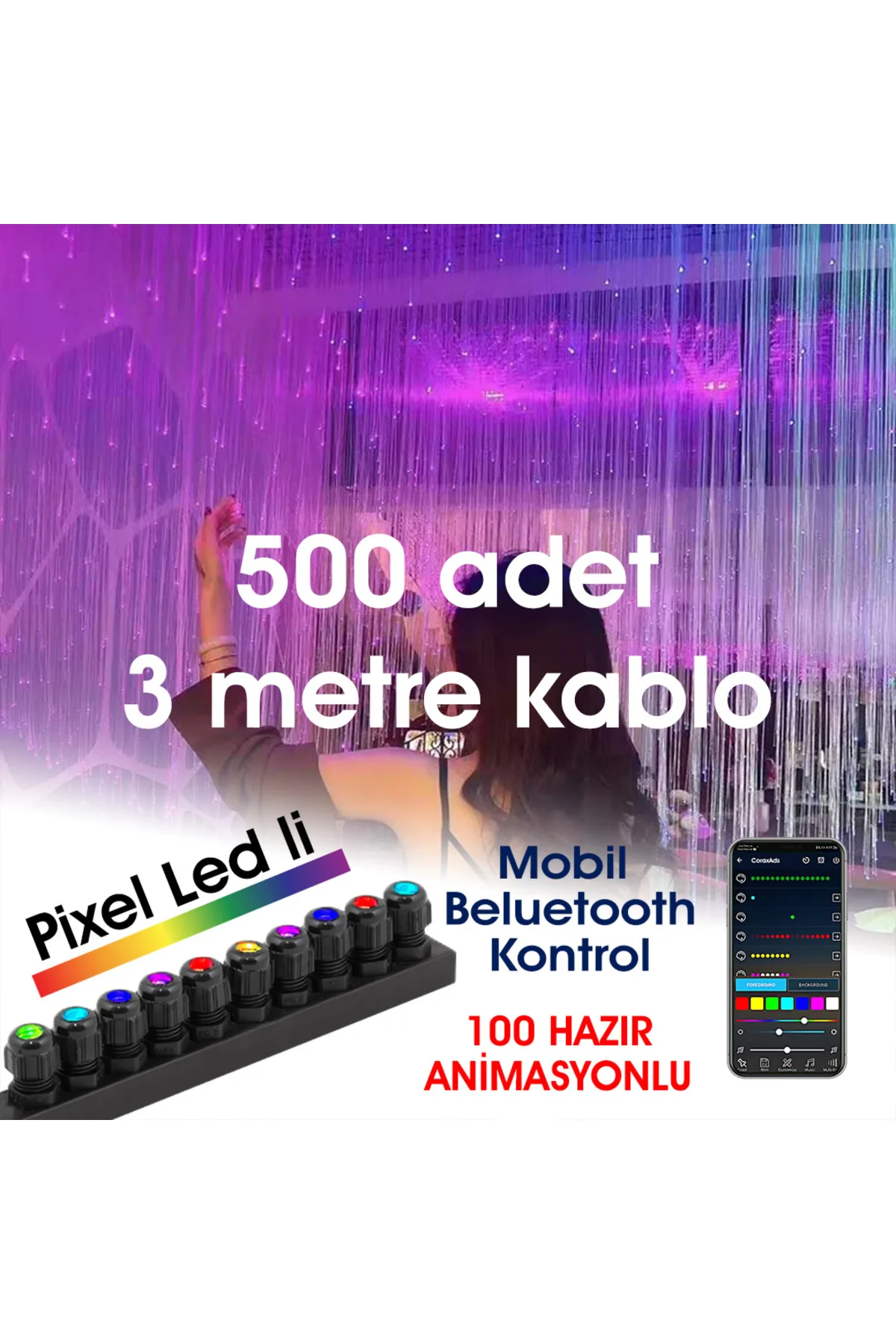
The heart of the system is an advanced RGB LED light source. Unlike traditional ones, this source does not emit a constant light. It instantly changes colors and modulates brightness. The brain managing this change is an audio processor or control module. This processor continuously listens to and analyzes the music signal. In short, this "commanded" light from the source is transmitted through the fiber optik cables. Ultimately, the pinpoint light emerging from the cable's end takes on the character of the music. This principle is the most dynamic among the advantages of many programmable fiber optic lighting systems.
The Core Trio: Light Source, Fiber Cable, and Audio Processor
How does an abstract audio signal transform into a tangible light effect? It works like this: The audio processor analyzes the music based on three key parameters: frequency (pitch), amplitude (intensity), and tempo. For example, when a high-frequency piano note is processed, the processor sends a command to the light source to "shine brighter in blue tones." When a deep bass drum sound is detected, it issues the command to "flicker with a short, powerful flash in red tones." Since this process happens within milliseconds, our eyes perceive the light as perfectly synchronized with the music. The most crucial step in answering how music-mode fiber optic lighting works is precisely this instantaneous transformation.
Sound-to-Light Conversion: From Analogy to Reality
This is essentially an automation similar to the working principle of an advanced sliding star animation in fiber optic ceilings. The key difference is that the input is live audio from an external source.
"The biggest leap in 2026 technology was reducing the audio-processing conversion delay to almost zero. Now, light is not just an echo of the music; it has become an integral part of it." - Lighting Systems Engineer
Advanced Synchronization with 2026 Technology
Older systems sometimes had a noticeable delay. Thanks to the chip designs and smart algorithms introduced in 2026, this latency has been reduced far below human perception. Furthermore, systems can now be personalized via user-friendly apps. For instance, they can be set to respond only to vocal frequencies or stay within a specific color palette. This allows every space to create its own unique light show. Therefore, the answer to how music-mode fiber optic lighting works now offers a much more personalized experience compared to the past.
How Does Music-Mode Fiber Optic Lighting Work? 2026 Installation Guide

After understanding how music-mode fiber optic lighting works, the next question is, "how is it installed in my space?" The installation approach is divided into two categories based on project scale. Choosing the right approach is key to success.
DIY Projects: Easy Installation with Ready-Made Kits
Fortunately, there are quite simple "plug-and-play" kits available today for home applications. These kits typically consist of a single light source, several meters of fiber cable, a simple controller with a sound sensor, and connection accessories. Installation can be completed within a few hours using basic hand tools. The important steps are connecting the light source to a power outlet and the audio source, and positioning the fiber cables as desired. These kits are ideal for small areas like bedrooms or personal music rooms. Thus, you can easily experience the principle of how music-mode fiber optic lighting works in your own home.
Commercial and Professional Applications: Planning and Expert Support
When it comes to commercial spaces like restaurants, bars, or hotel lobbies, the game changes. In short, multiple fiber cables, several powerful light sources, and a central control system may be required. For such projects, detailed planning is essential. Professional installation is a must for integration with electrical wiring, correct signal reception from the sound system, and ensuring the entire system's longevity. The 2026 standards offer kits with high IP ratings and remote management capabilities for these types of installations.
Critical Safety and Durability Rules for Pools and Outdoor Areas
Outdoor or pool applications represent the most challenging conditions. The issue is not just how it works, but how it works safely. All equipment used must have at least an IP67 or IP68 protection rating. Additionally, extra precautions must be taken for electrical safety, and all connections must be made in waterproof enclosures. In such projects, hybrid systems that combine music mode with other popular fiber optic animations like meteor shower effects are also frequently preferred.
How Does Music-Mode Fiber Optic Lighting Work? Light's Response to Different Rhythms
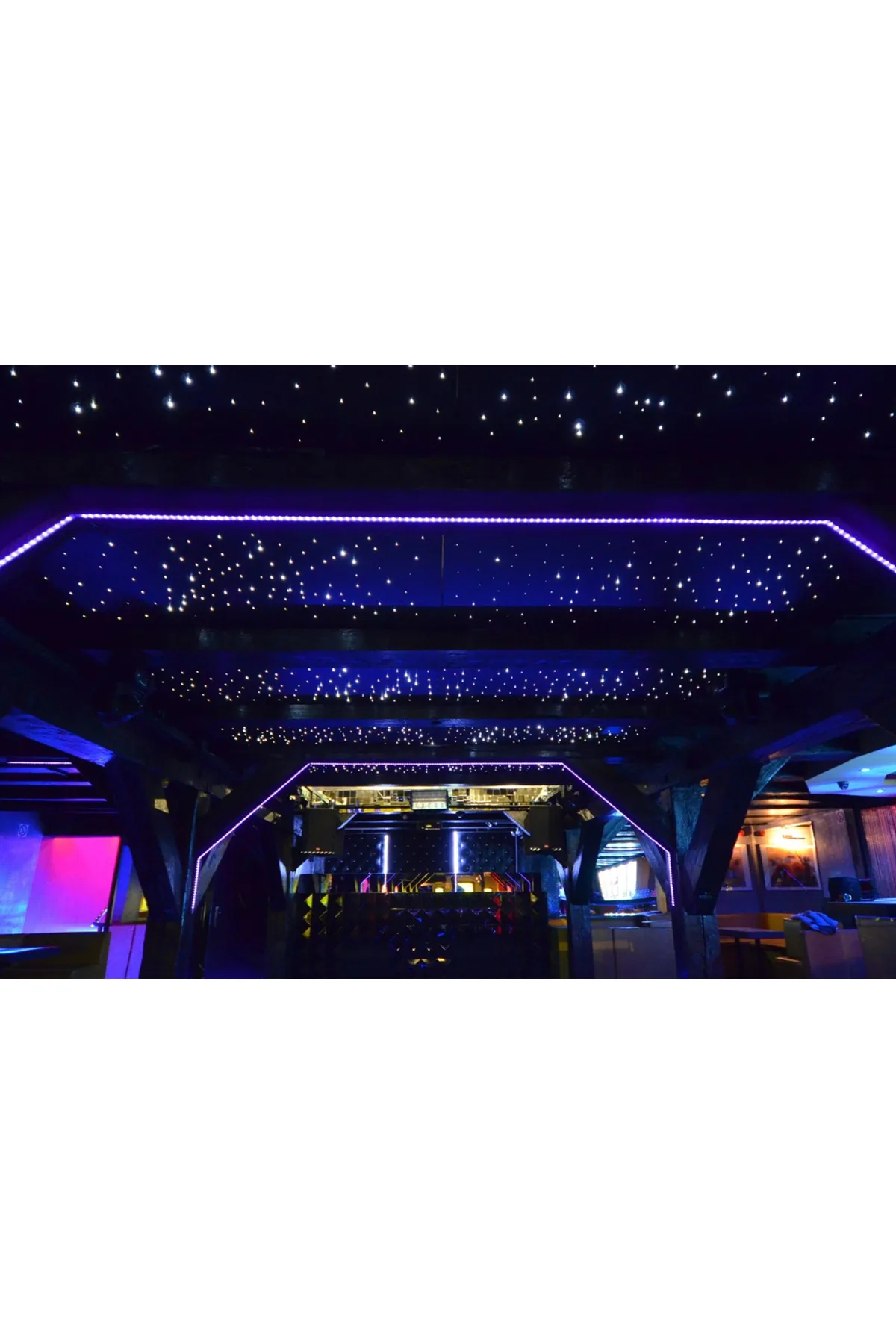
The most fascinating aspect of these systems is the dialogue they create with different music genres. The answer to how music-mode fiber optic lighting works is actually shaped by the track you're listening to.
Dynamic Light Play with Bass-Heavy Music
With bass-driven tracks like electronic dance music (EDM) or rock, the system truly comes alive. Every bass beat is reflected as a powerful flash of light in red, purple, or deep blue tones. High amplitude increases brightness, making the effects more aggressive and rhythmic. 2026 modules even offer special "energy modes" for this type of music. Therefore, observing how the music-mode fiber optic lighting mechanism works with these genres is extremely impressive.
Soft Transitions and Pastel Tones with Classical and Acoustic Pieces
When listening to a classical music piece, the system takes on a completely different personality. The processor detects low amplitude and a complex frequency range. The light makes soft transitions in pastel tones like golden yellow, soft turquoise, or lavender, akin to a reflection on water. It adds an extremely peaceful and luxurious ambiance to the environment—a heartwarming effect, not a dazzling one.
How the Color Spectacle Forms with Local and International Pop Music
Pop music typically has a dynamic structure, combining soft vocal sections and energetic choruses. A well-programmed system narrates these transitions with light. The accelerating tempo during the chorus increases the speed of color changes, initiating a lively, multi-colored spectacle. When returning to the vocal section, the colors simplify. The light almost accompanies the emotion of the lyrics.
2026 Product Comparison and Maintenance Tips
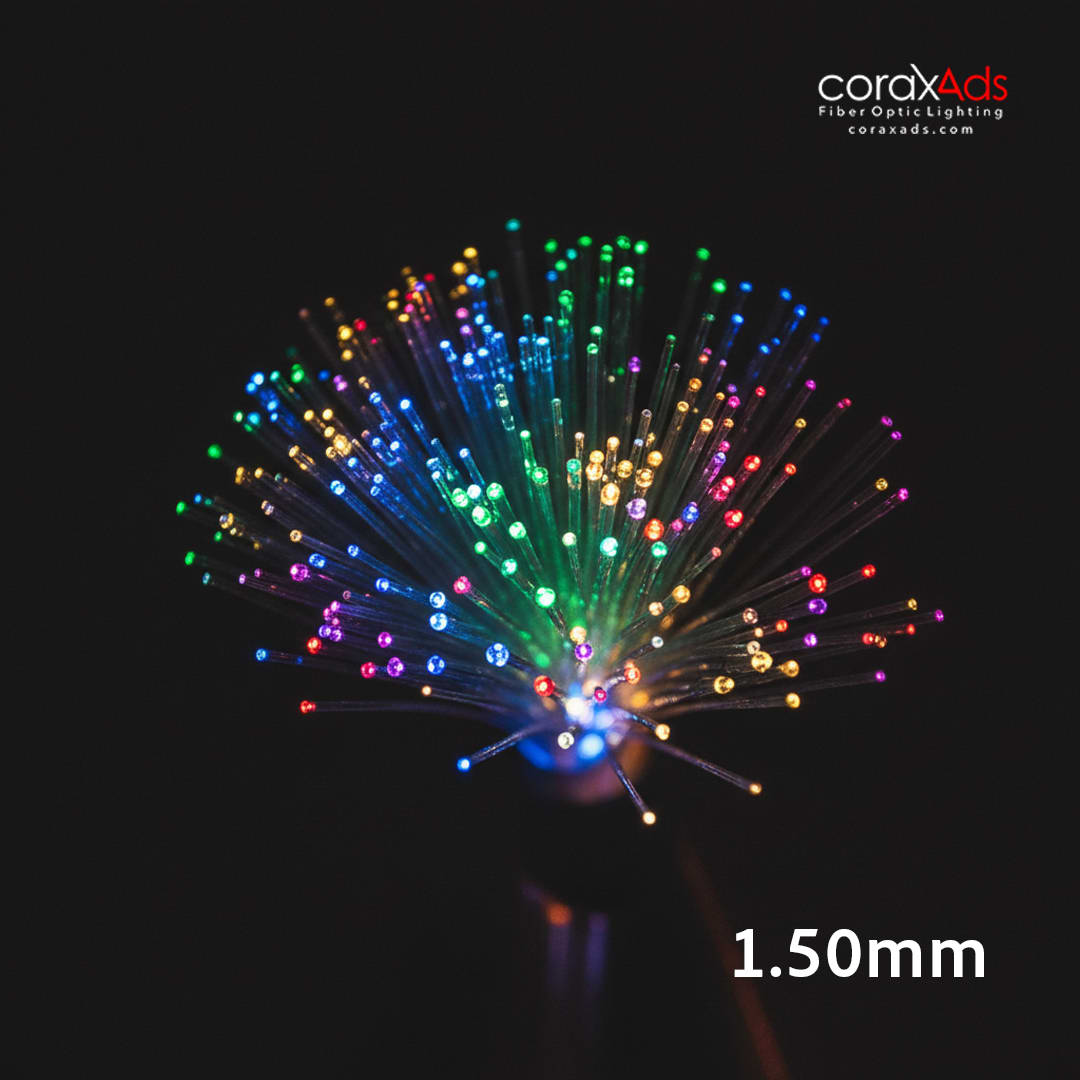
On the other hand, choosing the right product is as important as using it trouble-free for many years. In addition to understanding how music-mode fiber optic lighting works, information to extend the system's lifespan is also necessary.
2026's Standout Models and Technical Feature Comparison
The market features three main categories: home (DIY), prosumer, and professional. Home models usually come with a single control unit and around 10-15W of power. Prosumer models can go up to 30W, offering Wi-Fi control and precise sound detection. Professional models are systems with 50W or more power, capable of managing multiple light sources. According to data from the Ministry of Energy and Natural Resources, 2026 LED efficiency standards provide 40% less energy consumption. This efficiency should influence your decision as much as the technical specifications.
Critical Maintenance Tips to Extend System Lifespan
Regular maintenance is essential for your system's longevity. First, the ends of the fiber optik cables should be cleaned periodically. Dust accumulation significantly reduces light output. Second, pay attention to the light source's ventilation; overheating shortens LED lifespan. Third, for outdoor systems, check the waterproofing of connection boxes once a year. Finally, don't neglect software updates. The smooth operation of the music-mode fiber optic lighting mechanism is directly related to these simple maintenance steps.
2027 and Beyond: Future Trends and Smart Home Integration
The future of these systems lies in deeper artificial intelligence integration. In the coming years, systems are predicted to respond not only to music but also to the emotional content of the environment. Furthermore, reports published by organizations specializing in audio frequency analysis, such as the Audio Engineering Society, indicate that personalized sound profiles being converted into light scenarios will become a trend. These developments will bring much smarter answers to the question of how music-mode fiber optic lighting works.
How Does Music-Mode Fiber Optic Lighting Work? Purchasing Checklist (2026)
Choosing the right product is the first step to achieving the effect you envision. Here is the checklist you must review before purchasing in 2026.
| To-Do (DO) | Not-To-Do (DON'T) |
|---|---|
| Measure the space size. While one 10W LED is sufficient for small rooms (≤20 m²), plan for multiple sources or more powerful (≥30W) models for large areas. | Don't choose a light source based solely on price, independent of the space. Insufficient power means a dull light show. |
| Determine the control method. Choose the option that suits your needs: built-in microphone (easy), external audio input (quality), or smart app via Wi-Fi/Bluetooth (most advanced). | Avoid using the built-in microphone for outdoor projects. Wind or ambient noise can cause false triggers. |
| Always check the appropriate IP protection rating for the usage location (e.g., IP65 for outdoor, IP68 for pools). | Do not attempt to use an indoor product in damp or open areas. This creates a safety risk and instantly shortens the product's life. |
| Calculate the long-term cost. LED technology is energy efficient. Remember that 2026 models consume on average 40% less energy and offer a 25,000-hour lifespan. | Don't focus only on the initial purchase cost and buy an inexpensive, inefficient product. It may cost more in the long run. |
| Ask about fiber cable quality and flexibility. High-quality PMMA fibers minimize light transmission loss and last longer. | Avoid choosing very stiff or brittle fiber cables. They may break during installation or fail to take the desired shape. |
Frequently Asked Questions About Music-Mode Fiber Optic Lighting (2026 FAQ)
Question 1: How does music-mode fiber optic lighting work, and does it respond to all music?
Yes, by its basic principle, it responds to all types of audio signals. The system does not distinguish music genres; it processes the frequency and intensity it detects. However, 2026 modules can be adjusted via an app to respond more sensitively to specific frequency ranges (e.g., only bass) or above a certain sound level. This prevents unwanted triggering from ambient noise.
Question 2: Is professional help necessary for installation?
Usually not for home-ready kits. You can install them yourself by following the instructions. However, professional support is essential for commercial spaces, outdoor areas, pools, or complex multi-point systems. Proper planning and safe installation are critical for the system's performance and lifespan.
Question 3: Is the electricity consumption high?
No. This is one of the biggest advantages of fiber optic lighting. The light source is at a single point and consumes energy only there. The LEDs it uses are already efficient technologies. The consumption of an average music-mode light source is much lower than a traditional chandelier; it typically ranges between 10W and 50W.
Question 4: Can it be used outdoors or in pools?
Yes, it can. However, you must purchase equipment specifically designed for this purpose with high IP protection ratings (IP67 or IP68). This equipment is resistant to water, dust, and weather conditions. If a standard indoor kit is used outdoors, it will malfunction very quickly and pose an electric shock risk.
Question 5: Does it work when the volume is low?
Most 2026 systems have a sensitivity adjustment feature. Thanks to this setting, you can observe color changes and soft transitions even at very low volume levels (e.g., soft jazz playing in the background). In complete silence, the system usually switches to a static "ready" mode or continues to glow in a light background color you've set.
Summary and Conclusion
From our years of observation, the answer to how music-mode fiber optic lighting works lies in advanced synergy. The combination of the audio processor, light source, and fiber cables transforms static spaces into dynamic works of art. 2026 technology has taken the experience to the next level by reducing this synchronization to milliseconds and offering user-friendly personalization options. Whether you're creating a personal corner in your home or adding an unforgettable atmosphere to your commercial space, with these systems, light now exists not just to see, but to feel.
Take Action: With over 10 years of industry experience, Corax Ads is ready to explain not just how it works, but how it will perfectly fit your project. Contact us to begin your journey into the world of music-mode fiber optic lighting or to detail your professional project. Let's bring the dance of light and music to your space. Visit https://CoraxAds.com now to explore our How Does Music-Mode Fiber Optic Lighting Work? collection and seize the best opportunities.