Home gym soundproofing cost and equipment options refer to the acoustic barriers, vibration controls, and price estimates that keep your treadmill, weights, and music from annoying the rest of your household. A good setup addresses both airborne noise from sound waves and impact noise transferred through floors and walls.
- Mass loaded vinyl typically costs $200 to $350 per 100 square feet of coverage.
- Labor for professional home gym soundproofing ranges from $50 to $100 per hour.
- Fiber optic lighting systems generate no electromagnetic hum and no heat.
- Acoustic foam panels cannot block sound transmission by themselves.
Table of Contents
- What Is Home Gym Soundproofing?
- Home Gym Soundproofing Cost: Budget Benchmarks for You
- Does Sound Absorption Count as Soundproofing?
- Best Equipment Options to Block Gym Noise Effectively
- Vibration Isolation for Heavy Gym Equipment
- DIY Installation vs Hiring Pros for Soundproofing
- Non-Acoustic Equipment: Lighting and Ventilation Upgrades
- Frequently Asked Questions
The Corax Ads blog breaks down material trade-offs and installation details that can help you choose between mass-loaded vinyl, acoustic panels, and resilient underlayment.
What Is Home Gym Soundproofing?
Home gym soundproofing is the process of reducing the energy of sound waves and impact vibrations that escape a workout space, using isolation, absorption, and mass.
When you lift a heavy dumbbell or run on a treadmill, the impact sends vibrations through the floor joists. These vibrations travel through your home’s structure and reappear as audible noise in other rooms. Soundproofing for a gym therefore includes floor underlayment, wall insulation, and decoupling products.
Acoustic treatment is different: it controls echo inside the room. You often need both. For example, dense rubber floor mats absorb impact and reduce vibration, while acoustic foam tames reverberation so your music sounds cleaner. The final goal is a quieter house without sacrificing workout comfort.
Home Gym Soundproofing Cost: Budget Benchmarks for You
Most homeowners invest between $300 and $4,000 for home gym soundproofing, depending on room size and whether you hire installers.
To estimate your home gym soundproofing cost, measure floor space and wall area. A 200-square-foot room with the basic package—rubber mats, four acoustic panels, and acoustic sealant—can be done for under $500. If walls share a bedroom, add mass loaded vinyl or an extra drywall layer, pushing the price to $1,000–$1,800.
Labor for professional installation typically ranges from $50 to $100 per hour. Contractors may quote $1,200–$3,500 for a complete room. Getting three quotes is wise because the cost depends on openings, existing walls, and ceiling height.
Does Sound Absorption Count as Soundproofing?
Sound absorption is not true soundproofing because it reduces echo and reverberation but does not significantly block noise from leaving a home gym.
For home gym acoustic treatment, open-cell foam is used inside the room to absorb sound reflections. It stops slap echo and makes your music or exercise video clearer. But foam cannot stop sound traveling through a hollow wall. That requires mass and airtight barriers.
The word home gym soundproofing gets confused with acoustic treatment. You can have foam on every wall and still hear a treadmill below your neighbor’s bedroom. To truly block noise, focus on decoupling, adding mass, and damping vibrations rather than just packing rooms with absorbers.
Best Equipment Options to Block Gym Noise Effectively
For effective home gym soundproofing you should combine acoustic foam panels, bass traps, mass loaded vinyl, acoustic sealant, and rubber floor underlayment rather than relying on a single foam layer.
Acoustic panels are the most visible tool. They perform well for high and mid frequencies but not for low rumble. Bass traps target corner frequencies where thump sounds concentrate. Meanwhile, mass loaded vinyl is a flexible rolled barrier that you can sandwich between drywall layers. Acoustic caulk seals gaps from electrical outlets and wall edges.
Mineral wool insulation fitted into stud cavities is another possibility. It helps with mid-frequency noise and gives a slight heat advantage. Door sweeps and rubber thresholds seal the air gaps under the door. Each product does a distinct job, so read the labels carefully and select by the frequency problem, not by brand alone.
Vibration Isolation for Heavy Gym Equipment
Vibration isolation products like rubber flooring, anti-vibration pads, and floating floors prevent gym machine impact from traveling through the building’s frame.
Equipment that hits the floor creates structure-borne noise. A treadmill or weight bench directly transfers impact to subfloor. Anti-vibration pads sit beneath machine feet and absorb shock. Thick rubber floor rolls or interlocking mats add another layer. For the best result, use these over a floating subfloor.
Floating floors include a layer of cork or foam under plywood or engineered wood, effectively decoupling the surface. This is a bigger investment but also the best answer for homes with rooms below the gym. If your gym is on a concrete slab, use high-density rubber mats to protect the floor and reduce spring noise.
DIY Installation vs Hiring Pros for Soundproofing
Do-it-yourself soundproofing cuts labor costs by 30 to 50 percent, but professional installation provides better performance for low-frequency bass and structural flanking paths.
DIY homeowners can handle panel placement, mat installation, and sealing gaps. Material-only costs are low enough that many projects finish in one weekend. However, mistakes occur with mass loaded vinyl overlaps and caulk application. Pros remove baseboards and secure drywall correctly, especially when dealing with wall cavities.
The true cost gap between DIY and professional is mostly labor time. Installing drywall, framing a second stud wall, or adding resilient channels demands skills. If you pay for pros, ask for a written scope covering airtight sealing, all surfaces, and exact materials. Good installation is worth the money because soundproofing failures are hard to repair later.
For more real-world renovation stories, visit the Corax Ads blog before you finalize your budget.
Non-Acoustic Equipment: Lighting and Ventilation Upgrades
Along with acoustic panels and vibration pads, a comfortable home gym requires proper ventilation and low-noise decorative lighting like LED or fiber optic systems.
Home gyms generate heat and humidity, so you still need ventilation through the wall. Use an in-line duct fan with insulated flex ducts to reduce noise transfer while exchanging air. Quiet exhaust fans rated below 1 sone are available for small spaces.
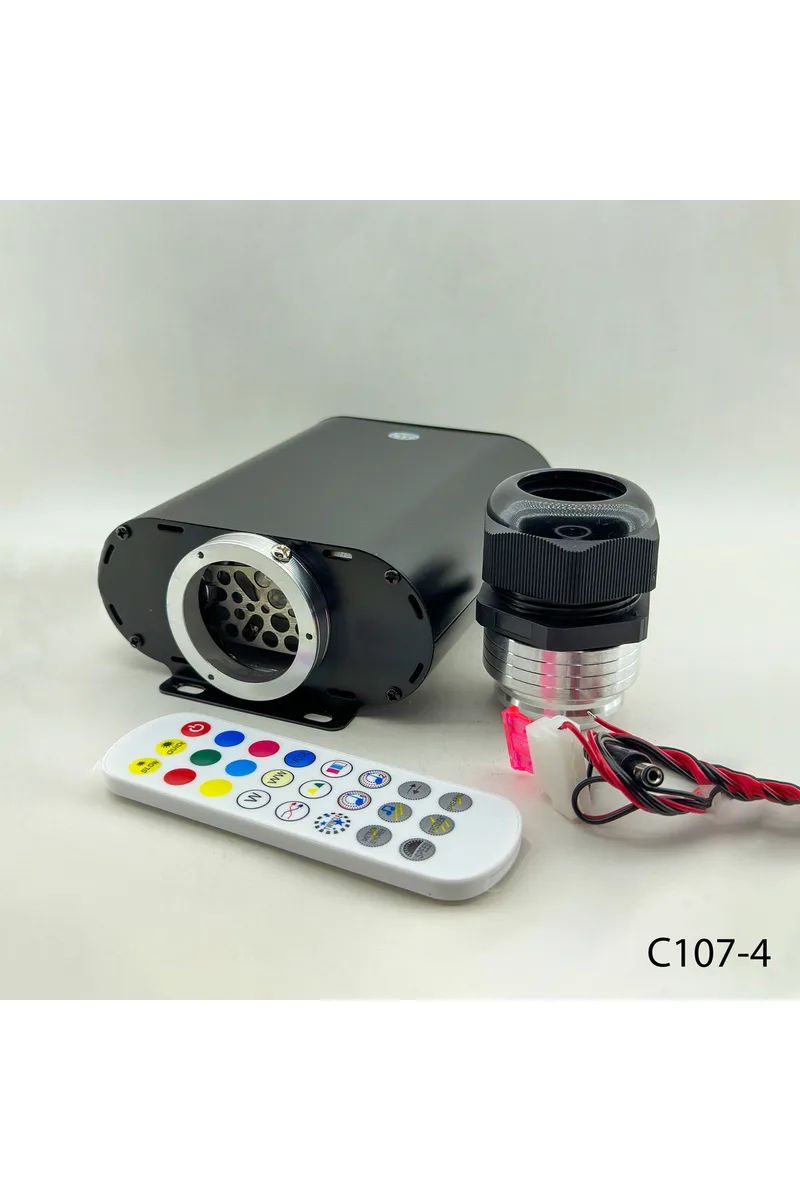
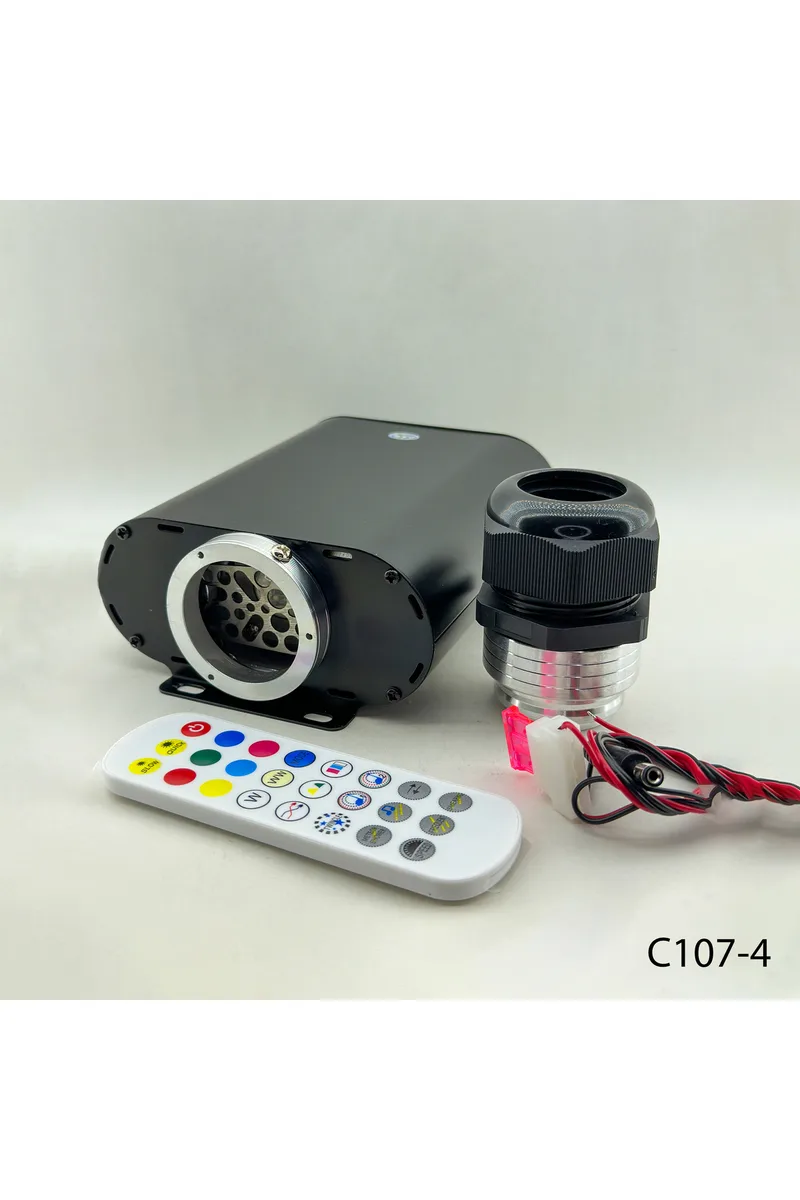
After solving sound and air, think about lighting. Fiber-optic lighting systems generate zero heat and no electromagnetic hum, making them excellent for a media-heavy workout zone. You can create accent ceiling lines or a bright vivid panel setup. Browse the fiber optic light sources category to upgrade your atmosphere while keeping noise low.
If you want brighter, cooler lighting without adding fan noise, the fiber optic light sources category lets you compare emitters, cables, and fixtures for your setup.
Frequently Asked Questions
How much should I budget to soundproof my home gym?
For a small room, plan on $300 to $700 for acoustic foam, bass traps, and rubber mats. Full-room soundproofing with mass loaded vinyl and new drywall typically costs $2,000–$4,000.
What is the best way to soundproof gym equipment like treadmills?
Use anti-vibration pads under machine feet plus high-density rubber mats. If the gym is upstairs, build a floating floor or install resilient channels under the subfloor.
Do acoustic foam panels block noise?
No. They absorb reflections inside the room but let sound pass through. To block sound you need added mass, decoupling, and airtight seals.
Can I soundproof a home gym without tearing down walls?
Yes. Use mass-loaded vinyl on the wall surface, then cover it with drywall. You can also add acoustic panels and use door seals. Tearing down walls is only necessary for major structural decoupling.