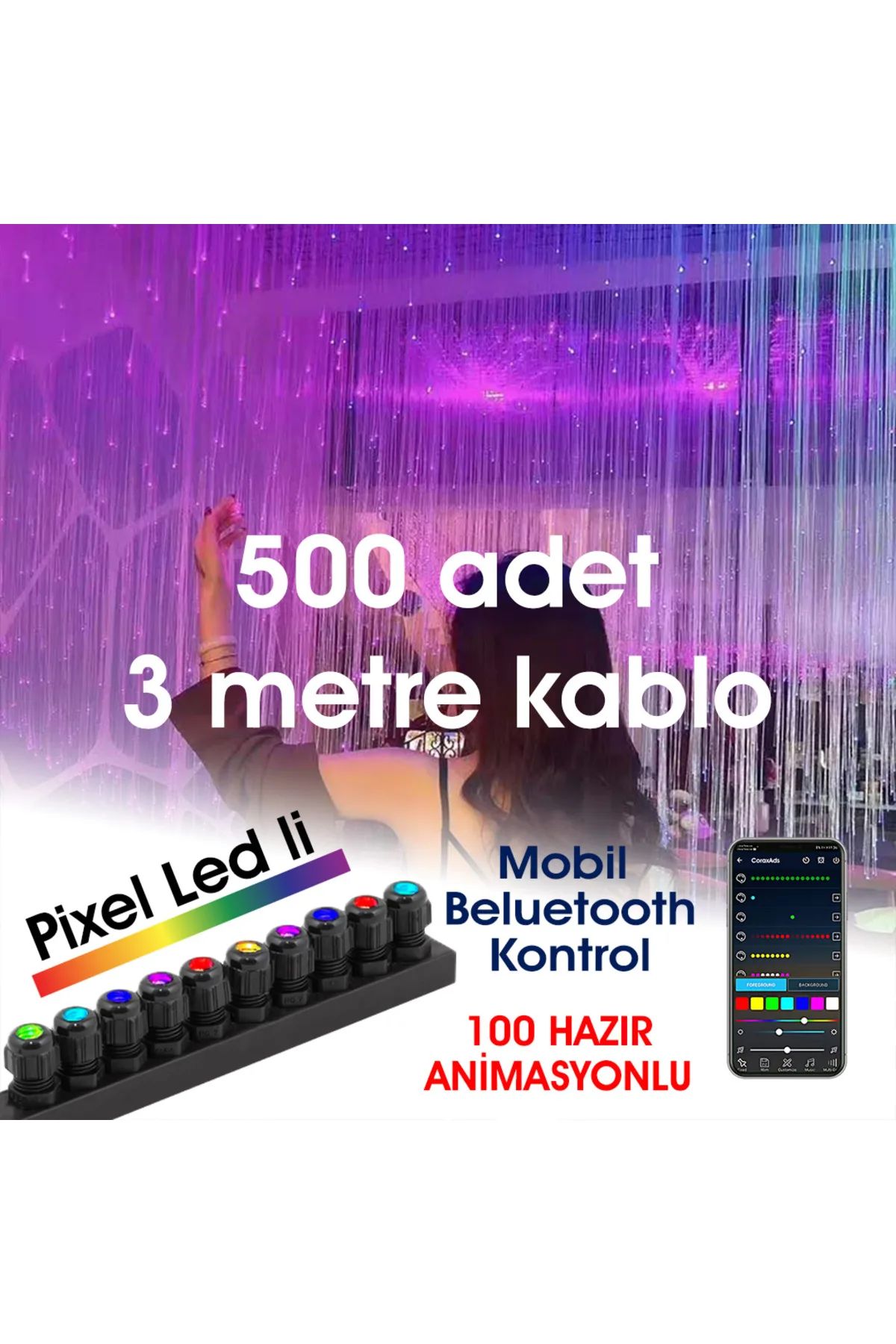
Decorating and transforming light into art is as old as human history. This journey, from the reflections of fire on cave walls to the glimmer of oil lamps in Roman villas and on to today's digital light displays, has been long. In 2026, technology offers us an incredible tool: fiber optik cables. However, many people get stuck on the most basic question when choosing these magical threads of light: what is the difference between fiber optik cable thicknesses? This guide goes beyond mere millimetric measurements. Drawing on over a decade of field experience, it explains how thickness determines the success, aesthetics, and durability of your project.
Table of Contents
- What is the Difference Between Fiber Optik Cable Thicknesses? Basic Principles
- What is the Difference Between Fiber Optik Cable Thicknesses? Which Thickness is Suitable for Which Project (2026 Application Map)
- What is the Difference Between Fiber Optik Cable Thicknesses in Terms of Cost and Installation?
- 5-Step Checklist for Choosing the Right Thickness in 2026
- What is the Difference Between Fiber Optik Cable Thicknesses? Effects on Light Quality and Color
- Frequently Asked Questions About Fiber Optik Cable Thicknesses (2026 FAQ)
- Conclusion and Expert Advice for Your 2026 Project
What is the Difference Between Fiber Optik Cable Thicknesses? Basic Principles
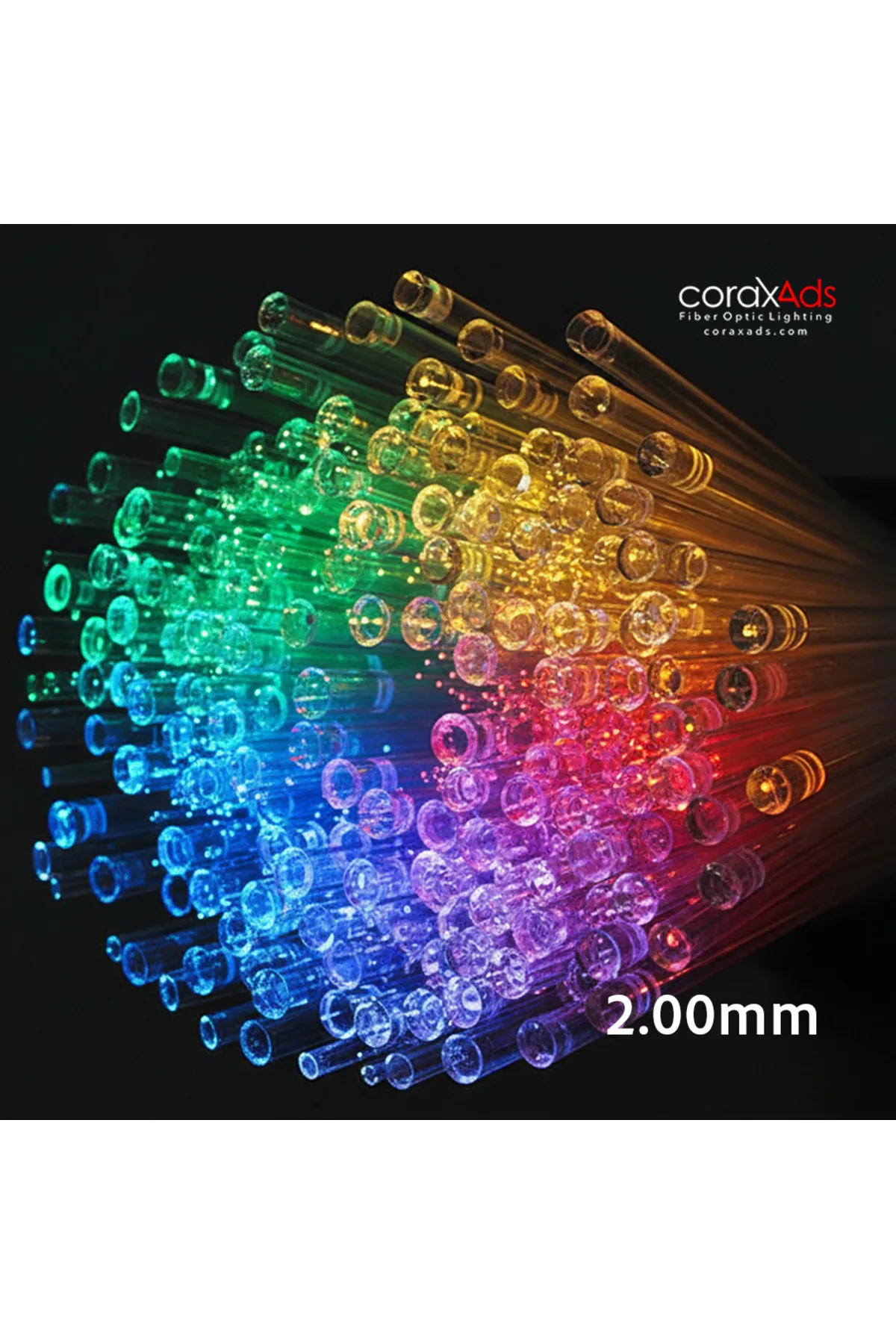
In truth, the difference between fiber optik cable thicknesses is not just a matter of a millimeter. This difference is directly linked to how light behaves, the physical stresses the cable can withstand, and ultimately, the character of the visual spectacle you achieve. The most commonly used diameters are 0.75mm, 1.0mm, 1.5mm, and 2.0mm. Indeed, each one works like a different artist's brush.
Light Transmission Capacity and Thickness Relationship
As is known, a fiber optik cable transmits light within its central core. Moreover, the thicker the cable, the wider this core area becomes. For example, a wider core allows more photons to be carried from the light source (illuminator). So, what does this mean in practice? Consequently, the light point emitted from the end of a 2.0mm cable will be, on average, up to 95% brighter and more intense compared to a 0.75mm cable. This is one of the fundamental answers to the question what is the difference between fiber optik cable thicknesses?: it's part of the technical answer to "how much brightness do you want?"
Differences in Physical Durability and Flexibility
Thickness also determines mechanical properties. A thick cable (e.g., 1.5mm or 2.0mm) is naturally more resistant to bending, crushing, and UV rays. Therefore, for harsh conditions like outdoor or pool applications, thick diameters are almost a necessity. However, thin diameters like 0.75mm are extremely flexible. In short, this flexibility allows you to create complex patterns, pass through small holes, and create a very dense star field. The table below clearly summarizes these basic differences with their advantages and disadvantages:
| Cable Diameter | Advantages | Disadvantages or Considerations |
|---|---|---|
| 0.75mm | Superior flexibility, very high star density, low visibility, compatible with small holes. | Relatively more delicate, not suitable for very bright points, light loss over long distances is more noticeable. |
| 1.0mm | Well-balanced option, sufficient flexibility and brightness, ideal for most indoor projects. | May not be durable enough for very harsh outdoor conditions. |
| 1.5mm | High brightness, good mechanical strength, suitable for outdoor and underwater applications. | Less flexible, requires larger holes, number of cables per square meter may decrease. |
| 2.0mm | Maximum brightness and physical durability, excellent for accentuated point lighting. | Limited flexibility, high cost, suitable only for distinct and sparse points. |
To be honest, the basic difference between fiber optik cable thicknesses lies in light-carrying capacity, physical durability, and flexibility. Thick cables (2.0mm) offer brighter point light and better mechanical resistance, while thin cables (0.75mm) provide greater flexibility and the potential to create a softer, denser star field. Therefore, understanding the difference between fiber optik cable thicknesses is the first step in making the right product choice.
What is the Difference Between Fiber Optik Cable Thicknesses? Which Thickness is Suitable for Which Project (2026 Application Map)
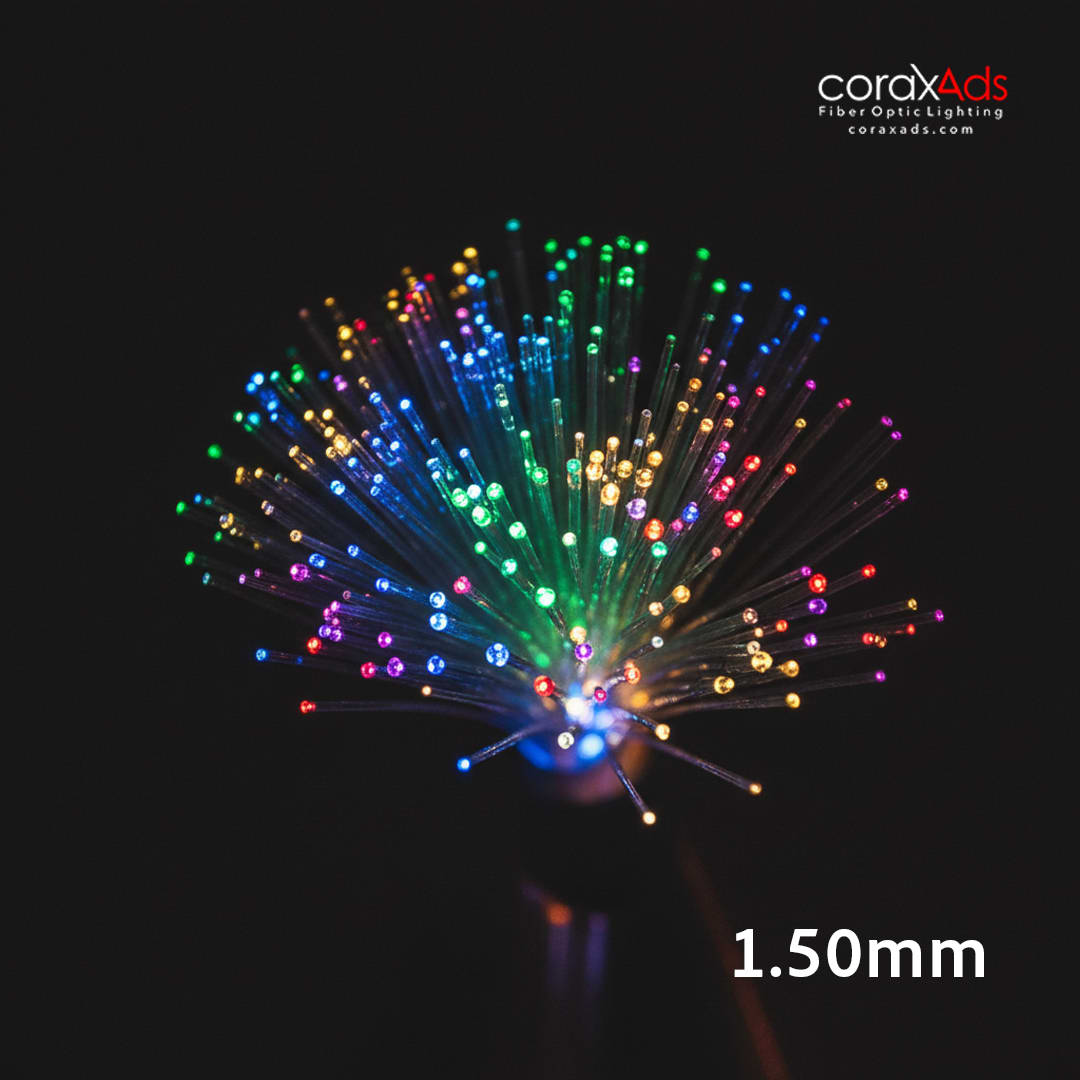
In 2026, projects have become more personalized and purpose-driven. In summary, cable selection must match the spirit of your project. So, let's see where each thickness shines.
0.75mm & 1.0mm Thin Cables: Star Ceilings and Detailed Decoration
These diameters are like the fine brush of a sky painter. In star ceiling projects, if you want to create a realistic and dense galaxy effect, 0.75mm cables are indispensable. In applications where over 100 fibers can be fitted per square meter, thin diameters allow stars to be placed very close together and distributed homogeneously. Additionally, 1.0mm is a perfect choice for children's rooms, bedrooms, or automotive ambient lighting (minibus, vehicle ceiling) where a slightly more balanced brightness is desired. For these needs, specially designed sets are available.
For example, the TV BACK UNIT AMBIENT LIGHTING FIBER OPTIK STAR SET - TWINKLING STARS typically uses 0.75mm cable to offer maximum star density, while the BOAT, YACHT, MARINE VEHICLE AMBIENT LIGHTING FIBER OPTIK STAR CEILING SET - ECO uses 1.0mm cable, which is critical for both flexibility and sufficient brightness.
1.5mm & 2.0mm Thick Cables: Pool Lighting and Accent Points
Thick diameters represent power and durability. Due to light dispersion underwater and water's absorptive effect, diameters below 1.5mm are generally ineffective for pool, jacuzzi, or waterfall lighting. The 2.0mm cable is used as sparse but impressive bright points on a restaurant ceiling, to illuminate an object in a museum display case, or to create decorative accents on building facades. These cables offer a lighting effect with few points that makes a strong statement. As an industry expert once said:
"In decorative lighting, sometimes less is more. A thick fiber cable, like a single star shining on a dark night, can draw all attention. The important thing is knowing where and how to use this power."
This is precisely why using 1.5mm or 2.0mm cable in the POOL LIGHTING KIT - ECO PRO is essential for underwater durability and brightness.
What is the Difference Between Fiber Optik Cable Thicknesses in Terms of Cost and Installation?
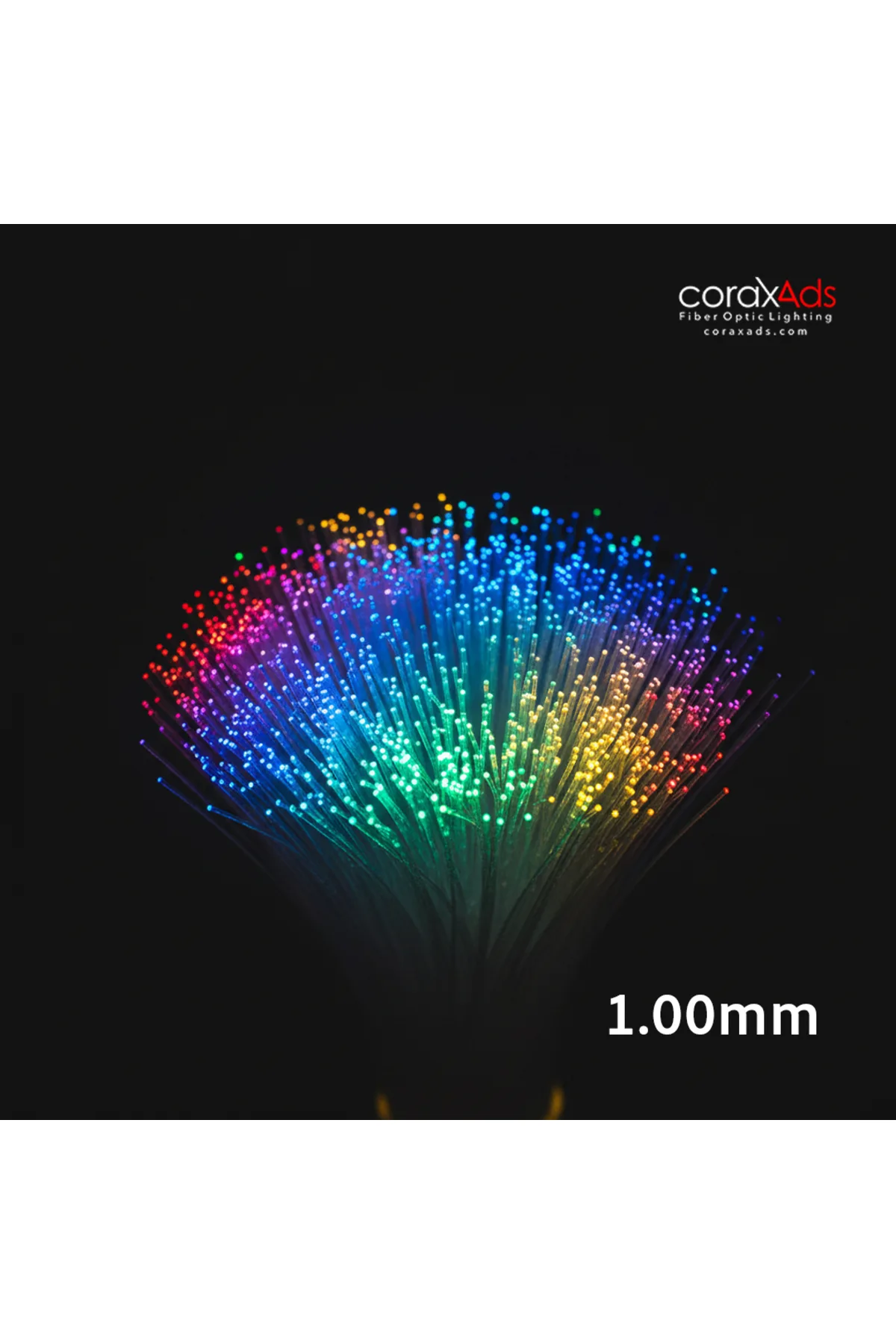
Cable thickness is a primary factor directly affecting your project budget and installation process. Therefore, answering the question what is the difference between fiber optik cable thicknesses? from a cost perspective is very important. Understanding these differences helps you avoid surprise costs.
Cost Per Meter Analysis and Light Source Efficiency
The general rule is that the price per meter increases as the cable gets thicker. However, a thicker cable does not always mean a more expensive project. For a dense star ceiling using 0.75mm cable, you may need almost 3-4 times more meters compared to using 1.5mm cable to cover the same area. In this case, the total cost of the thin cable with a low unit price could exceed the total cost of the thick cable with a high unit price. Furthermore, thicker cables transmit light more efficiently and can carry it over longer distances with less loss.
This allows you to use fewer or lower-power light sources, providing energy efficiency.
Installation Ease and Differences in Required Fixtures
Thickness plays a leading role during installation. Thin cables (0.75-1.0mm) bend much more easily and are less troublesome to fix to a panel or ceiling. Because the hole diameters are small (usually 1-1.5mm), drilling is quick. On the other hand, thick cables (1.5-2.0mm) tend to be stiffer and require more care during placement. These cables may require larger holes (2-3mm) and special connectors. These installation nuances are crucial for achieving a professional result. Therefore, understanding the difference between fiber optik cable thicknesses will give you a time and cost advantage when planning installation.
Getting detailed information on How to install a ready-made fiber optik lighting set? will help you understand what kind of workmanship is required for each thickness.
5-Step Checklist for Choosing the Right Thickness in 2026
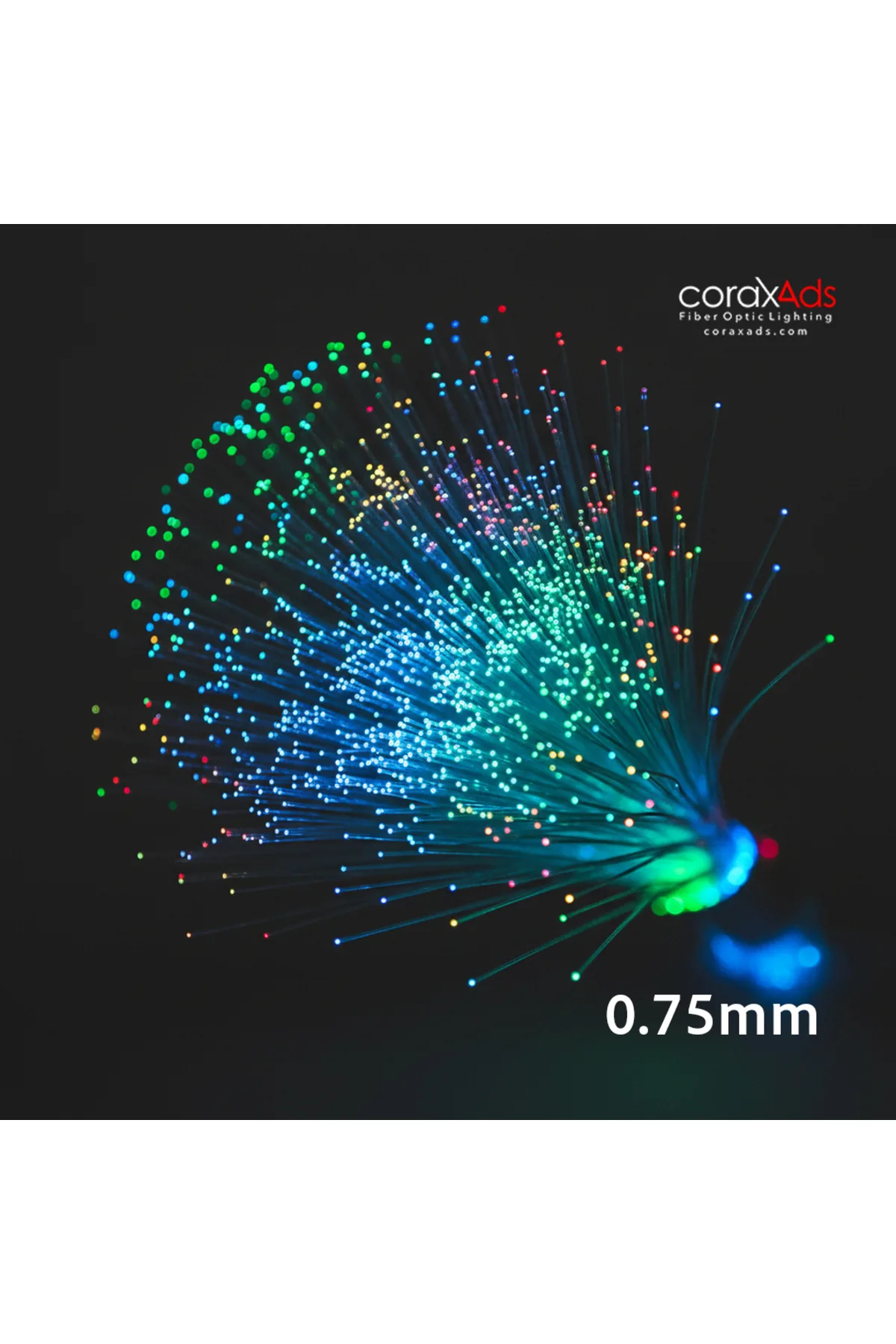
If you're confused, don't worry. This simple checklist will show you how to interpret the question 'what is the difference between fiber optik cable thicknesses?' for your project.
- Project Purpose and Desired Visual Effect: Is it a "realistic, dense Milky Way" or "sparse but bright constellations"? Think 0.75-1.0mm for the first, 1.5-2.0mm for the second.
- Characteristics of the Application Surface: Where will it be applied? Indoor plaster ceiling, outdoor concrete wall, underwater? Harsh conditions mandate thick diameters (1.5mm+).
- Budget and Meterage Calculation: Calculate cable meterage and light source power together. Thin cable may require many meters, thick cable may require a more powerful light source. Evaluate the total cost this way.
- Compatibility with Light Source Power: Check how many ends (luminaries) your existing or planned light source (illuminator) supports and its maximum cable capacity. A 150W source may illuminate very few points with 2.0mm cable but can feed hundreds of points with 0.75mm.
- Long-Term Maintenance and Durability Expectations: Will the installation be permanent or changeable later? Prefer thick diameters in areas where high durability is expected.
To choose the right cable thickness, analyze your project purpose, budget, and application surface. For a dense star effect, 0.75mm stands out; for bright and durable points, 1.5mm-2.0mm; and as a balanced option, 1.0mm cable.
What is the Difference Between Fiber Optik Cable Thicknesses? Effects on Light Quality and Color
The difference between fiber optik cable thicknesses is not limited to brightness and durability. The color and "feel" of the light also depend on this millimetric decision.
Source: tr.wikipedia.org
Color Vibrancy and Thickness Relationship
Colors from RGB or RGBW LED light sources, when transmitted inside the fiber cable, can mix slightly in very thin diameter cables, offering a more homogeneous, pastel-like appearance. In thick cables, the light beam mixes less, and colors are transmitted more purely and vibrantly, as from the source. For instance, a deep blue color may be observed much more saturated with a 2.0mm cable, while it might appear slightly softened with a 0.75mm cable. This effect becomes particularly important in projects using color fading effects. In short, the difference between fiber optik cable thicknesses also manifests in color transmission.
The Role of Thickness in the Twinkling Star Effect
The twinkling star effect is achieved with a special rotating disc connected to the light source. In this effect, cable thickness influences the "gliding" sensation of the star. A thin cable (0.75mm) gives the impression of a very fast and seamless glide, like a meteor trail. A thick cable (1.5mm) is perceived as a more distinct, slower, and heavier moving bright point. This is why the difference between fiber optik cable thicknesses also determines the character of the twinkling star effect. In products like the LOUNGE & BAR STAR CEILING SET - TWINKLING STARS, cable thickness is carefully selected to define the effect's character.
Frequently Asked Questions About Fiber Optik Cable Thicknesses (2026 FAQ)
1. What are the differences between fiber optik cable thicknesses?
Fiber optik cable thicknesses differ mainly in light transmission capacity (brightness), physical durability, and flexibility. Thin cables (0.75mm) are ideal for flexibility and dense star fields, while thick cables (2.0mm) are suitable for bright, durable, and accent points.
2. Which thickness is suitable for which application area?
0.75mm: Dense star ceiling, detailed decoration, vehicle interior ambiance. 1.0mm: Children's/bedroom, balanced indoor projects. 1.5mm: Pool, jacuzzi, outdoor, building lighting. 2.0mm: Accent lighting, sparse but bright points, museum display cases.
3. Does fiber cable thickness affect internet speed?
No, it absolutely does not. We are talking about fiber optik (PMMA) cables used for decorative lighting here. Glass fiber cables used for data transmission are a completely different technology, standard, and thickness range. The two should not be confused.
4. What thickness of fiber optik cable should I use for my home?
This depends on your room size and desired effect. In my personal experience, for a standard bedroom or living room, the most popular and safe choice is 1.0mm. It offers sufficient brightness and is relatively easy to install. For a very small and detailed area (inside a cabinet, niche lighting) consider 0.75mm; for a high ceiling and a dramatic effect, sparse 1.5mm cables can be considered.
5. What are the installation differences between thin and thick cables?
Thin cables require smaller holes, bend more easily, and can be packed more tightly on a panel. Thick cables require wider holes, stronger fasteners, and more care during bending. Also, connector connections for thick cables may differ.
6. Does light source selection change as cable thickness increases?
Yes, it does. Thicker cables consume more light power. The same light source, when operating thick cables, will be able to feed fewer cables (fewer luminaries), or a more powerful light source will be needed for the same number of cables. This balance must be considered during project planning.
Conclusion and Expert Advice for Your 2026 Project
As you can see, the answer to the question what is the difference between fiber optik cable thicknesses? is a multi-dimensional comparison that affects every stage of your project. Thin cable means density and flexibility; thick cable means brightness and power. In 2026, as the trend of creating personalized spaces increases, understanding these technical details becomes even more valuable.
In summary: If you dream of a realistic starry sky in a small, intimate space, 0.75mm is tailor-made for you. For a commercial space, an area integrated with water, or a project where you have high longevity expectations, thicknesses of 1.5mm and above will make you happy in the long run. 1.0mm is the perfect middle ground that will save you whenever you're indecisive.
Remember, choosing the right PMMA fiber optik cable is half the magic of light. The other half lies in directing this cable correctly. Do not hesitate to contact us for professional project consultation, technical support, and custom fiber optik lighting sets tailored to your needs. Let's transform your dream light into reality together. To explore our What is the difference between fiber optik cable thicknesses? collection and catch the best offers, visit https://CoraxAds.com now.