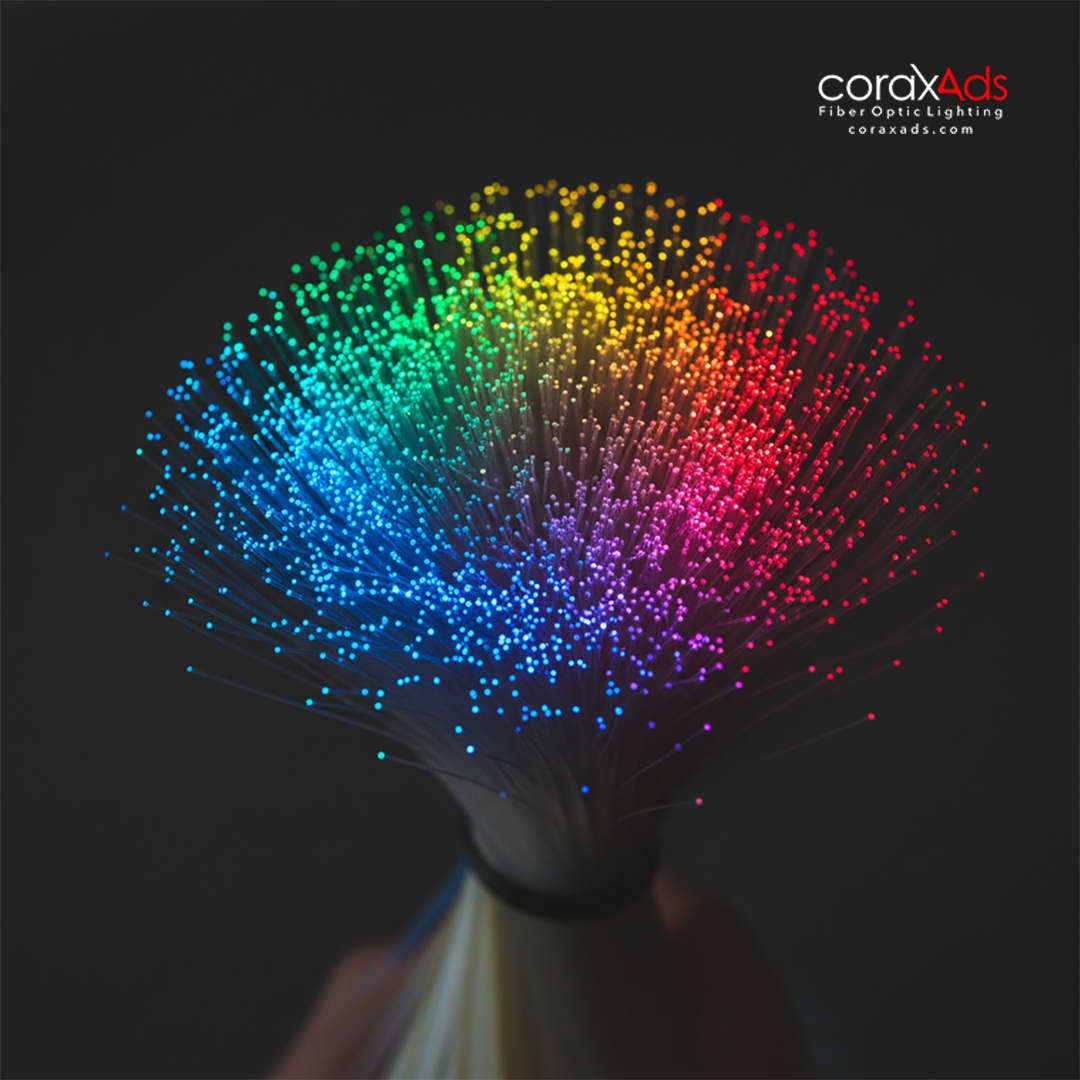
Corax LED lighting is a fiber optic lighting method in which a single LED light engine pushes illumination through thin glass or acrylic strands so that the glow appears at the strand tips rather than at the bulb. It is used in star ceilings, vehicle interiors, pools, restaurants, and hotel spaces where a conventional fixture would be too hot, too bulky, or too risky to service.
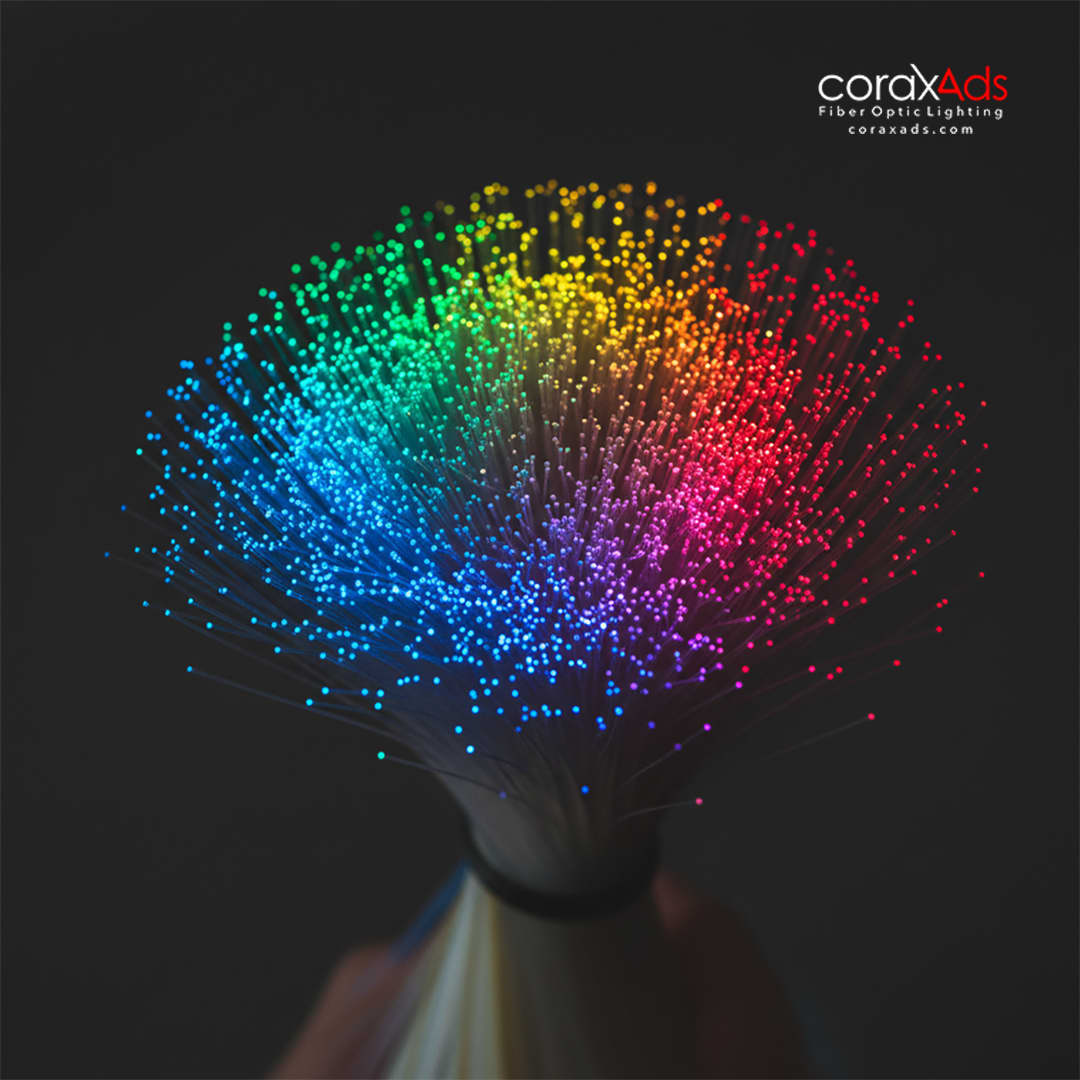
- Fiber optic lighting strands emit no heat at the illuminated tip because the light source sits at the engine, not at the point of glow.
- A single LED light engine can drive hundreds of individual light points, which centralizes maintenance in one accessible location.
- Lighting-grade fiber optic cables are commonly sold in diameters from 0.50 mm to 3.0 mm, and thicker strands carry more light but bend less tightly.
Table of Contents
- What Is Corax LED Lighting?
- How Does a Fiber Optic LED Light Engine Work?
- Corax LED Lighting for Homes
- Vehicle, Marine, and RV Applications
- Commercial, Hospitality, and Pool Lighting
- How Do You Choose the Right Fiber Optic Cable Diameter?
- Installation, Safety, and Maintenance
- Cost and Ordering in the US Market
- Frequently Asked Questions
The Corax Ads blog walks through how fiber optic illumination is planned for signage, displays, and architectural accents.
What Is Corax LED Lighting?
Corax LED lighting is a fiber optic system that channels light from one central LED engine through thin strands, so the glow appears at the strand tips instead of at a bulb.
Corax LED lighting sends light from one central LED engine through thin strands of glass or acrylic. The light travels inside the strand and escapes only at the tip or at a designed break. That separation between the source and the glow is what makes the technology useful.
Because the light source sits far from the visible glow, the illuminated surface stays cool and carries no electrical current. That matters in wet rooms, pool decks, steam showers, and vehicle interiors, where a bare bulb would be a hazard. Corax builds complete systems around low-voltage LED engines.
The company supplies both the engine and the fiber itself, plus ready-made kits for common spaces. Buyers can compare strand diameters from 0.50 mm to 3.0 mm and match them to the right fiber optic cables.
How Does a Fiber Optic LED Light Engine Work?
A light engine concentrates LED output into a coupler that feeds the fiber bundle, while a color wheel or control module adjusts brightness and hue at the source.
A fiber optic LED light engine is a housing that holds one or more high-output LEDs, a heat sink, and a coupler. The coupler aligns the fiber bundle with the LED so that as much light as possible enters the strands. Losses at that coupler are the main reason cheap engines look dim.
Many engines add a color wheel that spins in front of the LED. As the wheel turns, every fiber tip changes color at the same moment. Other models use separate red, green, blue, and white channels that mix electronically, giving smoother fades with no moving parts.
Output is usually rated in lumens at the engine, not at the fiber tip. Expect roughly half of that output to survive coupling and distance losses before it reaches a strand end. Corax lists its device selection guide so buyers can compare engines directly.
Corax LED Lighting for Homes
In homes, Corax fiber optic LED lighting creates star ceilings, stair accents, and wet-area glow without heat or shock risk.
In residential projects, the most common use is a star ceiling. Hundreds of thin strands are pushed through a panel or drywall, and one engine placed in a closet drives all of them. The ceiling twinkles while the ceiling surface itself stays completely cool to the touch.
Bathrooms and steam rooms benefit for a different reason. The strands are non-conductive, so a lit floor or shower niche never carries line voltage near water. Corax keeps dedicated pages for bathroom and bedroom installations so specifiers start from the right set.
Kitchens and living areas usually run a smaller strand count with a warmer white. Pool surrounds and patios need weather-rated hardware at the engine, since only the engine is electrical. Corax sells ready-made product sets for buyers who want a curated bundle.
Vehicle, Marine, and RV Applications
In vehicles, Corax fiber optic LED lighting delivers accent and ambient glow that draws only a few watts and adds no heat to trim panels.
Automakers and aftermarket shops use fiber to light door panels, footwells, and dashboard lines. A single engine in the trunk can feed the whole cabin through a harness. Because the strands emit no heat, they can sit directly against vinyl, leather, and foam without scorching.
Buses, minibuses, and travel trailers use the same approach for aisle strips and ceiling panels. Marine installations add salt and moisture to the problem, so sealed engines and UV-stable strands are the norm on boats and yachts. Corax groups these parts under automobile, caravan, and marine categories.
The wiring load matters here. A ten-point star array might draw under 2 watts total, which is negligible on a 12-volt system. That low draw is why fiber stays popular in battery-sensitive vehicles and in vehicles that sit unused for weeks.
Commercial, Hospitality, and Pool Lighting
Commercial spaces use Corax fiber optic LED lighting because one engine can animate hundreds of points across a large room with almost no routine maintenance.
Restaurants, cinemas, wedding halls, and hotel lobbies often need thousands of tiny light points in a ceiling that is hard to reach. Fiber solves that by moving the only replaceable part, the engine, into an accessible closet or service corridor. Corax maintains focused pages for restaurant and cinema projects.
Color animation is a strong selling point in event venues. A single engine with a color wheel can sweep an entire ceiling through a rainbow on cue, synced to music or a lighting console. Wedding halls and banquet rooms use this effect more than almost any other commercial client.
Pools and fountains use fiber for underwater points at 12 volts or less, which reduces shock risk compared with 120-volt pool fixtures. Corax publishes dedicated categories for pool and outdoor work.
How Do You Choose the Right Fiber Optic Cable Diameter?
Pick the smallest diameter that still carries enough light for your throw distance, because bigger strands are brighter but stiffer and harder to bend.
Diameter governs three things at once: how much light reaches the tip, how tightly the strand can bend, and how large the visible dot appears. A 0.50 mm strand gives a fine, subtle point. A 3.0 mm strand gives a bold dot that reads clearly from across a room.
Long runs lose more light. If the engine sits 30 feet from the ceiling, thicker strands help recover that loss. A short run inside a vehicle door can use 0.75 mm without any visible dimming, which keeps the installation flexible.
A common mistake is over-specifying diameter. Thick strands resist tight bends and can crack at sharp corners. Corax provides a cable cutting service and a set builder for assembling matched components.
Installation, Safety, and Maintenance
Fiber optic LED lighting is low maintenance because only the engine ever needs cleaning or replacement, while the strands themselves are passive and sealed.
Installation starts with planning strand routing before drywall or trim goes up. Bends below the strand's minimum radius cause light loss and eventual breakage. Most installers keep bends at ten times the cable diameter or gentler, which protects both output and long-term reliability.
The engine needs airflow. Heat is the leading killer of LED engines, and a closed cabinet without ventilation can cut rated life sharply. Keep the intake clear and dust the fan and heat sink about once a year in commercial settings.
Strands need almost nothing. A dusty tip wipes clean with a dry cloth. If a single point fails, the strand is usually the cause, and it can be swapped without disturbing the rest of the ceiling. Corax answers common questions in its FAQ section.
Cost and Ordering in the US Market
Expect fiber optic LED lighting to cost more up front than LED tape but far less over time in labor, because only one engine ever needs service.
Pricing in the United States depends mostly on strand count and engine output. A 50-point kit for a vehicle or a single room is an affordable entry point, while a 1,000-point commercial ceiling with a color-changing engine runs into the thousands of dollars.
Labor dominates the real cost. Routing 800 strands through a ceiling takes many hours, and that work is what buyers are mostly paying for. The hardware is the smaller share on most large jobs, which is why early planning saves money.
Ordering usually means matching an engine, a bundle of strands, and any lenses or connectors. Corax offers a set builder and a cable-cutting service so parts arrive sized to the project. More background is available on the Corax Ads blog.
Because fiber optic cables must match the engine, strand bundle, and connector type, Corax’s set builder helps you keep those specifications consistent.
Frequently Asked Questions
Is Corax LED lighting safe around water?
Yes. The fiber strands are non-conductive and carry no electricity, so only the light engine is electrical and can be placed away from the water. Pool, steam room, and bathroom installations typically run at 12 volts or less, which reduces shock risk compared with 120-volt fixtures.
How far can fiber optic strands run from the light engine?
Most residential and commercial runs stay under 50 feet, because every foot of strand loses some light. Thicker cables such as 2.0 mm or 3.0 mm recover more of that loss over long distances than thin 0.50 mm strands do.
Can Corax LED lighting change colors?
Yes. Engines with a rotating color wheel or with mixed RGBW channels can shift every fiber point at once, and many models accept DMX control for syncing to music, a lighting console, or an event cue list.
How many light points can one engine drive?
A compact engine may drive 50 to 150 points, while larger commercial units handle several hundred to over a thousand, depending on strand diameter and run length. Total strand count and cable thickness are the two figures that determine engine sizing.
Do fiber optic strands produce heat at the lit end?
No. The strands transmit light, not heat, so the tip stays cool even when the engine itself gets warm. That is why fiber is common in vehicles, saunas, and trim panels where a hot bulb would damage nearby materials.