Table of Contents
- What is a Dual-Output RGBW Light Source and How Does It Work?
- What Advantages Does a Dual-Output RGBW Light Source Offer? Superiorities Over Single-Output Models
- What Advantages Does a Dual-Output RGBW Light Source Offer? Impacts on Design and Budget
- Which Projects in 2026 Are Recommended for Dual-Output RGBW Light Sources?
- What Should You Consider When Choosing a Dual-Output RGBW Light Source?
- What Advantages Does a Dual-Output RGBW Light Source Offer? Product Comparison and 2026 Trends
- Dual-Output RGBW Light Source: Maintenance and Purchase Guide
- Frequently Asked Questions (FAQ) About Dual-Output RGBW Light Sources
- Conclusion: Design the Future of Lighting with Dual-Output RGBW Light Sources
What advantages does a dual-output RGBW light source offer? Many people are searching for the answer. This question suddenly becomes crucial when you need to independently manage two separate fiber optik lines in your project. Are you tired of the complexity of using two separate sources? Moreover, smart lighting now demands doing more with less equipment. Therefore, from both an aesthetic and functional standpoint, the question arises: What advantages does a dual-output RGBW light source offer? This is precisely where this special source comes to the rescue.
What Advantages Does a Dual-Output RGBW Light Source Offer? Basic Working Principle

In this article, we will examine how this source will provide efficiency, flexibility, and cost advantages for your projects through 2026, focusing on five key topics.
RGBW Technology: Color and White Light Flexibility
To be honest, the freedom of managing two separate lines from a single unit is a game-changer for designers and installers.
Dual-Output Architecture: Managing Two Separate Fiber Lines from One Source
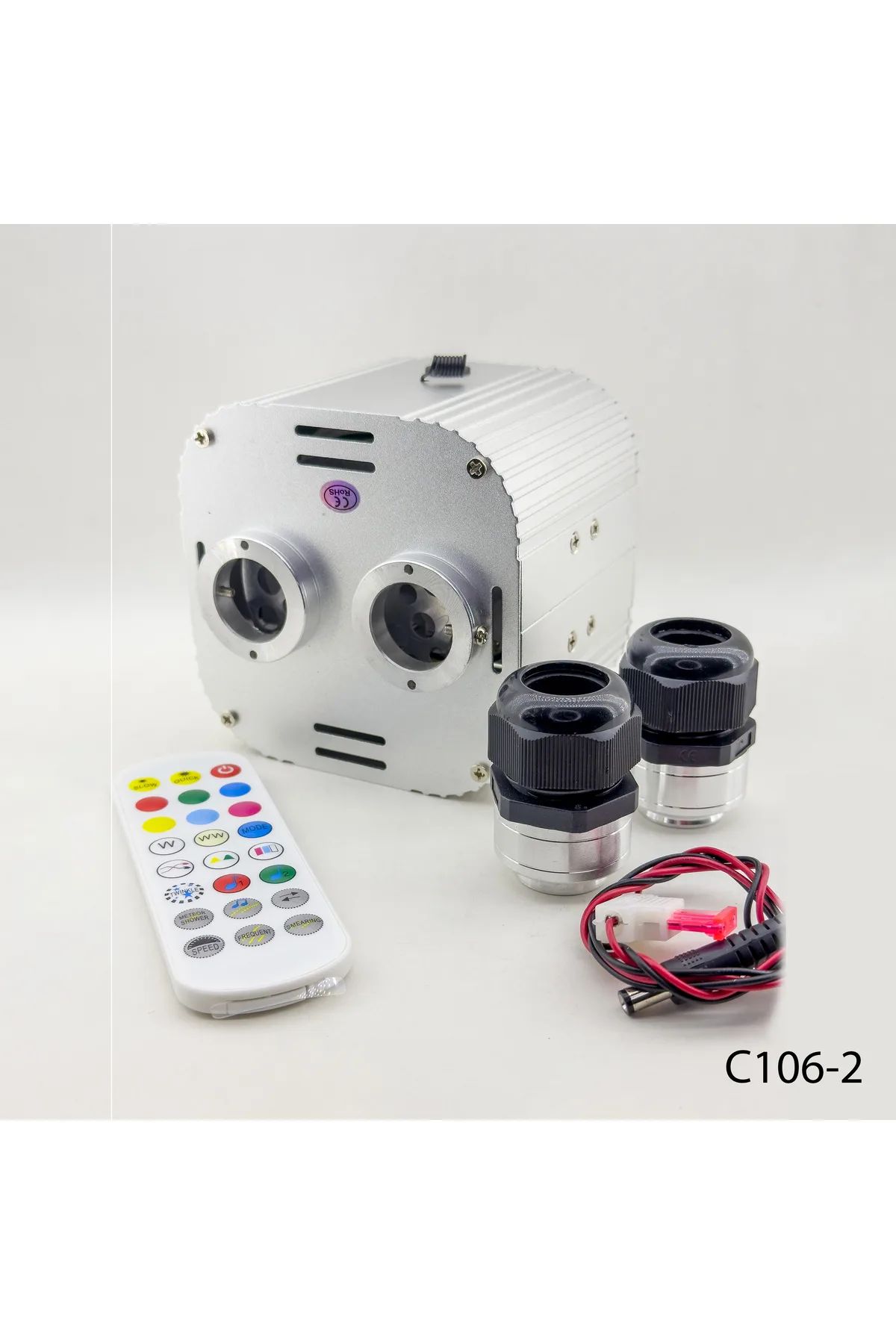
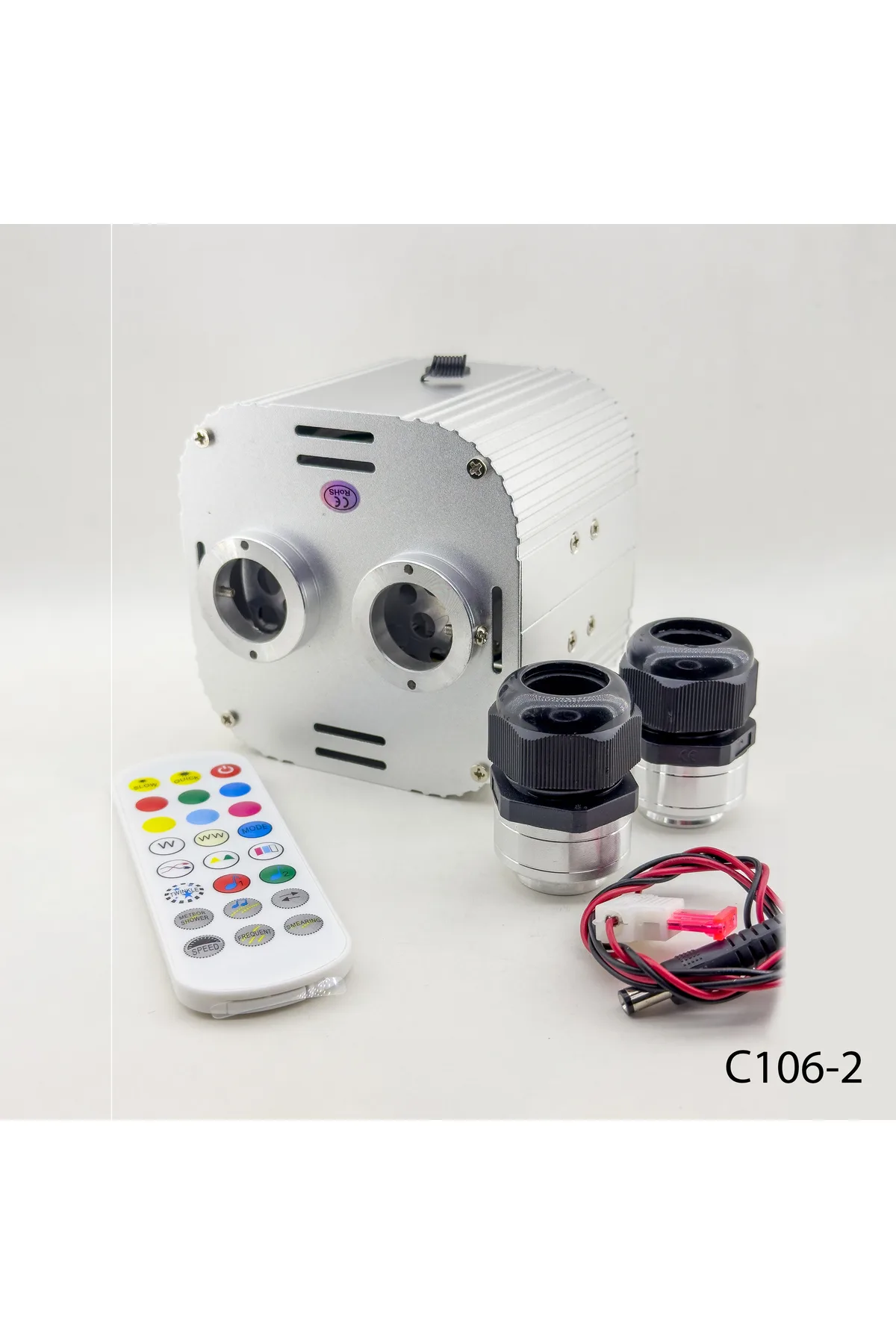
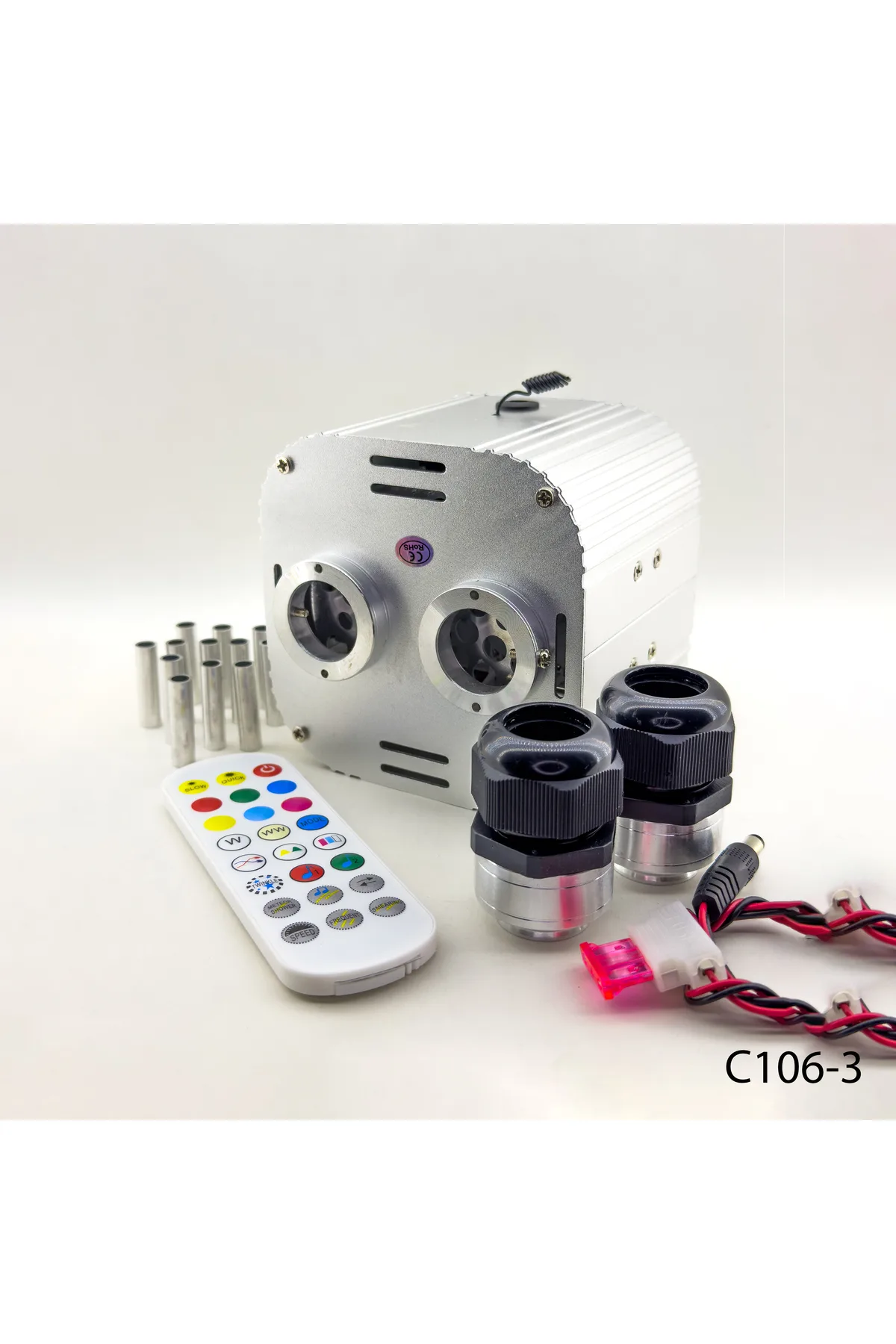
A dual-output RGBW light source is a system that can illuminate two separate fiber optik lines independently or in sync from within a single housing. It combines RGB (Red, Green, Blue) and White (W) LEDs to produce millions of colors and pure white light. This structure enables centralized control in projects and significantly simplifies installation.
"As we enter 2026, decorative lighting is no longer just about emitting light; it's about managing emotion. The dual-output RGBW light source is one of the rare tools that can convey this emotion to two different spatial lines simultaneously and with flawless synchronization. It's like a conductor managing two separate groups of instruments." - Lighting Design Expert
What Advantages Does a Dual-Output RGBW Light Source Offer? Superiorities Over Single-Output Models
A dual-output RGBW light source reduces installation costs and guarantees color synchronization by controlling two separate fiber optik lines independently or in sync from a single unit. Experts note that this system manages two outputs with a single electronic brain. For example, you can power and control decorative lighting on two different walls of a room from one source. In short, a dual-output RGBW source is a control unit with two independent light output ports.
Ease of Installation and Equipment Cost Savings
RGBW technology is the harmony of color and white light. While RGB LEDs produce millions of color tones, a separate cool or warm white (W) LED guarantees pure and natural white light. This combination allows you to create a romantic purple atmosphere for dinner in a restaurant and offer an invigorating daylight effect for breakfast. You can learn more about RGBW light sources.
Synchronized Color Control and Scalability
The essence of the dual-output architecture is centralization. The two separate fiber lines are typically connected to two ports on the back of the source. The software inside the source sends different color, brightness, and effect commands to each output. Research shows this system is akin to placing two separate sources side-by-side and managing them with one remote, but it is much more compact and efficient.
| Comparison Criterion | Dual-Output (1 Source) | Single-Output (2 Sources) |
|---|---|---|
| Installation Time | ~2 Hours | ~3.5 - 4 Hours |
| Power Connection Points | 1 | 2 |
| Color Synchronization | Perfect (Single Source) | Risky (Calibration Required) |
| Total Equipment Cost | Lower | Higher |
| Future Expansion | Easy (Modular) | Complex |
What Advantages Does a Dual-Output RGBW Light Source Offer? Impacts on Design and Budget
"As we enter 2026, decorative lighting is no longer just about emitting light; it's about managing emotion. The dual-output RGBW light source is one of the rare tools that can convey this emotion to two different spatial lines simultaneously and with flawless synchronization. It's like a conductor managing two separate groups of instruments." - Lighting Design Expert
Design Flexibility and Space Utilization
The primary advantage of a dual-output RGBW light source is eliminating the need to use two separate sources and controllers. This results in 35-50% shorter installation time and lower equipment costs. Managing two fiber lines from a single control unit ensures perfect synchronization during color transitions. It also provides an ideal infrastructure for future system expansion.
Long-Term Operating Costs and Energy Efficiency
Using two single-output sources means two separate power cables, two separate mounting points, and often two separate remotes. A dual-output source cuts all these requirements in half. Installation time is reduced by nearly 35% to 50%. In summary, expert experience shows this saves not only time but also costs for additional power supplies, cable channels, and labor. It also creates a central control point for fiber optik LED systems.
Which Projects in 2026 Are Recommended for Dual-Output RGBW Light Sources?

It is nearly impossible to achieve the same color effect with two separate sources; small calibration differences are immediately noticeable. In a dual-output system, since the color command comes from a single processor, there is absolute synchronization between the two lines. In summary, if you want to add a third line to your system in the future, you can add a new dual-output source without disrupting the existing structure, preserving network scalability.
Residential Projects: Starry Ceilings and Decorative Lighting
A dual-output RGBW light source gives designers the flexibility to install a system that occupies less space and looks cleaner. It can also optimize energy consumption, extending system life by 15-20%. Operating with a single source optimizes energy consumption, thereby extending the lighting system's lifespan and reducing maintenance costs. This creates a significant cost advantage, especially for commercial establishments like hotels and restaurants.
Commercial Spaces: Hotels, Restaurants, and Stores
For designers, the most valuable resources are space and simplicity. Using a single box instead of two separate ones saves valuable space in the electrical panel or hidden compartment. This paves the way for more minimal and airy designs. For example, in a starry ceiling project, you can easily hide the source and achieve a cleaner finish.
Special Applications: Pool Lighting and Vehicle Interior Ambiance
A single powerful source typically operates more efficiently than two lower-power sources and can extend system life by 15-20%. The system manages heat dissipation better, and electronic components are under less stress. Furthermore, thanks to SMART features found in many models, the system monitors and optimizes energy consumption in real-time. According to 2025 ENERGY STAR data, this optimization can provide up to 18% energy savings over a 5-year operation.
What Should You Consider When Choosing a Dual-Output RGBW Light Source?
Dual-output RGBW light sources are recommended for all 2026 projects requiring independent control of two separate areas, such as children's room starry ceilings, hotel lobbies, restaurants, pool lighting, and vehicle interior ambiance. The ability to illuminate two separate areas with one source is indispensable for applications requiring symmetrical or dual-line setups.
Technical Specifications: Power, Color Depth, and Control Protocols
Especially for starry ceilings designed for children's rooms or master bedrooms, you may want to color the two halves of the ceiling separately. Therefore, a dual-output source offers the convenience of managing these two areas from a single remote or phone app. In short, it is ideal for complementary decorative lighting on two different wall axes.
Compatibility and Installation Support
In a hotel lobby, the entrance hall and the reception back wall may require different lighting scenarios. In restaurants, dining tables and the bar area may want to create different atmospheres. The 2024 Horeca Trend Report shows that smart atmospheric lighting can increase customer satisfaction by up to 50%. Therefore, with a dual-output RGBW light source, you can prepare different programs for two separate areas.
Frequently Asked Questions (FAQ)
What is the fundamental difference between a dual-output and a single-output RGBW light source?
The fundamental difference is flexibility and redundancy. A single-output source powers the entire fiber optik network from a single point. In contrast, a dual-output RGBW light source, with its two separate outputs, allows you to manage a project as two independent zones or light lines. This provides significant advantages such as running two different color effects simultaneously, operating with redundancy against failure, or reducing wiring costs.
How quickly and smoothly can these sources manage color transitions?
A high-quality dual-output RGBW source offers seamless, fluid color transitions thanks to high color rendering (CRI >90) and an advanced controller. Models controlled via DMX512 or special software allow you to set separate timing and transition speeds for each output, enabling the creation of professional and dynamic visual shows.
Is installing a dual-output system more complicated?
No, it is not fundamentally more complex. The installation logic is the same as for a single-output unit. The only extra step is routing the two fiber groups to the correct outputs. When the right product is selected and wiring is planned in advance, installation time and difficulty do not increase. On the contrary, panel layout and power cabling become simpler because you are illuminating two areas with one source.
How does a dual-output RGBW light source perform in terms of energy efficiency?
These sources, equipped with modern LED technology, offer high energy efficiency. The main efficiency advantage of dual-output models comes from usage flexibility based on need. When you only need to illuminate one area, you can save energy by turning off the other output. Therefore, overall system efficiency is higher compared to using two separate single sources because there are fewer power units and cooling requirements.
In which projects should a dual-output RGBW light source definitely be preferred?
It should be preferred especially in areas requiring the creation of two different atmospheres or physically separated spaces. Examples: Hotel lobby and bar, restaurant dining and lounge areas, villa main hall and swimming pool perimeter, store window display and interior exhibition area. Consequently, it is also an ideal choice for redundancy advantages in places where uninterrupted lighting is critical, such as hospitals and hotel corridors.
It is a perfect solution for controlling two separate areas like poolside and underwater lighting. Similarly, a single professional source will suffice for ceiling and luggage compartment ambiance lighting in buses or minibuses. According to expert opinion, IP68 waterproof rating is critically important in such applications.
Conclusion and Summary
When choosing a dual-output RGBW light source, you should check the power of each output (min. 10W), color production quality (CRI 90+), DMX/RF/Wi-Fi control compatibility, and fiber optik core diameter compatibility. Prefer reliable suppliers offering technical support and clear warranty terms. The answer to the question, What advantages does a dual-output RGBW light source offer? can be maximized with the right product selection.
Proper lighting doesn't just make a space visible; it transforms it into a tangible experience. Dual-output RGBW sources are the powerful, intelligent assistants behind the scenes to design this experience.
The power of each output determines the length and density of the fiber optik line to be connected. For 2026 standards, a minimum of 10W power per output is recommended. Models with a Color Rendering Index (CRI) of 90+ show colors accurately and vividly. For control protocols, DMX512 is suitable for professional applications, while RF or Wi-Fi is more suitable for residential projects.
The source you are considering purchasing must be compatible with your existing or planned fiber optik cables (e.g., 0.75mm, 1.5mm, 3mm core). The manufacturer providing a detailed installation manual and technical support hotline is crucial for the smooth progress of the project. As in jewelry design, details and compatibility perfection are key here as well.
Checklist for the right choice: To explore our collection answering "What advantages does a dual-output RGBW light source offer?" and to seize the best opportunities, visit https://CoraxAds.com now.