Table of Contents
- What is Fiber Optic Lighting for a Study Room and How Does It Work?
- The Importance of Fiber Optic in 2026 Study Room Design
- What Are the Models and Types of Fiber Optic for Study Rooms?
- How to Install Fiber Optic Lighting in a Study Room?
- What Are the 2026 Prices for Study Room Fiber Optic Lighting?
- Maintenance and Cleaning for Study Room Fiber Optic Systems
- Study Room Fiber Optic Buying Guide
- Frequently Asked Questions (FAQ)
Does your study room lighting directly affect your productivity and motivation? Yet, standard lighting solutions often fall short. Fortunately, in 2026, study room fiber optic systems are emerging as a functional and decorative savior. In this article, you'll discover how this system—which transports light from a single source to different points in the room via fiber optic or glass fibers—creates an eye-friendly, focus-enhancing, and inspiring atmosphere for your desk, bookshelf, or ceiling.
What is Fiber Optic Lighting for a Study Room and How Does It Work?
Furthermore, fiber optic lighting for a study room is fundamentally a system that transports light emitted from a single powerful source (usually an LED or halogen projector) to the specific points your room needs, via thin fiber optic or glass fiber cables. This system provides direct, glare-free, flicker-free, and spot lighting onto your desk, under bookshelf shelves, or onto your ceiling. The working principle is quite simple: Light travels by continuously reflecting off the inner surface of the fiber cable (total internal reflection) and emits from the end or side surface of the cable.
The system has three basic components:
- Light Source (Projector/Light Generator): The brain of the system. 2026 models mostly use energy-efficient and long-lasting LEDs. With RGB LED sources, you can adjust the light color according to your work mode (focus, creativity, relaxation).
- Fiber Optic Cables: The veins that carry the light. Their diameters range from 0.75mm to 14mm. fiber optik fiber optic cables are more common in study room projects due to their flexibility and DIY compatibility.
- Terminating Ends and Accessories: Connectors that attach the fibers to the projector, lenses, and clips to secure the fiber ends.
To be honest, the harmonious operation of these components works wonders in your work environment. So much so that dozens of fibers powered by a single projector can provide homogeneous, eye-friendly lighting to your entire room. On the other hand, installing this system can be more accessible than you think.
"Fiber optic lighting is based on the idea of 'transporting' light from one place to another. This allows you to bring light exactly where you want it in your study room, without the clutter of electrical cables and plugs."
The Importance of Fiber Optic Lighting in 2026 Study Room Design
However, in 2026, fiber optic in study room design is no longer just a lighting element; it has become a strategic tool directly linked to productivity and well-being. Unlike traditional lighting, its soft, flicker-free light minimizes eye strain, providing physical comfort during long work hours, while the atmosphere it creates supports mental focus.
The Impact of Ergonomic Lighting on Work Efficiency
Research shows that proper lighting can increase productivity by up to 20%. Study room fiber optic systems come into play here. They offer reflected or diffused light instead of direct exposure to bright light. This reduces screen glare and allows eye muscles to strain less during reading. Especially for those working late into the night, LED projectors with blue light filters or those emitting warm white light can help maintain melatonin balance.
Modern Home Office Trends and Fiber Optic
2026's home office trends are built on minimalism, personalization, and multifunctionality. Fiber optic lighting perfectly aligns with all three trends. Its invisible installation offers a minimalist aesthetic. You can personalize the ambiance by instantly changing the light color with RGB systems. The same system can transform with the push of a button from a work mode to colorful decor that sparks creativity or a relaxing ambiance. Star ceiling applications have a powerful psychological effect, creating an open sky illusion in a closed office environment, boosting motivation and creativity.
What Are the Fiber Optic Models and Types for Study Rooms?
Choosing the right model is crucial when starting your project. In 2026, three main fiber optic models for study rooms stand out: side glow fibers for under-shelf lighting or fill light, end glow fibers for desktop or specific object highlighting, and ready-made star ceiling kits for ceilings. Today's systems come with smart home compatibility, dimmer control, and remote control options.
| Model | Working Principle | Ideal Use Area (In Study Room) | Advantages |
|---|---|---|---|
| Side Glow | Light emits continuously along the side surface of the fiber cable. | Under bookshelf lighting, cabinet interior lighting, step lighting, decorative frame lighting. | Creates a soft, linear band of light. Not dazzling, perfect for ambient lighting. |
| End Glow | Light emits only from the cut end of the fiber cable. | Desktop reading lamp, highlighting special objects (e.g., a sculpture), single star effect in star ceiling applications. | Provides a pinpoint, powerful, and directional light source. Acts as a spotlight. |
| Ready-Made Star Ceiling Kits | Sets designed for installation into ceiling panels or drywall, consisting of multiple end glow fibers connected to one projector. | Creating a starry effect across the entire ceiling surface. Atmospheric lighting for relaxation and inspiration corners. | Installation is relatively easy. Offers a realistic and mesmerizing visual effect. Often includes color changing and brightness control. |
Ambient Lighting with Side Glow Fibers
These fibers deliver excellent results, especially when installed under shelves right above your desk. They provide direct, shadow-free light onto your desk. Similarly, when placed behind a panel, they can create a soft backlight effect on the wall. Moreover, this type of light is easy on the eyes and provides comfort during long work sessions.
Spot Lighting with End Glow Fibers
Ideal when you need to illuminate a single document or highlight a small plant on your desk. Thin-diameter fibers (0.75mm-1.5mm) are almost invisible, creating the illusion that the light itself is floating in mid-air. This helps you focus by eliminating distractions. Thus, you can concentrate better on your work.
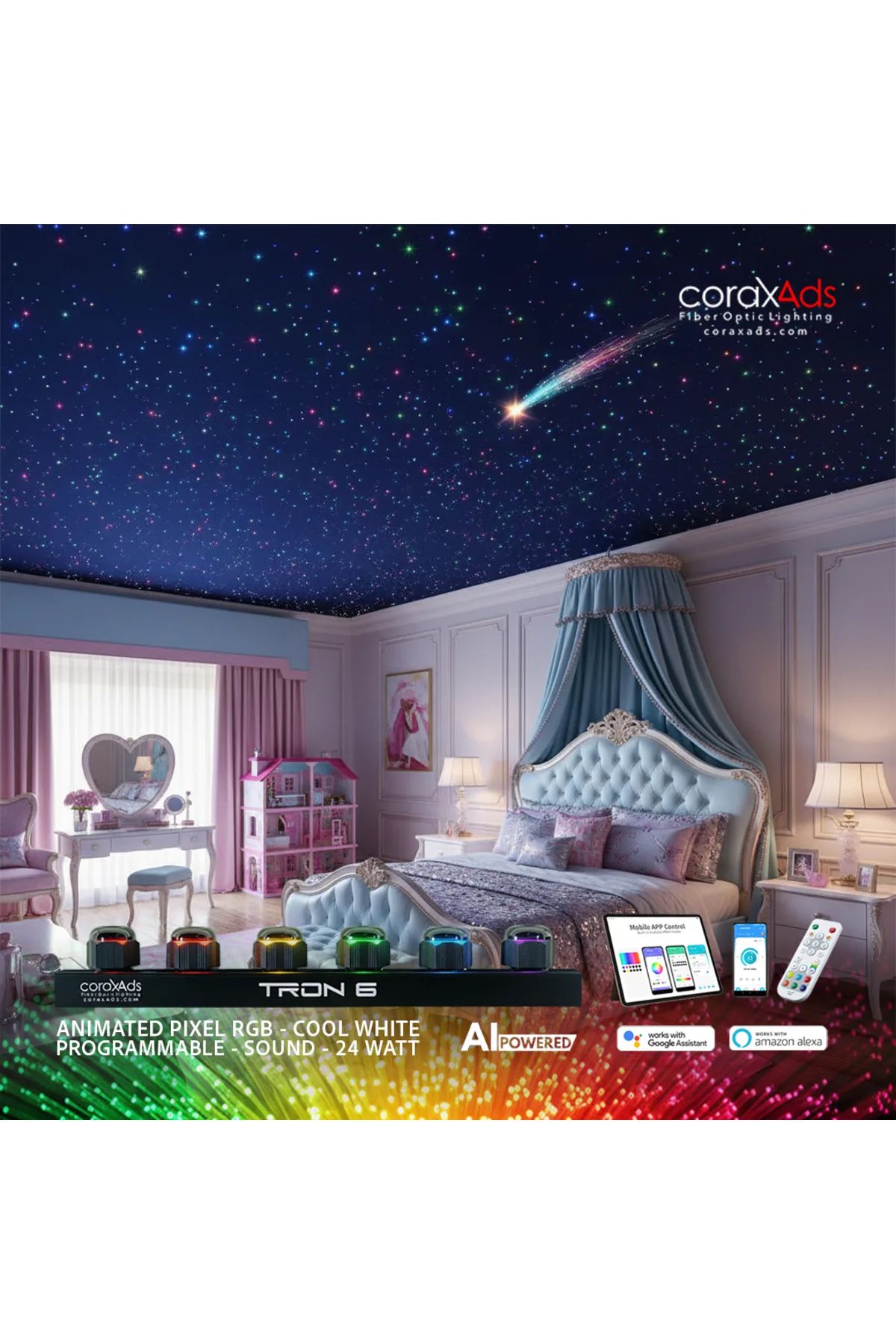
Ready-Made Systems: Star Ceiling Kits and Fiber Optic Chandeliers
If you're looking for a comprehensive transformation, ready-made star ceiling kits are the most logical starting point. These kits include all necessary components (projector, fiber bundle, mounting accessories). In 2026, models that combine fiber bundles with modern chandelier designs are also gaining popularity. These chandeliers offer both general room lighting and decorative star effects.
How to Install Fiber Optic Lighting in a Study Room?
Installing fiber optic in your study room can be simpler than you think. For a basic DIY project, first measure and plan the area you need (ceiling, under shelf). Create your material list accordingly: LED projector, sufficient meters of fiber optic cable, cutting tool, connection connectors, and securing clips.
Step-by-Step DIY Installation Guide
- Planning and Measurement: Decide where to place the light source (projector) and the route the fibers will follow. Position the projector in an easily accessible location with good air circulation (e.g., inside a cabinet, on a shelf).
- Cutting and Shaping the Fibers: Cut the fiber optic cables to your required length. Use a sharp knife or fiber optic cutter. A clean cut is critical for light efficiency.
- Connection to the Projector: Secure the fiber bundle to the special connection point (optical couplers) on the projector. This process varies from set to set, usually involving tightening with a screw or clip.
- Routing and Securing the Fibers: Route the fiber cables along your planned path (in a channel, along the wall edge). At points where you want to terminate, secure the fibers with appropriate lenses using fixing clips or adhesives.
- Power and Test: Connect the projector to power and test your system. Check the light distribution.
When is Professional Installation Necessary?
DIY might suffice for simple under-shelf lighting. However, for a complex star ceiling project, a recessed installation into drywall, or situations requiring changes to electrical wiring, professional support is essential. Also, expert hands will offer more guaranteed results when installing high-quality glass fiber optic systems. Therefore, you should make the right decision based on your project's complexity.
What Are the 2026 Prices for Study Room Fiber Optic Lighting?
In 2026, study room fiber optic system prices fall within a flexible range. While starter sets containing a simple LED projector and 15-20 meters of fiber can be acquired within a certain budget, star ceiling systems covering a large room, with smart control features and requiring professional installation, are more costly. On average, a personalized study room project requires a mid-level investment compared to basic LED lighting products, but the productivity increase and long-term durability it provides pay back this investment.
What Factors Affect the Price?
- Fiber Optic Cable Price per Meter: Cable diameter, material (PMMA fiber optic vs. glass), and quality directly affect the price. Thin-diameter fiber optik fibers are more economical.
- Power and Technology of the Light Source: A more powerful projector (more lumens) and advanced LED technologies like RGBW (color-changing + white) increase the price.
- System Scope and Accessories: The number of fibers used, special lenses, accessories like dimmers or remote controls add to the cost.
- Type of Installation: The cost difference between DIY and professional installation can be significant.
In fact, the variety in the market allows you to find a fiber optic solution suitable for almost any budget. Moreover, with proper planning, you can achieve the desired result without exceeding your budget.
Online Shopping Tips and Promotions
When shopping online, read product descriptions and technical details carefully. The projector's lumen value, fiber diameter, and material must be specified. Customer reviews and installation photos can be informative. Prefer reliable and expert sellers. Especially during certain times of the year (holiday season, end of summer), there may be promotions on home decor sites. Following the "fiber optic lighting" categories on e-commerce sites ensures you don't miss opportunities. Sellers offering post-purchase technical support are always a step ahead. Therefore, choosing a reliable seller will save you time and money in the long run.
Maintenance and Cleaning for Study Room Fiber Optic Systems
Regular maintenance is important to extend the life and maintain the performance of your fiber optic lighting systems. First, you must be very gentle when cleaning the fiber optic cables, the most delicate part of the system. Dust and dirt accumulation can reduce light transmission efficiency. Therefore, you can clean them by gently wiping with a dry, soft, lint-free cloth. Never use harsh chemicals or abrasive cleaners.
It is also critical that the ventilation holes of the projector unit do not get dusty. Dust buildup can cause the LEDs to overheat and shorten their lifespan. For this, you can periodically clean them lightly with a vacuum or compressed air. Additionally, if you won't be using your system for an extended period, it's recommended to unplug the projector from the power source. These simple steps will help protect your investment and keep your system running smoothly for years.
Study Room Fiber Optic Buying Guide
Choosing the right product is the first step to a successful project. Here are the basic criteria to consider during the purchasing process:
- Needs Analysis: First, determine the area you want to light and the purpose. Do you want just desktop lighting, or a decorative effect spread across the entire room? This directly determines the model you choose (side glow, end glow, or ready-made kit).
- Projector Power (Lumens): Choose a projector with sufficient lumen value for the size of the area you want to illuminate. While 1000-1500 lumens may suffice for a small corner, 3000 lumens or more may be needed for a large ceiling.
- Fiber Quality and Diameter: PMMA (acrylic) fibers offer flexibility and an affordable price. Glass fibers are preferred for higher heat resistance and longer lifespan. Diameter affects the size and brightness of the light point; 0.75mm-2mm is suitable for fine effects, 3mm-14mm for thicker effects.
- Control Options: Beyond basic on/off, features like dimmers, remote control, smartphone compatibility, or RGB color changing enhance your project's functionality.
- Warranty and Technical Support: The product having at least a 2-year warranty and the seller offering technical support for installation provides assurance for potential issues.
By paying attention to these factors, you can choose the most suitable fiber optic system for your study room and be satisfied in the long term.
Frequently Asked Questions (FAQ)
1. Why is fiber optic lighting better than traditional LED for a study room?
Fiber optic systems keep the light source (and heat) away from your work area. Therefore, they do not emit spot heat and contain no UV or IR radiation. Additionally, they can transport light from a single source to dozens of points without cable clutter and with decorative flexibility. Traditional LED spotlights or desk lamps cannot offer this flexibility and aesthetic variety.
2. Does fiber optic lighting cause eye strain during long work sessions?
On the contrary, a fiber optic system powered by a quality LED source provides flicker-free and soft light. Since you are not exposed to direct bright light, the risk of eye strain and headaches is significantly reduced. This makes it ideal for long office hours.
3. Is an electrician absolutely necessary for installation?
For simple DIY projects, no. The projector usually plugs into a standard outlet. On the other hand, jobs like wall recessing, switch control, or in-ceiling installation may require electrical wiring changes. In such cases, working with a certified electrician for safety is strongly recommended.
4. What is the average lifespan of a fiber optic system?
The system's lifespan largely depends on the light source (LED projector). A quality LED projector can have a lifespan of 30,000 to 50,000 hours. This equates to over 10 years with 8 hours of daily use. The fiber cables themselves have an almost unlimited lifespan unless physically damaged.
5. Which fiber type is suitable for directly lighting my desk?
If you want to softly illuminate the entire surface of your desk, installing side glow fiber under a shelf above your desk is the best option. If you only want to highlight a small area (pencil holder, notebook), you can create a pinpoint reading lamp effect with one or several end glow fibers.
6. Do fiber optic systems provide energy savings?
Yes, modern LED projectors are highly energy efficient. Furthermore, by distributing light from a single powerful source to many points, they can consume less energy than using multiple traditional lamps for the same lighting level. For example, a 50W LED projector can illuminate 10-15 points.
7. How many fibers are needed for a star ceiling effect?
This varies based on your ceiling size and desired density. However, as a general guide, an average of 20-40 thin-diameter (0.75mm or 1mm) fibers per square meter is recommended. This number can be increased for a more realistic and dense appearance.
In conclusion, one of the smartest ways to transform your study room in 2026 is to invest in fiber optic lighting systems. These systems not only protect your eye health but also create an environment that deepens your focus, boosts your motivation, and reflects your personal taste. From simple shelf lighting to an impressive starry ceiling, the potential is limitless. Start your project today and see how your productivity lights up. You can contact our expert team for custom solutions and draw inspiration from our portfolio. To explore our study room fiber optic collection and catch the best deals, visit https://CoraxAds.com now.