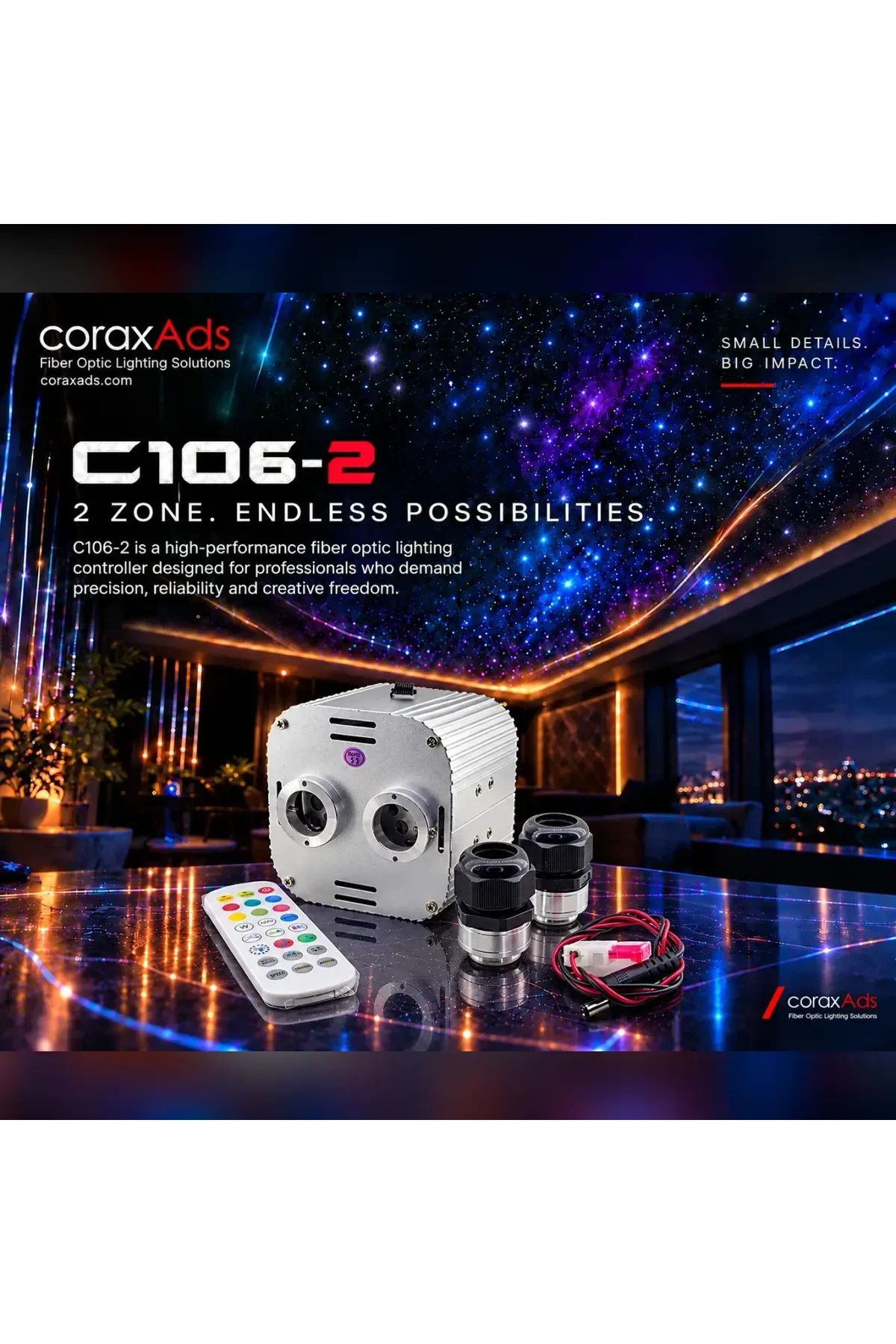
A shooting star fibre optic ceiling kit is a bundled starlight system in which light is carried along glass or PMMA strands to pinprick points in the ceiling, with an extra module that sweeps a bright streak across the stars. Its price is set by fibre count, the light source, the shooting star module and the star modules, not by ceiling area alone.
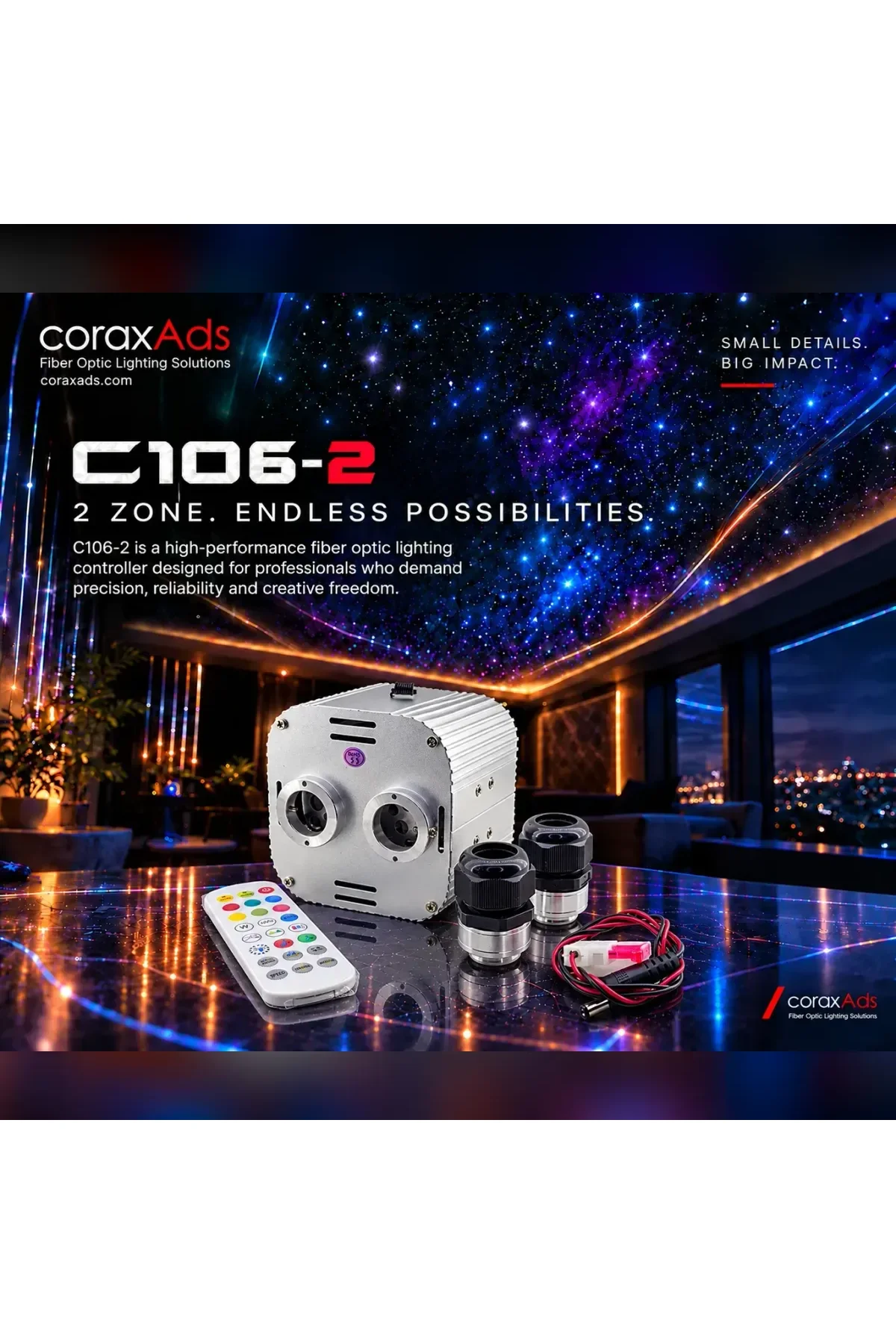
- In a shooting star ceiling the movement comes from a module switching light between fibres in sequence, not from anything physically moving in the ceiling.
- Fibre count rather than ceiling area is the main driver of kit price, because cable, terminations and light output all scale with the number of stars.
- A static colour-wheel light source cannot be turned into a shooting star effect later without replacing the electronics.
Video summary of this article
Watch this video on its own page
Video transcript
A shooting star fibre optic ceiling kit price reflects the system components, fibre count and installation needs.
A kit is a small system, not one product. The money sits in the light source, electronics and star modules. Compare what is in the box, not the headline figure.
Fibre count is the biggest single lever on price. Every extra star means more cable, more terminations and a larger light source.
The shooting star effect comes from a module sending light along fibres in sequence. It adds cost because it needs its own electronics and a compatible driver.
Fitting often costs as much as the kit itself. Star ceilings need hundreds of drilled points and fibre threaded behind the board.
Compare quotes on fibre count, light source rating, star module count and installation support. A cheaper headline can lose its edge once fees land.
The full details are in the article.
Table of Contents
- What does a shooting star fibre optic ceiling kit price include?
- How much does fibre count and star density move the price?
- What creates the shooting star effect, and does it add cost?
- Does installation add much to the total?
- Which kit suits which room?
- How do you compare quotes before you commit?
- Frequently Asked Questions
What does a shooting star fibre optic ceiling kit price include?
A kit price bundles the fibre harness, the light source with its twinkle or shooting star module, the star modules that finish each point, and the fixings needed to close the ceiling.
A kit is not one product but a small system. The strands are cheap by the metre; the money sits in the light source, the electronics that make stars twinkle or shoot, and the modules that hold each fibre end flush with the plasterboard.
That is why two quotes for the same room can sit far apart. One seller prices a basic static harness with a single colour wheel; the next includes a programmable RGBW driver, a shooting star module and pre-terminated star modules. Compare what is in the box, not the headline figure.
Our sets go out as complete packages, so the shooting star module sits inside the price rather than appearing as an add-on at checkout. Send the ceiling area, the room type and roughly how many stars you want, and the team will match a set to it.
If you are unsure which driver suits your ceiling, the device selection page narrows it down by room size and fibre count.
How much does fibre count and star density move the price?
Fibre count is the biggest single lever on price, because every extra star means more cable, more terminations and a larger light source to feed it.
Star density means the number of lit points per square metre. A quiet, sparse sky in a bedroom and a dense galaxy over a cinema use very different amounts of fibre, and cable is sold by the reel, so the count moves the price faster than the room does.
You also need a bigger light source as the harness grows, because every strand takes a share of the light. Push too many fibres through an undersized driver and the far end of the run looks tired rather than bright.
This is where cheap kits quietly cut corners. A price that looks keen often hides a smaller driver, thinner fibre or fewer star modules than the drawing needs. Ask what the light source is rated for, and ask whether the quote covers 1.00mm fibre optic cables or the thicker 3.0mm type. The two behave differently on long runs and tight bends.
What creates the shooting star effect, and does it add cost?
The shooting star effect comes from a module that sends light along fibres in sequence, so it adds cost because it needs its own electronics and a compatible driver.
Twinkle and shooting star are two different jobs. Twinkle scatters a random flicker across the whole ceiling. A shooting star sends one bright point along a path, then another, so your eye follows a streak. Both live in the light source or in a module that sits between driver and harness.
That extra board and its programming are what you are paying for. A static colour-wheel kit cannot be upgraded later by software alone; the electronics have to be there from the start. Budget for the effect on day one or accept a still sky.
Our RGBW twinkle light source handles the flicker side, while the 3cm single output RGBW module gives you a compact point to build a pattern around. Multi-output and pixel modules go further when the design needs several independent stars.
If you want the wider picture on how fibres and the driver work together, our piece on the fibre optic star ceiling explains it without the sales talk.
Does installation add much to the total?
Fitting often costs as much as the kit itself, because a star ceiling is slow, fiddly work that has to be finished before the room is decorated.
Fitting is the part most buyers underestimate. Star ceilings are slow work: hundreds of drilled points, fibre threaded and dressed behind the board, and a finish that has to be flat before decoration. On a large ceiling, labour can easily match the kit cost.
Access decides a lot. A loft above the room, a service void or a ceiling being replaced anyway keeps the job simple. A finished room with no access means lifting boards or building a drop ceiling first, and that is joinery rather than lighting.
Our star ceiling installation walkthrough sets out the fixing order, from first mark to final trim, so you can judge whether your installer or your own weekend will carry it. Read it before you price the job.
Which kit suits which room?
Room type shapes the kit more than ceiling size does, because a bathroom, a campervan and a cinema each need different fibre lengths, moisture protection and control.
A bathroom needs a set that tolerates damp and steam. A campervan build needs short fibre runs and a layout that survives vibration. A cinema room wants low output and tight control, so the stars do not wash out the screen.
For a normal domestic ceiling, the living room shooting star ceiling kit covers a standard lounge without padding the order. Smaller rooms suit the bedroom or child's room sets, and the bathroom ambience set is built for wet areas.
If the ceiling is in a vehicle, start with the campervan kits rather than adapting a household set. Fibre lengths and fixing methods differ, and a package designed for a static ceiling will fight you on the road.
How do you compare quotes before you commit?
Compare quotes on fibre count, light source rating, star module count and installation support, and insist every supplier quotes to the same specification.
Ask every supplier the same four questions: how many fibres, what the light source is rated for, how many star modules are included, and what installation support comes with it. Answers that stay vague usually mean a smaller package than the drawing.
Currency matters for UK buyers. Prices are set by the supplier, so check what your bank adds on conversion and whether duty applies before you compare totals. A cheaper headline can lose its edge once fees land.
We are CoraxAds Fiber Optic, at Korkutreis, Lale Sk. No:17 D:20, Çankaya, Ankara. Phone +90 537 606 5228, lines open Monday to Friday 09:00–18:00 and Saturday 09:00–15:00. Call with your ceiling details and we will talk through the specification before you order rather than after.
Frequently Asked Questions
Why do two shooting star kits of the same size cost different amounts?
Because the light source, the shooting star module and the number of star modules differ. Fibre is the cheap part; the electronics and the finished points are where the money goes.
Can I add the shooting star effect to a kit I already own?
Only if the driver has a spare output and the harness is wired for it. In most cases it works out cheaper to buy a set with the effect included than to rebuild the electronics later.
Does a shooting star ceiling need a special ceiling?
Not a special one, but it needs somewhere to hide the fibre. Plasterboard with a void above, an MDF panel or a drop ceiling all work. Solid concrete with no gap does not.
How many stars will one kit cover?
It depends on the density you want, so we size from points per square metre rather than ceiling size. Tell us the room and the look you are after and we will work it out.
What should I check before booking an installer in the UK?
Ask about lead time and delivery first, because it depends on the set and the modules in it. Get the kit on site before anyone drills a hole.