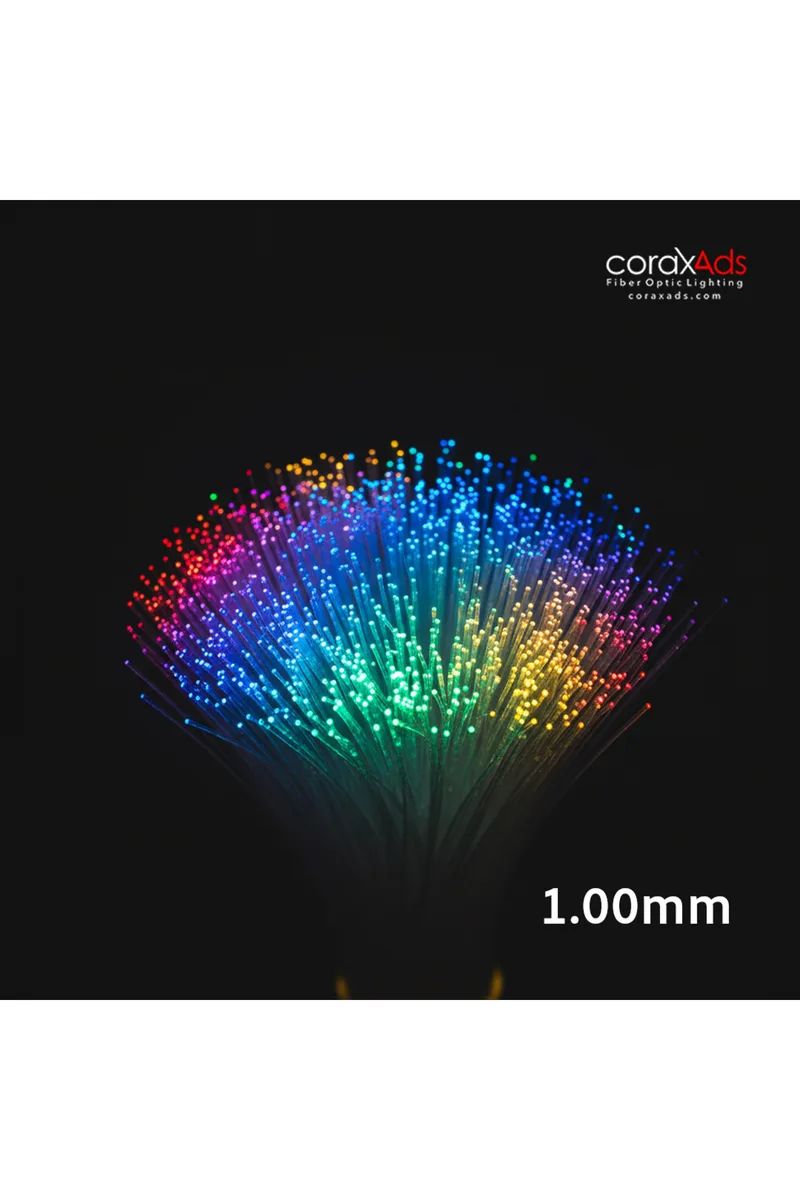
A fibre optic waterfall light curtain is a decorative lighting feature that sends light down a hanging bundle of thin strands to mimic falling water, and it turns up in spa receptions because it adds movement and calm without water, pumps or heat. Guests see a soft, continuous fall of light beside the desk; the building gets a dry fitting with almost nothing to service.
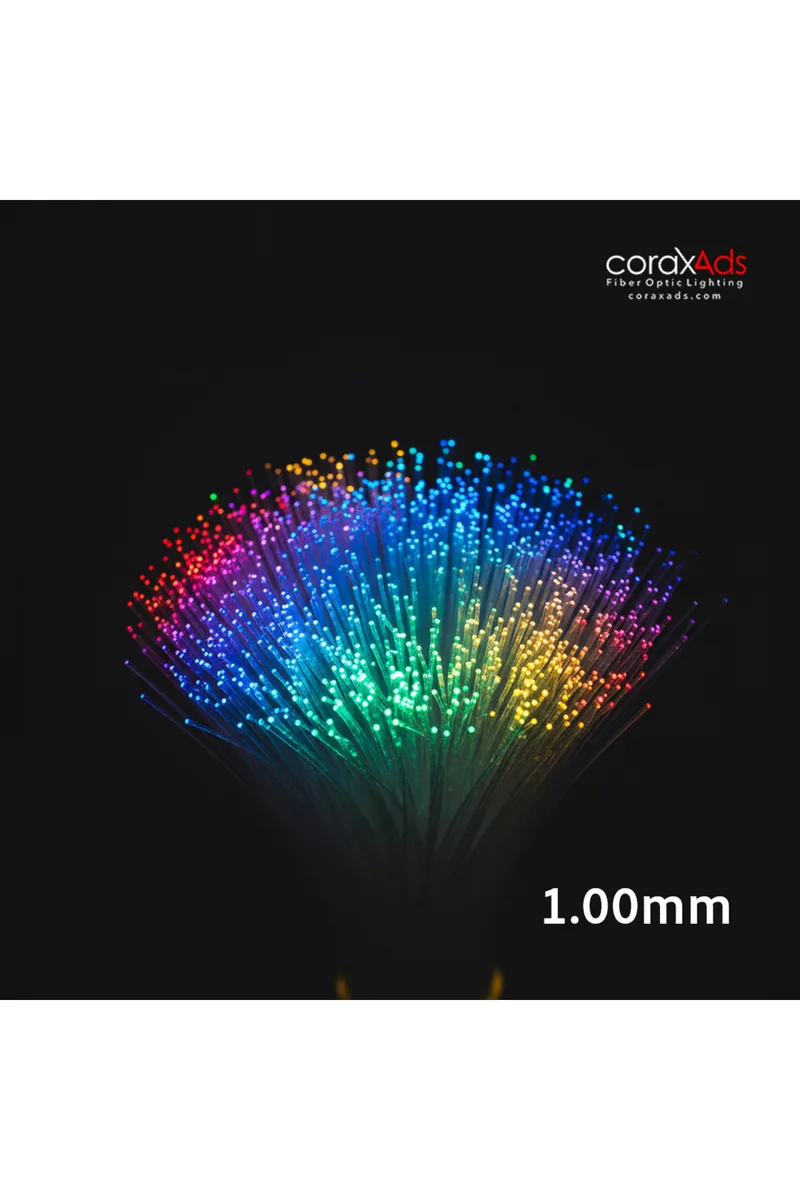
- A fibre optic waterfall light curtain carries light rather than mains current through its strands, so the hanging section stays cool to the touch.
- The illuminator, not the strands, is the heat-sensitive part of the system and belongs in a dry, ventilated space outside the steam zone.
- Strand diameter sets the look: 3.0 mm strands read as bold, spaced lines, while 1.00 mm strands produce a denser, finer curtain.
Video summary of this article
Watch this video on its own page
Video transcript
This article explains what to specify for a fibre optic waterfall light curtain in a spa reception.
It sends light down thin strands to mimic falling water. It adds movement and calm without water, pumps or heat.
An illuminator feeds light into a bundle of thin strands. Staggered cut lengths make highlights look like water finding its way down.
Settle the strand drop, illuminator position and service access before the ceiling is closed. Someone must reach the light source without closing reception for a day.
Fine 1.00 millimetre strands give a dense, delicate fall. Thicker 3.0 millimetre strands read as bold, spaced lines. Warm white suits a candlelit spa.
The strands carry light, not mains current, and the illuminator sits outside the wet zone. Keep it dry and ventilated, and running cost stays modest with little upkeep.
More details are in the article.
Table of Contents
- What the curtain adds to a spa reception
- How the falling-water effect actually works
- Planning the install around a working reception
- Choosing strands and a light source for a spa
- Humidity, heat and running costs
- Getting a specification and a quote
- Pairing the curtain with a star ceiling
- Frequently Asked Questions
What the curtain adds to a spa reception
It gives the reception a moving focal point and a silent backdrop, so guests have something to follow with their eyes while they wait and the desk area looks finished rather than bare.
Picture the moment a guest walks in: coat still on, slightly unsure where to stand. A fall of light at the end of the desk pulls them forward without a single sign. It also softens a plain wall that would otherwise sit behind reception as a hard, bright rectangle.
Nothing splashes here. Nothing needs topping up, and no pump hums under the desk. The strands simply carry light from an illuminator tucked away elsewhere, so the part a guest might brush against stays cool and dry.
Reception areas are also the first thing people photograph for review sites. A lit curtain reads well in low light on a phone camera, which matters more to operators than it sounds.
How the falling-water effect actually works
An illuminator feeds light into a bundle of PMMA strands, and because the strands are cut at slightly staggered lengths the eye reads the moving highlights as water finding its way down.
The hardware is simple. A light source sits in a dry, ventilated spot, a harness of strands runs to the ceiling, and each strand terminates in a small fitting. Light travels along the strand and escapes at the tip and along the etched surface.
Stagger the cut lengths and the effect stops looking like a tidy row of dots. It starts to look like water choosing its own path. Get the stagger wrong and the whole piece reads as a bead curtain, which is not what anyone wants in a treatment spa.
Add a twinkle or pixel source and you get gentle variation instead of a static glow. Keep the movement slow. Fast chasing belongs in an arcade, not next to a booking desk.
Planning the install around a working reception
Settle the strand drop, the illuminator position and a service hatch before the ceiling is closed, because retrofitting a route above a finished reception is the expensive part of the job.
On a refit, the ceiling void is where the project is won or lost. We ask for a dimensioned drawing showing the desk, the drop point and the nearest plant space, then mark the harness route and the shelf for the light source.
Access matters. Someone will need to reach that light source without closing reception for a day. A hinged panel or a ceiling hatch behind the desk is usually enough, and it costs far less than scaffolding later.
Check headroom too. A long curtain hung low across a walkway will be knocked by bags and shoulders. Shortening the drop, or moving it into a wall recess, solves that in an afternoon.
Choosing strands and a light source for a spa
Use fine 1.00 mm strands where you want a dense, delicate fall and thicker 3.0 mm strands where you want bold, widely spaced lines, then pick a source with enough ports for the strand count.
Strand diameter changes the character of the piece more than any setting on the controller. Our 1.00 mm fibre optic cables give a fine, dense fall that suits a narrow slot beside the desk, while thicker strands read as bolder, more spaced lines. Where the drop is wide and you want fewer, stronger lines, 3.0 mm fibre optic cables do that job.
Colour temperature does more for the mood than colour itself. Warm white suits a candlelit spa; a cooler white can feel clinical in the wrong room. A dimmable RGBW twinkle light source lets the desk move from warm white during the day to something softer after dark, with colour held back for seasonal promotions.
Port count is the number most quotes get wrong. Our light source selection page sets out how the two relate, so you can sanity-check a specification before anyone drills a ceiling.
Humidity, heat and running costs
Because the strands carry light rather than mains current and the illuminator sits outside the wet zone, the curtain copes with spa humidity better than exposed mains fittings.
Steam is the usual worry, and it is manageable. Keep the illuminator in a dry plant room or a ventilated cupboard, seal the cable entries, and the LED source will live a normal life. The strands themselves do not care much about moisture.
Running cost is modest. A low-voltage LED illuminator draws very little next to the downlights already lighting your reception, and there are no moving parts to wear out. Most of the upkeep is dusting the fittings.
If your reception opens into a wet area, our notes on fibre optic lighting for sauna and steam rooms cover the details that keep both sides of the door working properly.
Getting a specification and a quote
Send a photo of the reception, the ceiling height at the drop point and the desk width, and we can size a harness and light source against real measurements rather than guesswork.
We build fibre optic features from our workshop in Çankaya, Ankara — CoraxAds Fiber Optik, Korkutreis, Lale Sk. No:17 D:20, Çankaya, Ankara, 06430, TR. The team takes calls on +90-537-606-5228 from 09:00 to 18:00 Monday to Friday, and 09:00 to 15:00 on Saturday.
British clients should remember Ankara runs two to three hours ahead of the UK depending on the season, so a late-afternoon call from Leeds lands comfortably inside our working day.
Three things speed a quote along: the width of the desk, the height of the drop, and a photo of the space in its normal lighting. If budget is the sticking point, our breakdown of what drives a fibre optic waterfall light curtain price shows where the money actually goes.
Pairing the curtain with a star ceiling
A waterfall on its own can look stranded, so many receptions pair it with a quiet star field above the seating and run the two from separate sources.
Separate sources are the useful part. One can be dimmed or switched off during quiet hours while the other keeps the room alive, which suits spas that shift their lighting through the day.
Our walkthrough of fibre optic star ceiling installation covers that ceiling side step by step, from marking out to the final termination. If you would rather start from a known set, the spa and sauna starlight ceiling kit is built for exactly this kind of damp, warm room.
Where the reception leads into a treatment corridor, carry the same warm white through. That continuity does more for the feel of the place than adding a third lighting idea nobody asked for.
A dimmable RGBW twinkle light source lets the desk move from warm white during the day to something softer after dark.
Frequently Asked Questions
Do fibre optic connectors cope with extreme temperatures?
The connectors and strands handle hot, steamy rooms comfortably. The part that dislikes heat is the illuminator, so we site it in a cool, ventilated spot outside the steam zone and run the harness in to the ceiling.
Is fibre optic lighting safe around children?
It is one of the safer choices for a family-friendly spa. The strands carry no electricity and stay cool to the touch, so a curious child who reaches up will not be burned or shocked — though fixings within reach should still be checked now and then.
Does the waterfall need a water supply or drainage?
None at all. There is no water in the system, no reservoir and no pump, which is why it suits reception areas where a leak would be a disaster.
Can it run during treatments without making noise?
Silently, yes. There are no moving parts in the curtain itself, so the only sound is whatever your existing ventilation makes.
How often does it need servicing?
More often than never, less often than your downlights. Check it at your normal electrical inspection and give the strand tips a dust when the output starts to look dull.