Fiber Optic Light Source Selection
A fiber optic light source is an LED-based device that feeds light into fiber optic cables. These devices use RGB, RGBW or ARGB colour systems to produce millions of different colours. They are especially preferred in starlight ceilings, decorative lighting and architectural projects. The fiber optic lighting market in Turkey continues to grow every year.
Light sources work together with fiber optic cables. The device’s LED module produces the light and the fiber optic cables carry this light as points. The light source choice therefore directly affects the success of your project. With the right device you obtain uninterrupted, vivid and long-lasting lighting.
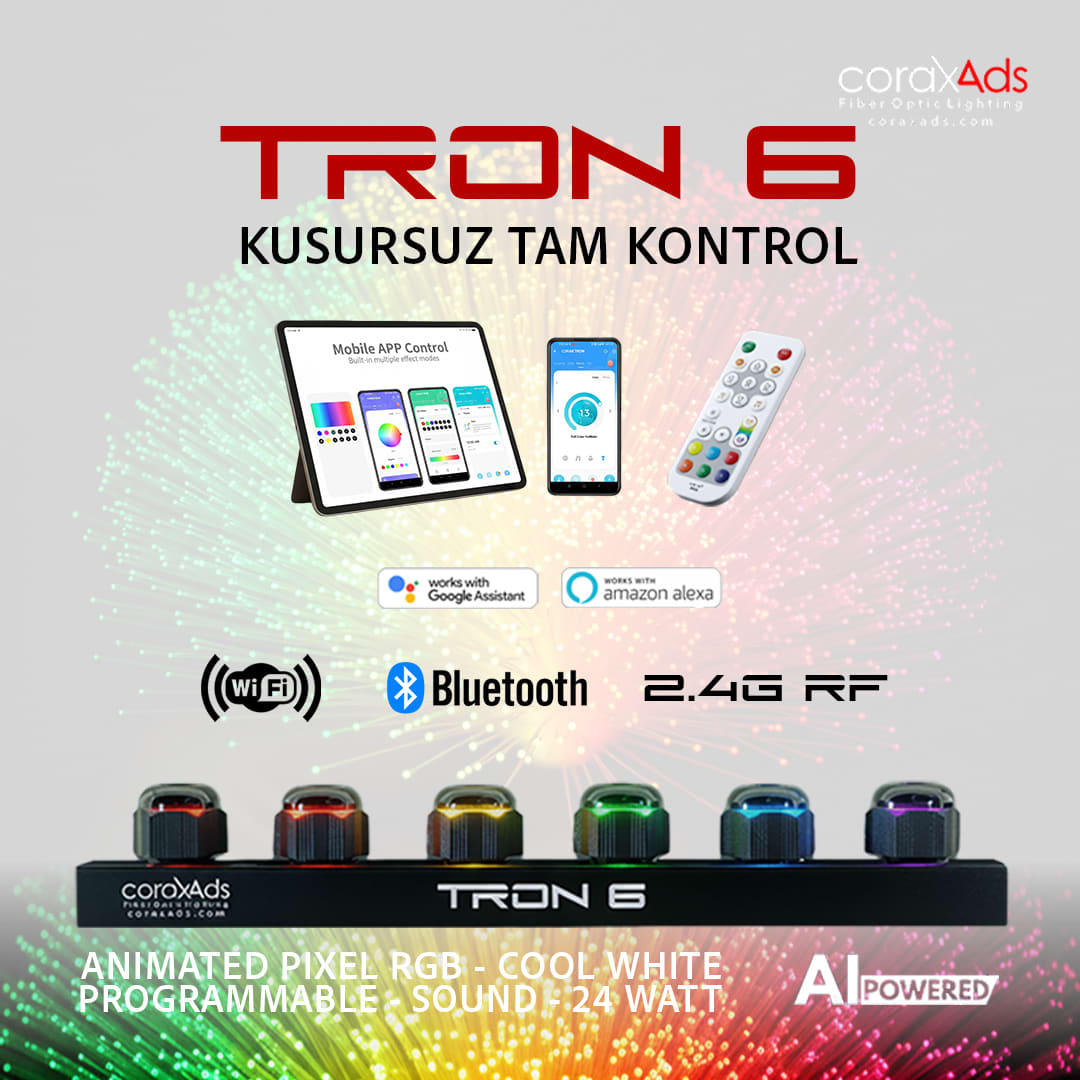
RGB, RGBW and ARGB: Which Colour System to Choose?
The most important decision when choosing a fiber optic light source is the colour system. Each system offers different features and suits different project types.
- RGB (16 Million Colours): Produces 16 million different colours by mixing red, green and blue LEDs. Cannot produce pure white but is ideal for colourful lighting projects.
- RGBW (RGB + Warm White): Contains a separate warm white LED in addition to RGB colours. Can do both colour and white lighting. The most preferred system for home and hotel projects.
- ARGB (Addressable): Can assign an independent colour to each fiber optic point. With pixel control you can create animations, wave effects and custom patterns.
How to Choose a Light Source?
Using the filter system on this page you can easily find the fiber optic light source suitable for your project. Just follow the steps below:
- Choose a Colour System: Click one of the RGB, RGBW or ARGB buttons.
- Set Your Effect Preferences: Choose the one you want from twinkle, meteor or pixel effects.
- Select the Number of Outputs and Level: Prefer a single output for small areas, 6+ outputs for large areas.
- Add to Cart: When you find the device that suits you, order directly.
Twinkle, Meteor and Pixel Effects
Modern fiber optic light sources offer not only fixed colour but also dynamic effects. The twinkle effect simulates the flickering of stars. The meteor effect creates a shooting-star image. The pixel effect allows each fiber optic point to be controlled independently.
Level Comparison Table
| Feature | Standard | Professional | Industrial |
|---|---|---|---|
| Target Area | Under 10 m² | 10-30 m² | Over 30 m² |
| LED Power | 5-10W | 10-25W | 25W+ |
| Number of Outputs | 1-2 | 2-4 | 4-8+ |
| Ideal Use | Home, bedroom | Hotel, restaurant | Mall, plaza |
| Warranty | 2 years | 3 years | 5 years |
Colour System Comparison
| Feature | RGB | RGBW | ARGB |
|---|---|---|---|
| Number of Colours | 16 million | 16 million + white | Unlimited (pixel) |
| Pure White | No | Yes | Yes |
| Independent Control | No | No | Yes |
| Price Range | Economy | Mid | Premium |
Usage Areas
Fiber optic light sources are extremely versatile devices. In starlight ceiling projects they create a realistic night-sky effect on bedroom, children’s room and living-room ceilings. In hotels and restaurants they provide luxurious ambient lighting for lobby and spa areas. They can be used safely in wet areas such as pools and hammams. In commercial spaces they offer striking lighting solutions for mall, showroom and store decoration.
Frequently Asked Questions
What is a fiber optic light source?
What is the difference between RGB, RGBW and ARGB?
What do twinkle, meteor and pixel effects mean?
What is the number of outputs for?
Which light source should I choose?
How do I match the light source with the fiber optic cable?
What is the difference between standard, professional and industrial levels?
Sources: Fiber optic lighting and LED technology information was prepared with reference to Fiber-optic communication — Wikipedia.